



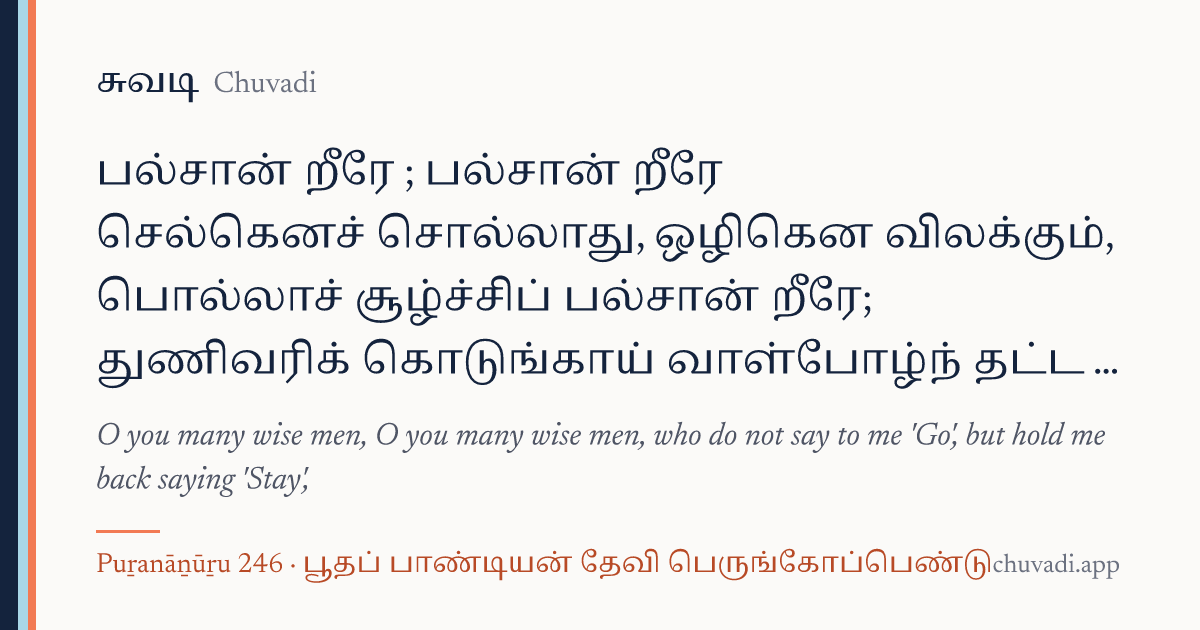
புறநானூறு 246
பாடல் · The poem
Tap a word to see where else it occurs.
பொருள் · Meaning in TamilAI
பல சான்றோர்களே, பல சான்றோர்களே! "போ" என்று சொல்லாமல், "இருந்துவிடு" என்று தடுக்கும் தீய சூழ்ச்சியுடைய பல சான்றோர்களே! வரிகளுடைய வளைந்த காயைக் கத்தியால் பிளந்து சமைத்தபோது தோன்றும் விதைகளைப் போல வெண்மையான நல்ல மணமுள்ள நெய்யைத் தொடாமல், இலையில் இட்ட கையால் பிழிந்த சோற்றுருண்டையையும், வெள்ளை எள்ளுத் துவையலோடு புளி சேர்த்துச் சமைத்த வேளைக் கீரையையும் உணவாகக் கொண்டு, பாய் இல்லாமல் பருக்கைக் கற்கள் பரப்பிய படுக்கையில் உறங்கும் துயருற்ற கைம்பெண்கள் அல்லோம் நாங்கள். பெரிய சுடுகாட்டில் கரிய கட்டைகளால் அமைத்த ஈமத்தீ உங்களுக்கு அரிதாக இருக்கட்டும்; எனக்கோ, பெரிய தோள்களையுடைய என் கணவன் இறந்துவிட்டதால், மொட்டே இல்லாமல் வளமான இதழ்கள் விரிந்த தாமரைகள் நிறைந்த ஆழமான பெரிய பொய்கையும் இந்த நெருப்பும் ஒன்றுதான்!
இது பொதுவியல் திணை, ஆனந்தப் பையுள் துறை; இறப்பால் எழும் பெருந்துயரைச் சொல்வது. பாடியவர் பூதப் பாண்டியன் தேவி பெருங்கோப்பெண்டு என்று குறிக்கப்படுகிறது; கணவனின் ஈமத்தீயில் புகுவதைத் தடுக்கும் சான்றோரிடம் அவள் பேசுவதாகப் பாடல் அமைந்துள்ளது. கைம்பெண்ணின் உணவைச் சொல்லும் அடிகளில் சில சொற்களின் பொருள், குறிப்பாக நெய்க்குச் சொன்ன உவமை, உறுதியாகத் தெரியவில்லை.
ஆங்கிலம் · English translationAI
Translation
- O you many wise men, O you many wise men,
- who do not say to me 'Go', but hold me back saying 'Stay',
- O many wise men of wicked counsel!
- of the curved gourd with its cut stripes, split with a knife and cooked,
- like its seeds, the fine pale fragrant ghee left untouched,
- but a ball of rice squeezed by hand, laid out on a leaf,
- with white sesame paste and tamarind added, cooked,
- and boiled vēḷai leaves for food,
- sleeping without a mat on a bed strewn with pebbles —
- we are not such grieving widows as these, no;
- the pyre of black logs made ready in the great burning ground
- may be a hard thing for you; but for me, since my
- broad-shouldered husband has died, a lotus that has opened
- its rich petals until no bud is left
- in a deep dark pond, and the fire, are one and the same!
What the poem says
The colophon gives this poem to Peruṅkōppeṇṭu, queen of Pūtappāṇṭiyaṉ, and it is spoken in her voice as she rejects the elders who are trying to stop her from going to her husband's pyre. The tiṇai is potuviyal and the turai āṉantappaiyuḷ, grief at a death. Tradition links the poem to the queen entering the fire; the poem itself states her resolve.
She addresses the 'many wise men' three times, the last with open scorn: their counsel is wicked because they will not tell her to go, only to stay. Then she describes the life of a widow that they are offering her instead: no ghee, white like the seeds of a cut gourd; a ball of hand-pressed rice on a leaf, with sesame paste and tamarind; boiled vēḷai leaves; a bed of pebbles without a mat. 'We are not widows of that kind,' she says.
The ending reverses the expected fear. The pyre may be dreadful to them, but to her, now that her broad-shouldered husband is dead, the fire is no different from a cool, deep pond full of open lotuses. Some details of the widow's diet in lines 4–8 are not certain in sense, especially the comparison in line 5 and the plant named vēḷai, but the general picture of hardship is clear.