



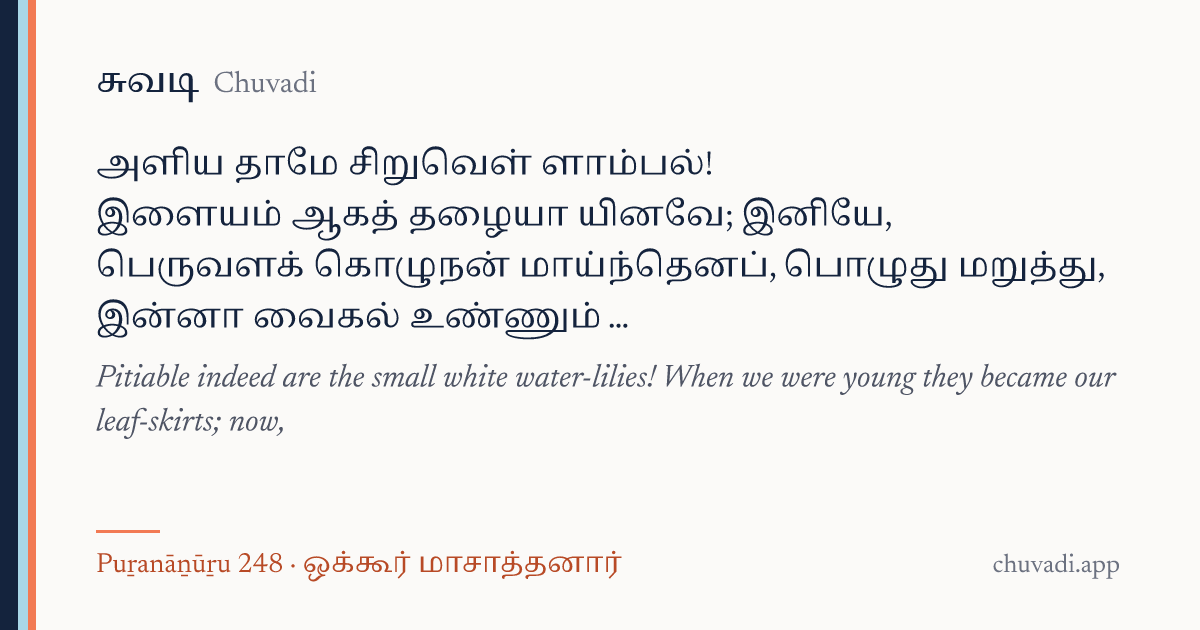
புறநானூறு 248
பாடல் · The poem
Tap a word to see where else it occurs.
பொருள் · Meaning in TamilAI
சிறிய வெள்ளை ஆம்பல்கள் இரங்கத்தக்கவை! நாங்கள் இளமையாக இருந்தபோது அவை எங்களுக்குத் தழையாடையாக ஆயின. இப்போதோ, பெருஞ்செல்வமுடைய என் கணவன் இறந்துவிட்டதால், உரிய வேளையில் உண்பதை விலக்கி, துன்பம் நிறைந்த நாட்களில் நான் உண்ணும் அல்லி அரிசியைத் தரும் இழிந்த உணவாக அவை ஆகிவிட்டன.
இது பொதுவியல் திணை, தாபதநிலைத் துறை; கணவனை இழந்த பெண் மேற்கொள்ளும் கைம்மை நோன்பைச் சொல்வது. ஒக்கூர் மாசாத்தனார் பாடியது; பாடப்பட்டவர் பெயர் இல்லை. இளமையில் அணியாக இருந்த ஆம்பலே இப்போது கைம்மை உணவாகிவிட்டதைக் காட்டி வாழ்வின் மாற்றத்தைப் புலவர் உணர்த்துகிறார். 'பொழுது மறுத்து' என்பதை வழக்கமான உணவு வேளையை மறுத்து என்று கொண்டோம்.
ஆங்கிலம் · English translationAI
Translation
- Pitiable indeed are the small white water-lilies!
- When we were young they became our leaf-skirts; now,
- since my husband of great wealth has died, refusing the proper hour of meals,
- on these bitter days, what I eat,
- the alli seeds they yield, they have become a wretched food.
What the poem says
Okkūr Mācāttaṉār gives voice to a widow. The tiṇai is potuviyal and the turai tāpatanilai, the austerities of a woman who has lost her husband; no individual is named.
The poem hangs on one plant, the small white water-lily (āmpal). In her girlhood its leaves and stems were woven into the leaf-skirts (taḻai) that young girls wore. Now, after the death of her wealthy husband, she eats its seeds, alli, as the meagre food allowed to a widow, and she takes it not at the usual mealtime. The same plant marks both stages of her life, adornment then and deprivation now, and it is the lily she calls pitiable, though the pity is plainly for herself.
The phrase poḻutu maṟuttu, 'refusing the time', is taken here as the widow's refusal of normal mealtimes; it could also be read more loosely as days turned bitter. The last line's pul, 'poor, mean', is applied to what the lilies have become for her.