



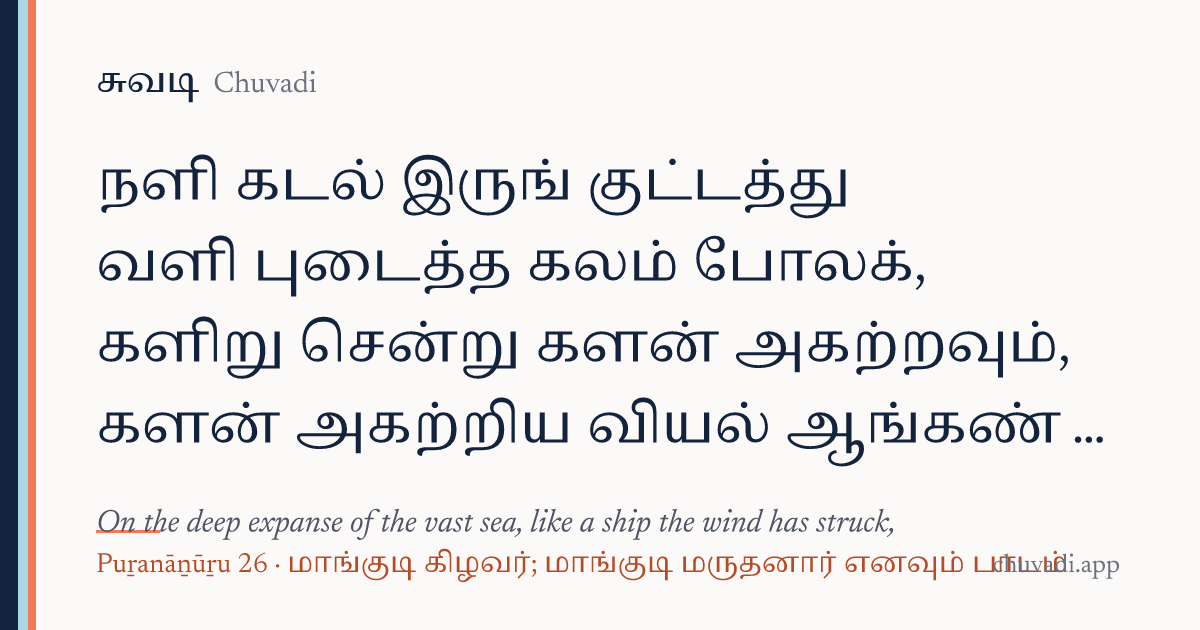
புறநானூறு 26
பாடல் · The poem
Tap a word to see where else it occurs.
பொருள் · Meaning in TamilAI
ஆழ்ந்த பெருங்கடலின் அகன்ற பரப்பில் காற்று மோதிய மரக்கலம் போல, உன் யானைகள் சென்று போர்க்களத்தை அகலச் செய்தன. அவ்வாறு அகலச் செய்த பரந்த களத்தில், ஒளிரும் இலைவடிவ முனையுடைய இரும்பு வேலை ஏந்தி, அரசர்கள் வீழும்படி போரைக் கலக்கி, உன் புகழ் பரவும்படி அவர்களின் முரசுகளைக் கைப்பற்றினாய். மணிமுடி அணிந்த தலைகளையே அடுப்புக் கற்களாக்கி, ஓடும் குருதியையே உலைநீராக ஊற்றி, வளையல் அணிந்த தோள்களையே துடுப்பாகக் கொண்டு துழாவிச் சமைத்த உணவால் போர்க்களத்தில் வேள்வி செய்த, கொல்லும் போரையுடைய செழியனே! நிறைந்த கல்வியும் அடங்கிய ஒழுக்கமும் உடைய நான்மறை வல்லவர்கள் சுற்றத்தாராக இருக்க, அரசர்கள் ஏவல் செய்ய, நிலைத்த வேள்வியைச் செய்து முடித்த, தவறாத வாளுடைய வேந்தனே! உன் பகைவர்கள் உறுதியாகத் தவம் செய்தவர்களே; ஏனெனில் உன்னோடு பகைவர் என்ற பெயரைப் பெற்றதால், உன்னை எதிர்க்க முடியாமல் போனாலும் அவர்கள் அங்கே மேலுலகில் வாழ்கிறார்கள்.
வாகைத் திணை, அதாவது வெற்றியைப் பாடுவது; துறை அரசவாகை, அதாவது அரசனின் சிறப்பைச் சொல்வது. பாடியவர் மாங்குடி கிழார், மாங்குடி மருதனார் என்றும் பாடம் உண்டு; பாடப்பட்டவன் பாண்டியன் தலையாலங்கானத்துச் செருவென்ற நெடுஞ்செழியன். போர்க்களத்தையே சமையல் வேள்வியாகக் காட்டும் கொடிய காட்சியும், வேதமுறைப்படி செய்த வேள்வியும் இங்கே அருகருகே வைக்கப்பட்டுள்ளன. 'ஆண்டு' என்பதை மேலுலகம் என்று கொண்டோம்.
ஆங்கிலம் · English translationAI
Translation
- On the deep expanse of the vast sea,
- like a ship the wind has struck,
- your elephants went and cleared the field;
- in the wide space of the field they cleared,
- raising steel spears with gleaming blades,
- you churned the battle till kings fell,
- seized their drums so that your fame went forth,
- and with crowned heads for the hearth-stones,
- with flowing blood poured into the pot,
- with braceleted arms for ladles stirring the food,
- you made sacrifice on the field of slaughter, Ceḻiya of slaying war!
- With men of deep learning and restrained ways,
- the masters of the four Vedas, as your company,
- with kings doing your bidding, you completed
- the lasting sacrifice — king of the sword that never fails!
- Surely they did penance, your enemies — with you
- they won the name of foe,
- and though they could not prevail, they live on there.
What the poem says
Māṅkuṭi Kiḻār (or Māṅkuṭi Marutaṉār) sings again to Neṭuñceḻiyaṉ of Talaiyālaṅkāṉam. The tiṇai is vākai, victory, and the turai is aracavākai, the excellence of a king.
The poem sets two sacrifices side by side. The first is the grim 'sacrifice of the battlefield': elephants charge through the enemy like ships driven by the wind, the king's spears bring down kings, he seizes their drums, and then a cooking is described in which crowned heads are the hearth-stones, blood is poured into the pot and arms still wearing bracelets serve as ladles. The image is meant to be horrifying and is a recognised motif of war poetry.
The second is a Vedic sacrifice, completed with learned and disciplined masters of the four Vedas around him and kings serving him. The poem closes with a paradox of praise: his enemies must have done great penance, because simply being called his foes has won them a life 'there', in the other world, even though they could not stand against him.