



புறநானூறு 273
பாடல் · The poem
Tap a word to see where else it occurs.
பொருள் · Meaning in TamilAI
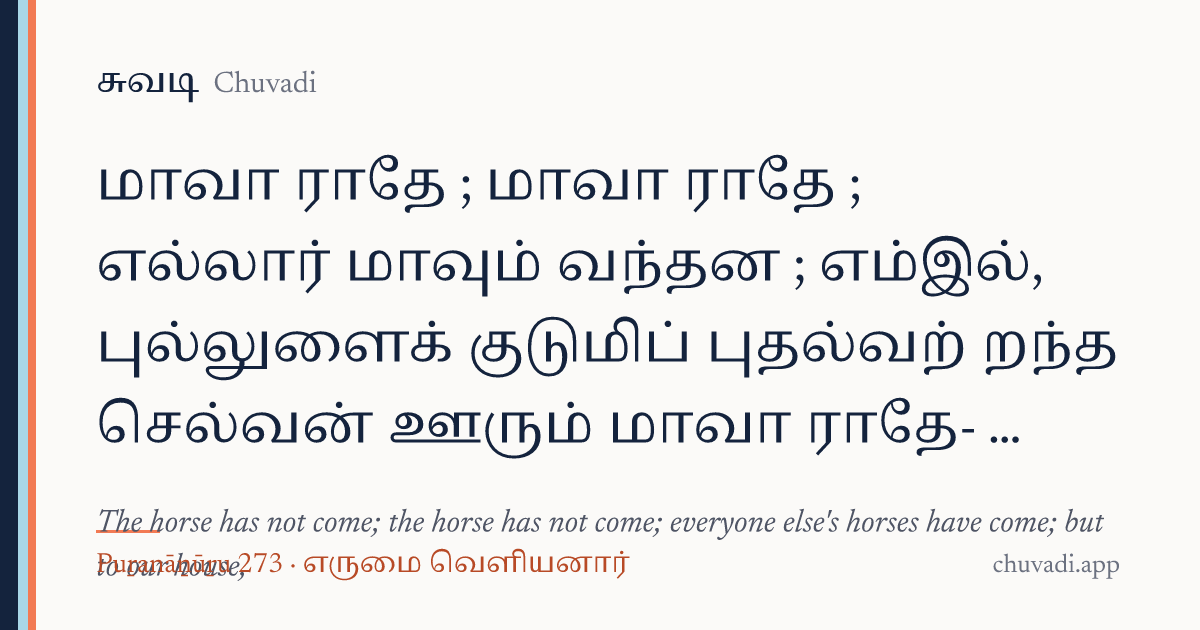
குதிரை வரவில்லை; குதிரை வரவில்லை; எல்லாருடைய குதிரைகளும் வந்துவிட்டன; எங்கள் வீட்டுக்கு, மெல்லிய குடுமியுடைய மகனை எங்களுக்குத் தந்த செல்வன் ஏறிச் செல்லும் குதிரை மட்டும் வரவில்லை. இரண்டு பெரிய ஆறுகள் ஒன்றுகூடும் பெரிய சங்கமத்தில் குறுக்கே கிடந்து வெள்ளத்தைத் தடுக்கும் பெரிய மரத்தைப் போல, அவன் போரில் ஏறிப் பொருத குதிரை அழிந்துவிட்டதோ?
இது தும்பைத் திணை, குதிரை மறம் துறை; போர்க்குதிரையின் வீரத்தைச் சொல்வது. எருமை வெளியனார் பாடியது. குதிரையைப் பற்றிக் கேட்பதுபோல் இருந்தாலும், அதன்மேல் சென்ற கணவனைப் பற்றிய அச்சமே பாடலில் உள்ளது.
ஆங்கிலம் · English translationAI
Translation
- The horse has not come; the horse has not come;
- everyone else's horses have come; but to our house,
- the lord who gave us a son with a tuft of soft hair,
- the horse that he rides has not come —
- like the great tree that lies across the one great meeting
- of two great rivers,
- has it perished, the horse he rode into battle?
What the poem says
Erumai Veḷiyaṉār's poem is in tumpai tiṇai, the class of pitched battle, with the turai kutirai maṟam, the valour of a war-horse. It is spoken by a woman whose husband has not returned.
The repetition of the first line carries her anxiety: all the other horses are back, but not the one ridden by the man who fathered her little son. Her question, at the end, is about the horse, but the fear is plainly for the rider.
The central image compares the horse to a great tree lodged across the confluence of two big rivers, taking the full force of both floods. The horse, like the tree, would have stood against two armies meeting, and like the tree it may have been destroyed. The poem leaves the answer unspoken.