



புறநானூறு 275
பாடல் · The poem
Tap a word to see where else it occurs.
பொருள் · Meaning in TamilAI
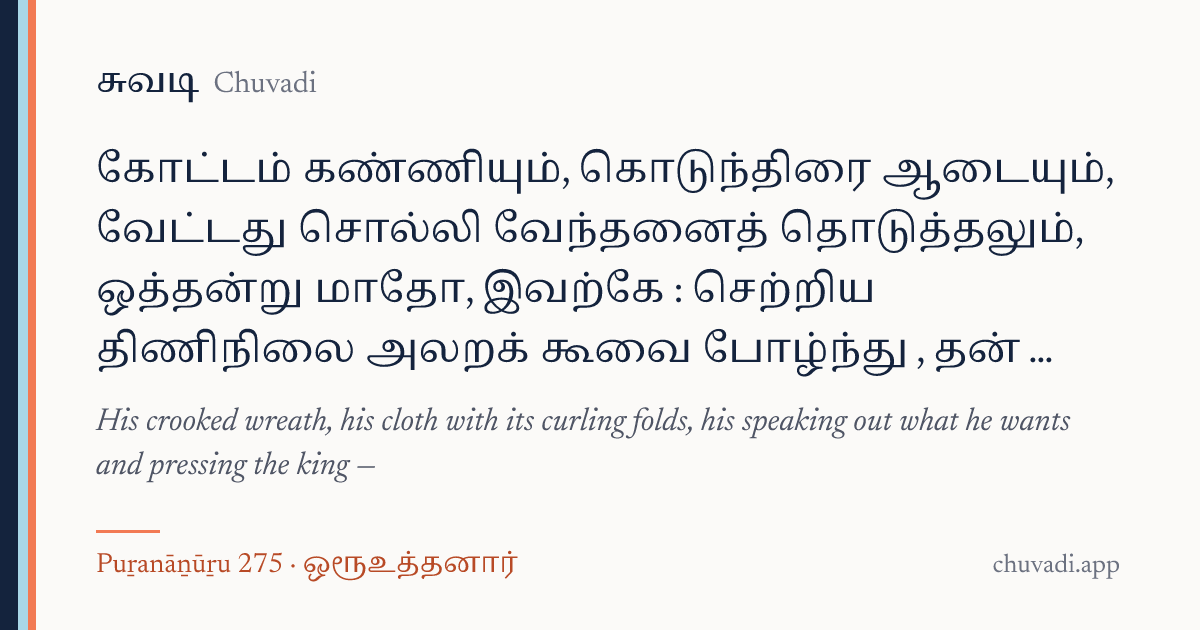
வளைந்த கண்ணியும், சுருண்ட மடிப்புகளையுடைய ஆடையும், தான் விரும்பியதை வெளிப்படையாகச் சொல்லி வேந்தனையே வற்புறுத்துவதும் இவனுக்குப் பொருத்தமானவையே. நெருங்கி நின்ற பகைவரின் செறிந்த அணி அலறும்படி கூவைக் கிழங்கைப் பிளப்பதுபோல் பிளந்து, தன் கூர்மையும் அழகும் உடைய வேலைக் கடுமையான போர்முனையில் ஏந்தி, "நில்லுங்கள், நில்லுங்கள், இங்கேயே!" என்று பிறர் கூவவும் நில்லாமல், சங்கிலியால் கட்டிய யானையின் குடல் தன் கால்களைச் சுற்றித் தடுக்க, கன்றை விரும்பி ஓடும் கறவைப் பசுவைப் போல, முன்னணிப் போரில் பகைவரை எதிர்த்து நிற்கும் தன் தோழனிடம் வருகிறான்.
இது தும்பைத் திணை, எருமை மறம் துறை; தனித்து நின்று பொருதும் வீரனின் மறத்தைச் சொல்வது. ஒரூஉத்தனார் பாடியது. 'கூவை போழ்ந்து' என்ற உவமையின் சரியான பொருள் உறுதியாகத் தெரியவில்லை.
ஆங்கிலம் · English translationAI
Translation
- His crooked wreath, his cloth with its curling folds,
- his speaking out what he wants and pressing the king —
- all these suit him well indeed; the packed,
- close ranks crying out, he split them as one splits a kūvai root, and his
- finely wrought spear raised against the fierce front,
- while men cried 'Hold back, hold back, stay here!', not holding back,
- with the entrails of a chained elephant tangling his legs,
- like a milk-cow that runs to its calf,
- he comes to the comrade who met the enemy in the front of the fight.
What the poem says
Orūuttaṉār's poem is, like the previous one, in tumpai tiṇai with the turai erumai maṟam, the lone, stubborn courage of a warrior. The speaker watches a soldier and approves of him.
The first lines list what might seem faults: a wreath worn askew, a cloth worn loose and curling, a habit of saying plainly what he wants and challenging even the king. They suit him, the speaker says, because of what he does in battle. He cuts through the packed enemy ranks as easily as one splits a tuber, lifts his spear at the dangerous front, and, though others shout to him to hold back, keeps going, with the entrails of a slain elephant tangled round his legs, to reach a friend who is fighting in the front line.
The comparison with a milk-cow running to her calf gives the fierce scene an unexpected tenderness: he goes to his comrade out of love. The plant kūvai in line 4 is taken as a soft tuber; the exact force of the comparison is not certain.