



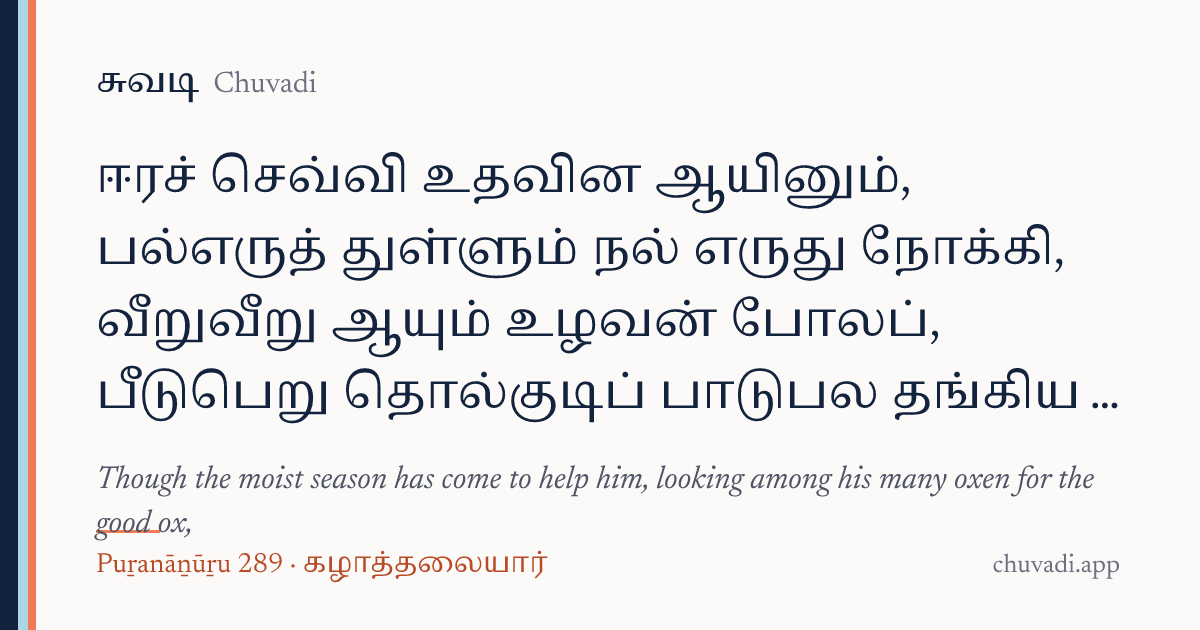
புறநானூறு 289
பாடல் · The poem
Tap a word to see where else it occurs.
பொருள் · Meaning in TamilAI
மழைக்காலம் உதவியிருந்தாலும், பல எருதுகளுக்குள்ளும் நல்ல எருதைக் கண்டறிய ஒவ்வொன்றின் வலிமையையும் ஆராயும் உழவனைப் போல, பெருமை பெற்ற பழைய குடியில் பிறந்து பல சிறப்புகளையும் கொண்ட மூதில் மறவர்களுக்குள்ளும், அன்போடு, தனக்காக நிறைத்து ஏந்திய பசும்பொன் கிண்ணத்தை "இவனுக்குக் கொடுங்கள்!" என்று வேந்தன் சொல்கிறான். அதுமட்டுமல்ல; பாணனே, நீ வாழ்வாயாக! பாசறையில், "இன்று பூக்கோள்!" என்று அறிவிக்கும், மடிந்த வாயுடைய தண்ணுமையை முழக்கும் இழிசினனின் குரலைக் கேட்டாயோ?
இப்பாடலுக்குத் திணையும் துறையும் இப்பதிப்பில் குறிக்கப்படவில்லை. கழாத்தலையார் பாடியது. உழவன் நல்ல எருதைத் தேர்வதுபோல வேந்தன் சிறந்த வீரனைத் தேர்ந்து சிறப்பிப்பதையும், போருக்குமுன் பூக்கோள் அறிவிக்கப்படுவதையும் சொல்கிறது. 'மடிவாய்' என்ற சொல்லின் பொருள் உறுதியாகத் தெரியவில்லை.
ஆங்கிலம் · English translationAI
Translation
- Though the moist season has come to help him,
- looking among his many oxen for the good ox,
- like a ploughman who tests the strength of each one by one,
- of an old line that has won glory and holds many merits,
- among the men of ancient houses, out of love,
- the bowl of fresh gold that was filled and raised for himself,
- 'Give it to this man!' he says; and not that alone:
- did you hear, bard, long may you live, in the war camp,
- 'Today is the taking of flowers!' — the cry
- of the lowly man with the slack-mouthed taṇṇumai drum?
What the poem says
Kaḻāttalaiyār's poem has no tiṇai or turai recorded in the edition. Its subject is a king choosing and honouring his warriors before battle, told to a bard.
The comparison in the first three lines is from farming: when the rains come, a ploughman looks over all his oxen and tests each to find the best. So the king, among the many men of old fighting families, picks out one and, out of affection, tells his servants to give that man the gold drinking bowl that had been filled for the king himself.
The last lines bring the moment of battle near. In the camp the drummer, called 'the lowly one', proclaims on his drum that today is pūkkōḷ, 'the taking of flowers', the ceremony in which warriors receive the flowers they will wear into battle. The word maṭivāy, describing the drum, is taken as 'slack-mouthed' or 'folded at the rim'; its exact sense is not certain.