



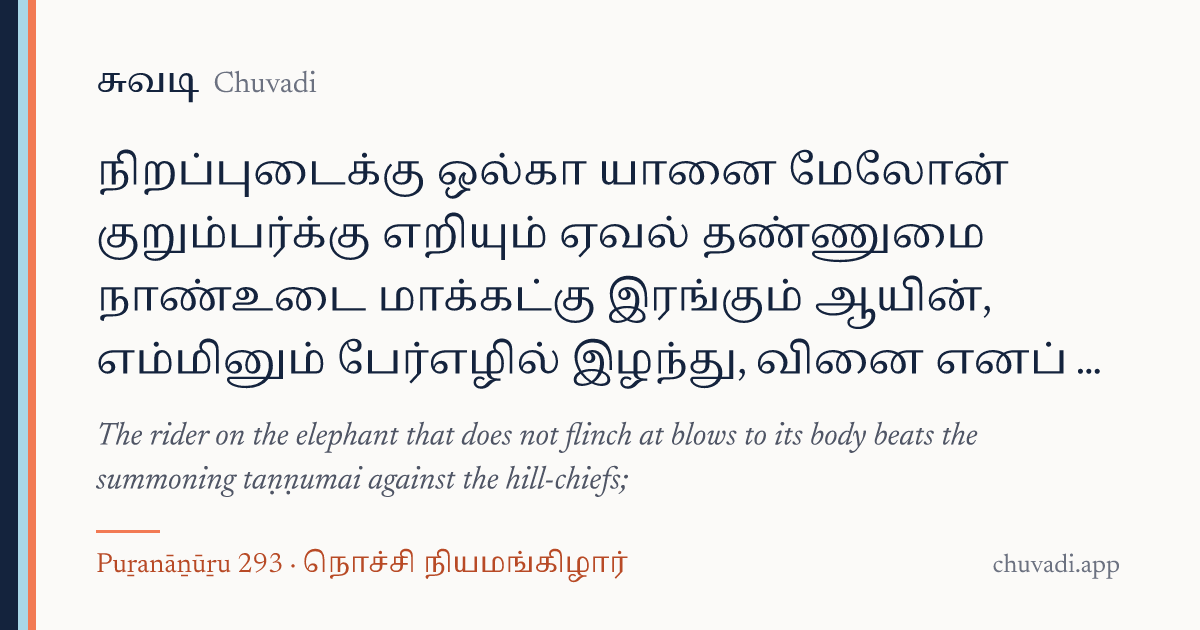
புறநானூறு 293
பாடல் · The poem
Tap a word to see where else it occurs.
பொருள் · Meaning in TamilAI
உடலில் அடிபட்டாலும் தளராத யானையின் மேல் இருப்பவன், குறும்பர்களுக்கு எதிராக முழக்கும் ஏவல் தண்ணுமை, மானமுடைய வீரர்களை அழைக்க ஒலிக்குமானால், எங்களைவிட மிகுதியாகத் தன் பேரழகை இழந்து, "இது என் தொழில்" என்று சொல்லிக்கொண்டு பிறருடைய வீடுகளுக்குள் புகுவாளோ? பூ விற்கும் பெண் இரங்கத்தக்கவள்!
இது காஞ்சித் திணை, பூக்கோட் காஞ்சித் துறை; போருக்குமுன் வீரர்கள் பூச்சூடுவதோடு நிலையாமையையும் சொல்வது. நொச்சி நியமங்கிழார் பாடியது. பூ விற்பவள் ஏன் 'எங்களைவிட' அழகிழப்பாள் என்பது பாடலில் சொல்லப்படவில்லை; இறுதி அடிகளின் பொருள் உறுதியாகத் தெரியவில்லை.
ஆங்கிலம் · English translationAI
Translation
- The rider on the elephant that does not flinch at blows to its body
- beats the summoning taṇṇumai against the hill-chiefs;
- if it sounds out for the men who hold to honour,
- will she, losing her great beauty even more than we, saying 'it is my trade',
- go into the houses of others?
- She is to be pitied, the woman who sells flowers!
What the poem says
Nocci Niyamaṅkiḻār's poem is in kāñci tiṇai, impermanence, with the turai pūkkōṭ kāñci, the taking of flowers before battle, which here carries the shadow of coming death. The speaker seems to be a woman of a warrior household.
The war drum is beaten from the back of an elephant, summoning men of honour to fight against the kuṟumpar, read here as hill-chiefs or petty lords of strongholds. When it sounds, the flower-seller will go from house to house selling the flowers the warriors wear.
The speaker pities her, and says she will lose her beauty even more than 'we' do. The reason is not stated, and the poem is open to more than one reading: perhaps she will have to carry her flowers into houses about to be bereaved, or perhaps, once the men are dead, there will be no one to buy them. The interpretation of the last three lines is uncertain.