



புறநானூறு 295
பாடல் · The poem
Tap a word to see where else it occurs.
பொருள் · Meaning in TamilAI
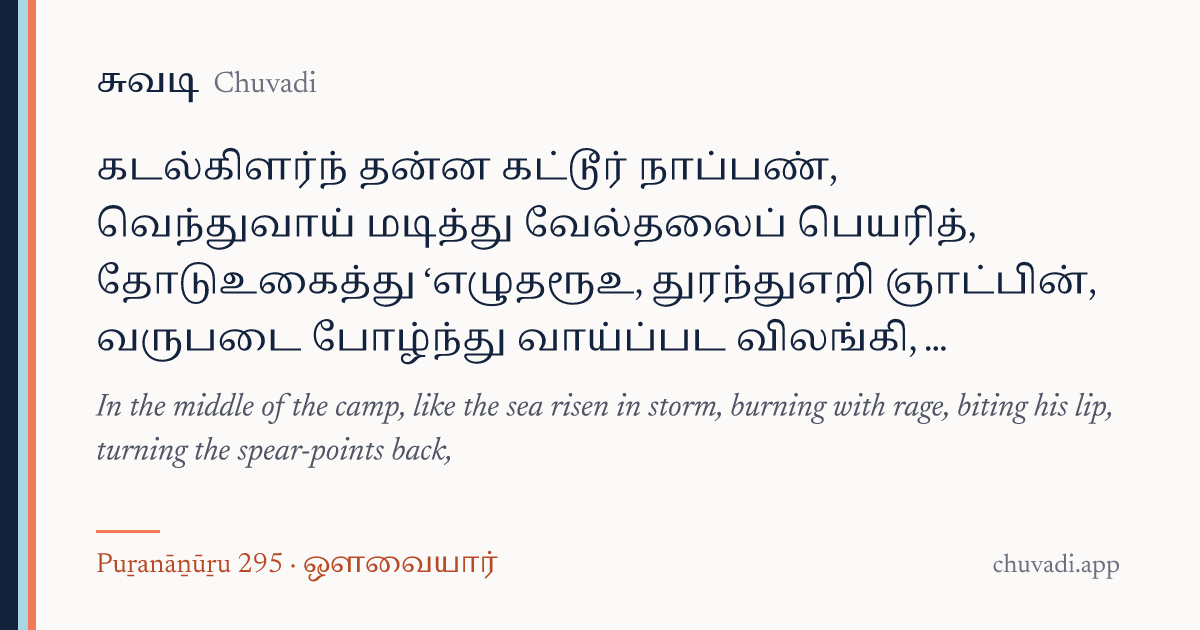
கடல் பொங்கி எழுந்தது போன்ற பாசறையின் நடுவில், சினத்தால் வெந்து, உதட்டைக் கடித்துக்கொண்டு, பகைவரின் வேல் முனைகளைத் திருப்பி, படை வரிசைகளைப் பிளந்து எழுந்து, படைக்கலங்கள் எறியப்படும் போரில், வரும் படையைப் பிளந்து அதன் வாயிலேயே தடுத்து நிறுத்தி, இரு படைகளுக்கும் இடையே சிதைந்து துண்டுகளாகிவிட்ட அந்தச் சிறப்புடைய வீரனின் பெருமையைக் கண்டு, புறங்கொடாத உறுதிகொண்ட அந்த இளைஞனின் தாய்க்கு, வாடிப்போன முலைகள் அருவிபோலப் பால் ஊறிச் சுரந்தன.
இது தும்பைத் திணை, உவகைக் கலுழ்ச்சித் துறை; போரில் சிறப்பாக உயிர்விட்ட மகனைக் கண்டு தாய் மகிழ்ந்து உருகுவதைச் சொல்வது. ஔவையார் பாடியது.
ஆங்கிலம் · English translationAI
Translation
- In the middle of the camp, like the sea risen in storm,
- burning with rage, biting his lip, turning the spear-points back,
- driving through the ranks he rose up, and in the battle where they hurl and strike,
- he split the oncoming army and blocked it at its mouth,
- and in the thick of the armies he was cut to pieces —
- seeing the greatness of that excellent man, like a waterfall,
- her withered breasts welled up and flowed with milk —
- the mother of the youth whose vow was never to run.
What the poem says
Auvaiyār's poem is in tumpai tiṇai, battle, with the turai uvakaik kaluḻcci, a mother's weeping for joy at her son's heroic death.
Most of the poem is one long description of the young man in battle: the camp heaving like a stormy sea, his rage, his bitten lip, the way he turns back the enemy's spears, drives through their ranks, cuts the oncoming army apart and stops it, until he himself is hacked to pieces in the press.
The last two lines turn to his mother. Seeing what he did, her old, dried breasts fill again and flow like a waterfall. The image joins the pride of the heroic code with the most physical sign of a mother's love. Line 3's tōṭu ukaittu is read as 'driving through the ranks'.