



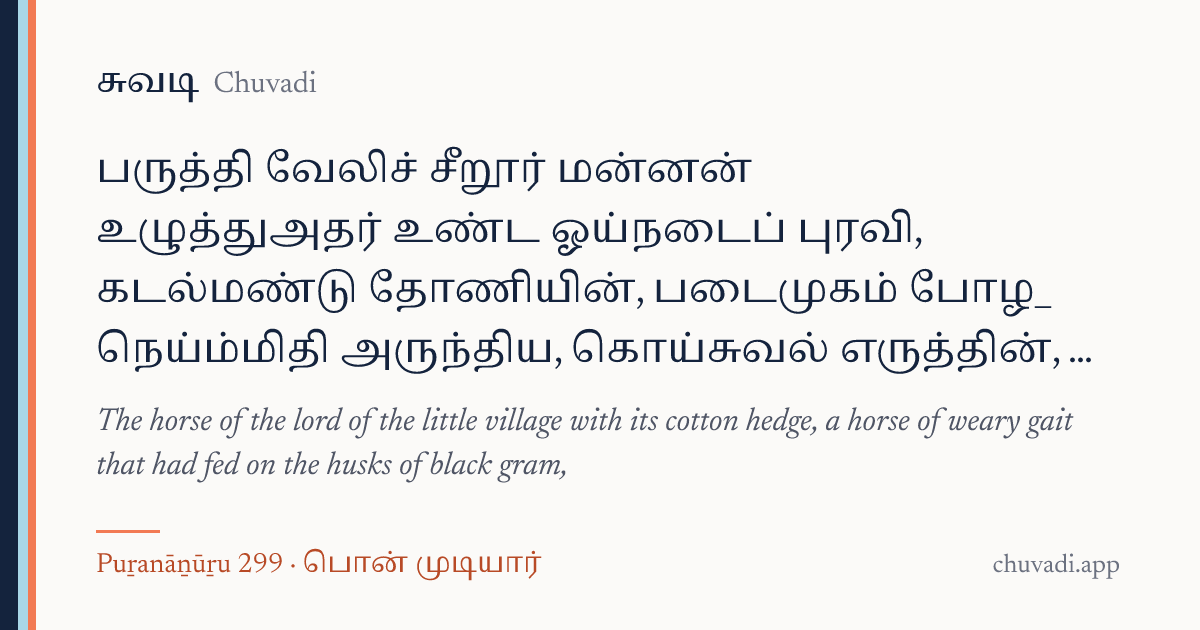
புறநானூறு 299
பாடல் · The poem
Tap a word to see where else it occurs.
பொருள் · Meaning in TamilAI
பருத்திச் செடிகளை வேலியாகக் கொண்ட சிறிய ஊரின் தலைவனுடைய குதிரை, உளுந்தின் தோலைத் தின்று வளர்ந்தது, தளர்ந்த நடையுடையது; ஆயினும் அது கடலுக்குள் பாய்ந்து செல்லும் தோணியைப் போலப் பகைவர் படையின் முன்னணியைப் பிளந்து சென்றது. ஆனால் நெய்யில் பிசைந்த உணவை உண்டு, கழுத்தில் பிடரிமயிர் கத்தரிக்கப்பட்ட, குளிர்ந்த வளமான நாடுகளை ஆளும் அரசர்களின் மாலை அணிந்த குதிரைகளோ, அச்சம் தரும் வல்லமையுடைய முருகனின் கோயிலில் பூசைக் கலங்களைத் தொடாமல் விலகி நிற்கும் பெண்களைப் போலப் போருக்குச் செல்லாமல் ஒதுங்கி நின்றன.
இது நொச்சித் திணையில், குதிரை மறம் என்னும் துறையில் அமைந்த பாடல்; குதிரையின் வீரத்தைப் புகழ்வது இத்துறை. பாடியவர் பொன்முடியார். நொச்சி என்பது கோட்டையைக் காக்கும் போரைக் குறிக்கும்; இப்பாடலின் பொருளுக்கு அது நேராகப் பொருந்தவில்லை. 'கலம் தொடா மகளிர்' என்பது சடங்கு முறைப்படி சில நாள் விலகியிருக்கும் பெண்களைக் குறிக்கலாம்.
ஆங்கிலம் · English translationAI
Translation
- The horse of the lord of the little village with its cotton hedge,
- a horse of weary gait that had fed on the husks of black gram,
- like a boat that plunges into the sea, split the front of the army;
- while the horses that had eaten balls kneaded with ghee, with clipped manes on their necks,
- the garlanded horses of kings of cool, well-watered lands,
- like women who, in the shrine of Murukaṉ who holds fearful power,
- may not touch the sacred vessels, held back and stood apart.
What the poem says
Poṉmuṭiyār contrasts two kinds of war-horse. The chieftain of a poor hamlet, fenced only with cotton bushes, rides a tired-looking horse fed on gram husks, yet it cuts through the enemy's front line like a boat driving into the sea. The pampered horses of rich kings, fed on ghee and groomed with trimmed manes, hang back from the fight.
The turai, kutirai maṟam, is 'the valour of the horse'; the tiṇai given is nocci, the defence of a fort, which does not obviously fit a poem about horses in open battle, but the label is kept as the edition gives it.
The closing simile compares the shrinking royal horses to women who keep away from the ritual vessels in Murukaṉ's shrine; the phrase most likely refers to women under a temporary rule of ritual impurity, who stand apart and may not take part. The point is the distance they keep, not any fault in them. 'Aṇaṅku' marks Murukaṉ's power as awe-inspiring and dangerous.