



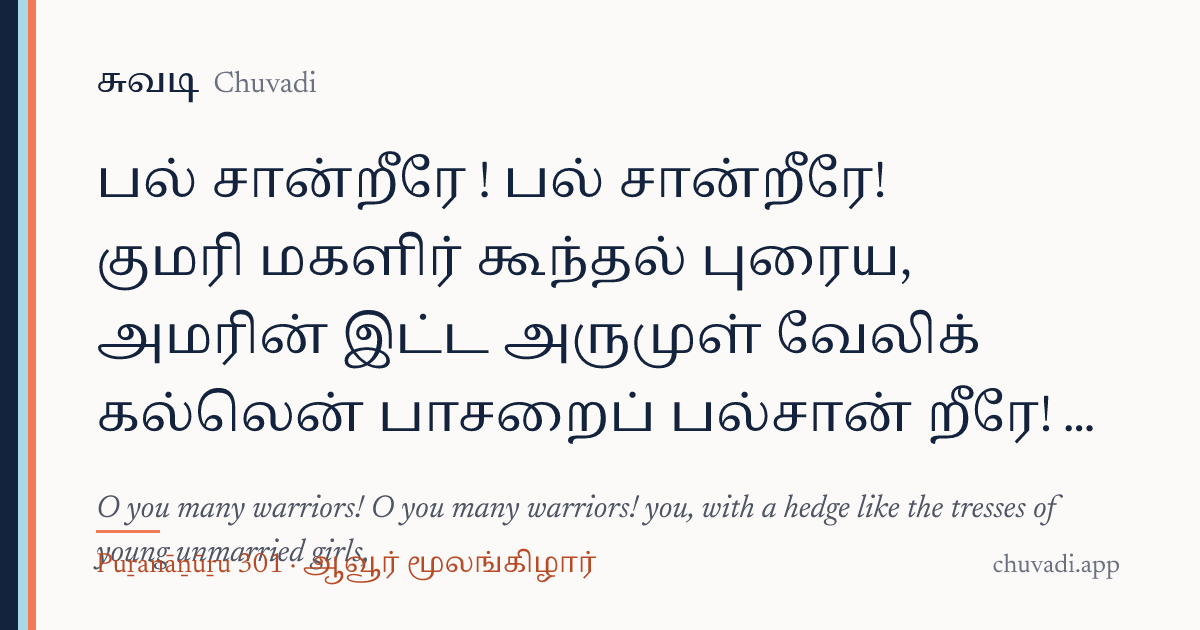
புறநானூறு 301
பாடல் · The poem
Tap a word to see where else it occurs.
பொருள் · Meaning in TamilAI
பல வீரர்களே! பல வீரர்களே! கன்னிப் பெண்களின் கூந்தலைப் போலப் போருக்காக அமைத்த அரிய முள்வேலியைக் கொண்ட, ஆரவாரம் மிகுந்த பாசறையில் இருக்கும் பல வீரர்களே! முரசு முழங்கும் படையையுடைய உங்கள் அரசனைக் காத்துக்கொள்ளுங்கள்; ஒளிவீசும் உயர்ந்த கொம்புகளையுடைய உங்கள் யானைகளையும் பாதுகாத்துக்கொள்ளுங்கள். உங்கள் போர் எத்தனை நாள் நீடித்தாலும், அத்தனை நாளும் சாதாரணமாகத் தாக்குபவர்களை அவன் ஏன் தாக்கப் போகிறான்? தன்னைத் தாக்கியவர்களை எதிர்த்துச் சென்று தாக்கக்கூட அவன் போவதில்லை. ஆகவே அவன் மனத்தில் நினைத்திருப்பது என்ன என்று யாருக்குத் தெரியும்? அவனை வெறும் வலிமை உடையவன் என்று இகழ்வதைத் தவிருங்கள். அதோ பாருங்கள்! நிலத்தை அளப்பது போல ஒரு சிறிய வழியில் நிற்காமல் ஓடி, தன் நல்ல நடையுடைய குதிரையின் சிறப்பைப் பாராட்டிக்கொண்டு பகலில் சென்றுவிட்டான். ஆரவாரம் மிகுந்த போர்க்களத்தில், அரசன் ஏறிவரும் யானைக்கு அல்லாமல் வேறு எதற்கும் அவன் தன் ஒளிவீசும் இலையையுடைய வேலை ஏந்துபவனாகத் தோன்றவில்லை.
இது தும்பைத் திணையில், தானை மறம் என்னும் துறையில் அமைந்த பாடல்; பாடியவர் ஆவூர் மூலங்கிழார். பகைவரின் பாசறையில் உள்ள வீரர்களுக்கு நம் வீரனின் ஆற்றலைச் சொல்லி எச்சரிக்கிறார் புலவர். முள்வேலியைக் கன்னிப் பெண்களின் கூந்தலோடு ஒப்பிடுவதன் நோக்கம் தெளிவாக இல்லை. 'பலம்' என்ற சொல்லும் 'எல்லிடை' என்ற சொல்லும் ஐயத்துக்குரியவை.
ஆங்கிலம் · English translationAI
Translation
- O you many warriors! O you many warriors!
- you, with a hedge like the tresses of young unmarried girls,
- the hedge of hard thorns set up for war,
- in your clamorous war-camp, O you many warriors!
- Guard your king, whose army roars with drums;
- take care of your elephants with their gleaming upraised tusks!
- However many days your war may last, for all those days,
- why would he strike at mere strikers? Even those who struck at him
- he does not go out to meet and strike; and so
- who knows what it is that he has in mind?
- Beware of scorning him as only so much strength! Look there:
- on the short track where he never stops, as though measuring the land,
- praising the qualities of his fine-paced horse,
- he has ridden off in the daylight; with a roar coming on,
- for anything but the elephant a king rides
- he does not seem one to lift his spear with its shining blade!
What the poem says
A warning shouted across the lines. The speaker, from our side, addresses the many warriors in the enemy's noisy camp, ringed by a hedge of thorns. Look after your king and your elephants, he tells them: our hero does not waste blows on ordinary fighters, does not even go out to answer those who attack him, and no one can guess what he is waiting for. Do not take him lightly. He has been riding his horse back and forth over a short stretch as if measuring the ground, and he will raise his spear only against the elephant that carries a king.
The tiṇai is tumpai, open battle, and the turai tāṉai maṟam, the valour of a warrior. The poet is Āvūr Mūlaṅkiḻār.
Several points are uncertain. The comparison of the thorn hedge to the hair of young unmarried girls (line 2) is unusual and its point is not clear; perhaps both are not to be touched. In line 11 'palam', read here as 'strength', is doubtful and may be a corrupt form. 'Ellitai' in line 14 can mean either 'in daylight' or 'at night'.