



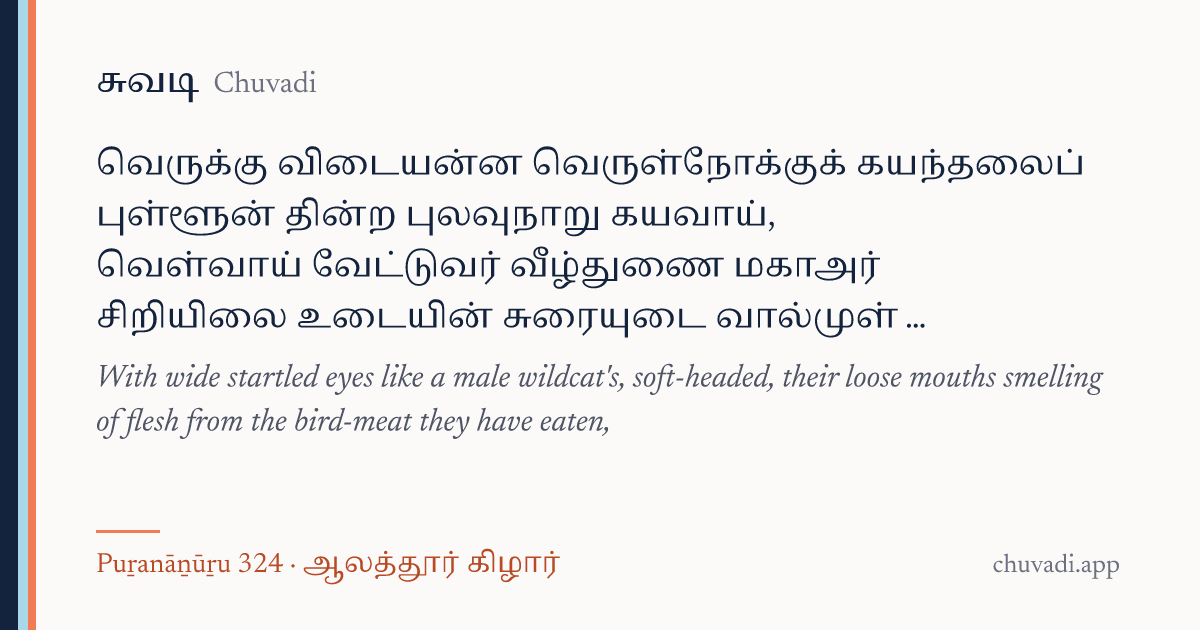
புறநானூறு 324
பாடல் · The poem
Tap a word to see where else it occurs.
பொருள் · Meaning in TamilAI
ஆண் காட்டுப்பூனையின் கண்களைப் போல மருண்ட பார்வையையும் மென்மையான தலையையும், பறவை இறைச்சியைத் தின்றதால் புலால் நாறும் வாயையும் உடைய, வெள்ளைப் பல்லுடைய வேட்டுவர்களின் அன்புக்குரிய துணைவர்களான சிறுவர்கள், சிறிய இலையுடைய உடைமரத்தின் வெண்மையான முள்ளைக் குழியுடன் பொருத்தி, ஊகம்புல்லின் மெல்லிய கோலில் செருகிய அம்புகளுடன், வலார் மரத்தால் ஆன வலிய வில்லை வளைத்து, பருத்தி வேலியின் அருகே வயல் எலியைப் பார்த்திருப்பார்கள். வறண்ட நிலம் சூழ்ந்த அந்த அழகிய சிற்றூரில், குமிழம்பழத்தைத் தின்னும் பிளந்த வாயுடைய வெள்ளாடுகள் துப்பிய வெண்மையான விதைகள் பரவிக் கிடக்கும், வலிய கால்களுடைய பந்தலின் கீழ், இடையன் மூட்டிய சிறிய தீயின் ஒளியில், பாணர்களோடு அமர்ந்திருந்த நாணமுடைய பெருந்தகை, வெற்றிப் படையுடைய அரசனுக்கு, அவன் இறந்தால் தானும் இறக்கும், அவன் மனமறிந்த துணைவன் ஆவான்.
இது வாகைத் திணையில், வல்லாண் முல்லை என்னும் துறையில் அமைந்த பாடல்; பாடியவர் ஆலத்தூர் கிழார். ஒன்பது, பத்தாம் அடிகளின் பொருள் உறுதியாகத் தெரியவில்லை; 'வெண்வாழ்' என்ற சொல் பிழைபட்டிருக்கலாம்.
ஆங்கிலம் · English translationAI
Translation
- With wide startled eyes like a male wildcat's, soft-headed,
- their loose mouths smelling of flesh from the bird-meat they have eaten,
- the boys, dear companions of the white-mouthed hunters,
- with the white thorn of the small-leafed uṭai, fitted in a socket,
- set as the point of arrows on slender reeds of ūkam,
- bending their strong bows of valār wood into a curve,
- keep watch for the field-rat by the cotton hedge
- in the pretty little village set among poor lands;
- where goats with white, cleft mouths, chewing kumiḻ fruit, have spat out
- the white stones that lie scattered under the stout-posted pandal,
- in the light of a small fire the herdsman has kindled,
- the modest noble man who sat among the bards
- is, to the king whose army brings victory,
- the companion who knows his heart, who will die when he dies.
What the poem says
Ālattūr Kiḻār opens with a long, close-up picture of hunters' boys in a poor village: wide-eyed like young wildcats, their mouths still smelling of the birds they have eaten, they sit by the cotton hedge with little bows and thorn-tipped reed arrows, waiting for field-rats. In this village, under a rough pandal where goats have spat out the stones of kumiḻ fruit, a herdsman's small fire gives light, and the chieftain sits with the bards. This modest man, the poem ends, is the king's true companion, who knows his mind and will die when the king dies.
The tiṇai is vākai, victory, and the turai vallāṇ mullai, praise of a chieftain of a small place. The close tie between the chieftain and his king, ready to share his death, is the high point.
Lines 9–10 are uncertain. 'Kumiḻ uṇ veḷḷaip pakuvāy peyartta veṇ vāḻ tāya' is read as goats chewing kumiḻ fruit and spitting out the pale stones that lie about; 'veḷḷai' can mean a white goat, but the construction is not clear, and 'veṇvāḻ' may be corrupt. 'Valār' in line 6 is taken as a wood for bows.