



புறநானூறு 345
பாடல் · The poem
Tap a word to see where else it occurs.
பொருள் · Meaning in TamilAI
யானைகளைக் கட்டியதால் சோலைகள் கலங்கின; தேர்கள் ஓடியதால் தெருக்களில் புழுதி நிறைந்தது; குதிரைகள் சுற்றித் திரிந்ததால் வழிகள் குழம்பின; படைக்கருவிகளைக் கழுவியதால் நீர்த்துறைகள் கலங்கின; கொடிய வீரர்கள் நெருங்கியதால் சுமை மிகுந்து நிலம் நெளிந்தது. இப்படிப் புதிதாக வந்த அரசர்கள் பலர். பெண்யானையின் மூச்சுப் போன்ற வெப்பமுடைய இரும்புப் படைக்கருவிகளைக் கையில் பற்றிக்கொண்டு, ஓவியம் போன்ற அழகுடைய, காவல் மிகுந்த பெரிய மதிலைக் குறிவைத்து வந்துள்ளனர். ஆனால் கரிய முனையுடைய நெருங்கிய முலைகளையும் மயக்கும் பார்வையையும் உடைய இந்தப் பெண்ணை விரும்பியவர்கள் இரங்கத்தக்கவர்கள். ஏனெனில் இவளுடைய அண்ணன்மார் செல்வத்தை விரும்புவதில்லை; போரையே விரும்பி, 'எம் நிலைக்கு ஒப்பில்லாதவர்க்குக் கொடுப்பது இல்லை' என்கின்றனர். கழிகளால் பிணித்த கேடயமும், பல்லுடைந்த வாளும், குருதியின் புலால் நாற்றமும், கழுவாத தலையும், கரிய முனையுடைய நீண்ட வேலும் உடைய அத்தகைய வீரர்கள் அவர்கள். ஆயினும், ஐயோ! பருத்தி வேலியுடைய வயல்கள் சூழ்ந்த இந்த நல்ல ஊர் என்ன ஆகுமோ!
இது காஞ்சித் திணையில், மகட்பாற் காஞ்சி என்னும் துறையில் அமைந்த பாடல்; பாடியவர் அடைநெடுங் கல்வியார். எட்டு, ஒன்பதாம் அடிகளின் பொருள் உறுதியாகத் தெரியவில்லை; 'பிடியுயிர்ப்பன்ன' என்பது கொல்லனின் துருத்தியைக் குறிக்கலாம் என்றும் கொள்ள இடமுண்டு.
ஆங்கிலம் · English translationAI
Translation
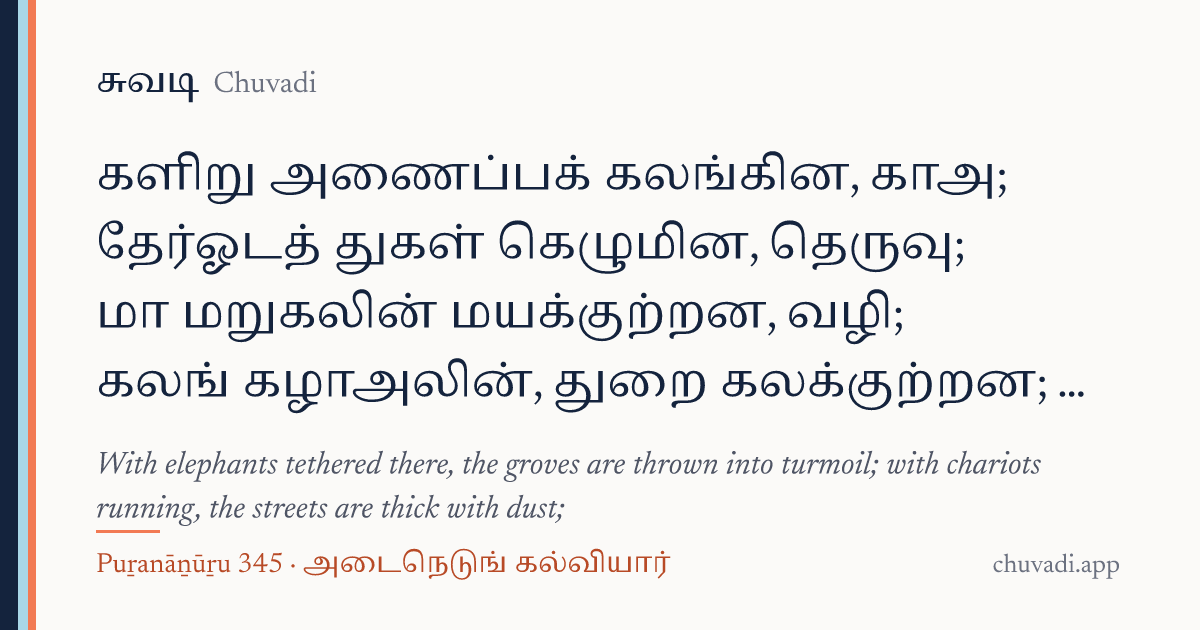
- With elephants tethered there, the groves are thrown into turmoil;
- with chariots running, the streets are thick with dust;
- with horses wheeling about, the roads are all confused;
- with weapons being washed, the fords are muddied;
- with fierce warriors crowding in,
- the ground bends under the load;
- many are they who have come, these new kings,
- with iron weapons gripped in their hands, hot as a cow-elephant's breath,
- aiming at the guarded great walls, fair as paintings;
- but the girl with close, warm breasts, dark at the tips,
- with her bewitching glance — those who desire her
- are to be pitied; for her brothers
- want no wealth, but, longing for battle,
- say, 'There is no giving her to those not of our rank';
- with shields braced with rods, with notched swords,
- with the reek of blood clinging thick about them,
- with heads unwashed, with tall spears dark at the end,
- such warriors they are; and yet, alas,
- what will become of it —
- this good town of fields with its hedge of cotton?
What the poem says
Aṭaineṭuṅ Kalviyār opens with a rhythm of four short clauses, each showing what a crowd of suitor kings has done to the girl's town: the groves are torn up where elephants are tied, the streets full of chariot dust, the roads churned by horses, the fords muddied as the soldiers wash their weapons. So many warriors have come that the ground sags. They have come for a girl with a bewitching glance. But, the speaker says, those who want her are to be pitied: her brothers want no wealth, only war, and will not give her to anyone outside their rank; they are grim fighters with notched swords and blood-matted hair. The poem ends in fear for the town itself.
The tiṇai is kāñci, the poetry of transience and the losses of war, and the turai makaṭpāṟ kāñci.
Lines 8–9 are difficult. 'Piṭi uyirppaṉṉa kai kavar irumpu' is read as iron weapons held in the hand, hot like the breath of a cow-elephant; it might instead describe the smith's bellows, which were compared to an elephant's breathing. 'Ōvuṟaḻ irumpuṟam kāval kaṇṇi' is read as the kings aiming at the town's great walls, beautiful as paintings. 'Paṉṉal' in the last line is cotton.