



புறநானூறு 356
பாடல் · The poem
Tap a word to see where else it occurs.
பொருள் · Meaning in TamilAI
களர் நிலம் பரந்து, கள்ளிச் செடிகள் உயர்ந்து வளர்ந்திருக்கின்றன; பகலிலும் கூவும் கூகைகளோடும், கோணலான பற்களை உடைய பேய்மகளிரோடும், பிணம் எரிக்கும் தீயின் ஒளியோடும், மேகம் சூழ்ந்த இந்தப் பழைய சுடுகாடு அச்சம் தருவதாக இருக்கிறது. நெஞ்சுக்கு நெருக்கமான அன்பர்கள் அழுது சிந்திய கண்ணீர், எலும்புகள் கிடக்கும் சுடலையின் வெண்மையான சாம்பலை அவிக்கிறது. இந்தச் சுடுகாடு எல்லாருடைய முதுகையும், அதாவது எல்லாரும் போவதையும், தானே கண்டிருக்கிறது; உலகத்தில் உள்ள எல்லா மக்களுக்கும் இது மாறாமல் தானாகவே நிற்கிறது. இதன் முதுகைக் காண விரும்பியவர்கள் யாரும் அதைக் கண்டதில்லை.
இது காஞ்சித் திணை, பெருங்காஞ்சித் துறை: உலகில் எதுவும் நிலையில்லை, சாவு எல்லாரையும் வெல்லும் என்ற உண்மையைப் பொதுவாக எடுத்துச் சொல்வது. பாடியவர் தாயங்கண்ணனார். ஒருவரின் முதுகைக் காண்பது என்பது அவரைவிட நீண்டு வாழ்வதைக் குறிக்கிறது.
ஆங்கிலம் · English translationAI
Translation
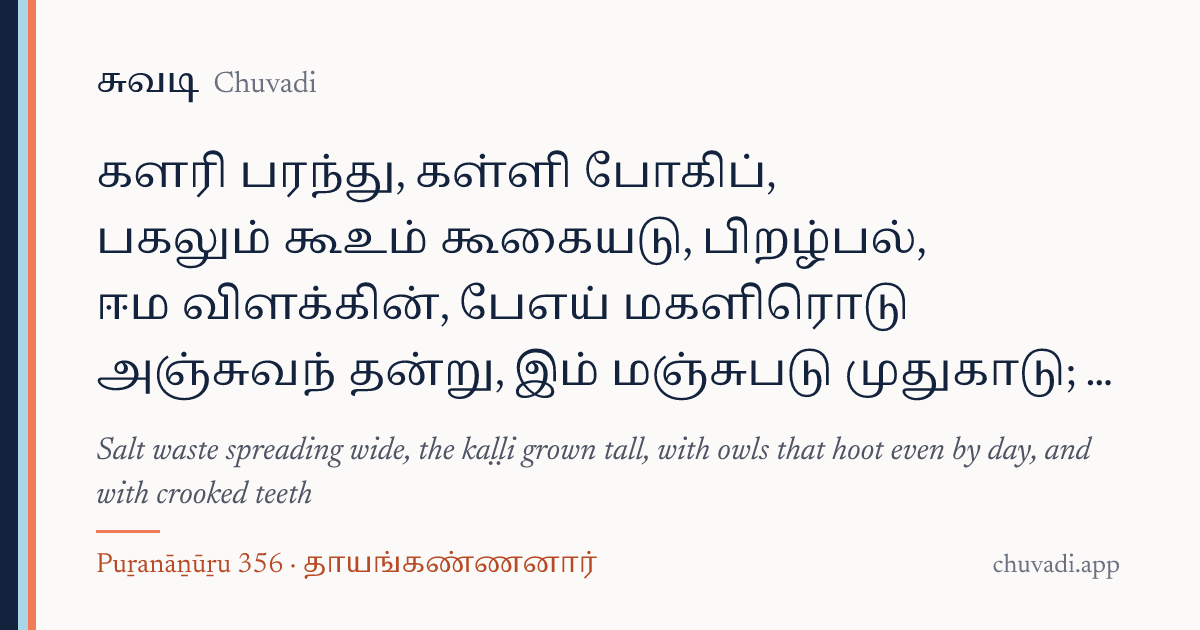
- Salt waste spreading wide, the kaḷḷi grown tall,
- with owls that hoot even by day, and with crooked teeth
- she-demons by the light of the pyre-lamps,
- it has become a place of dread, this old burning-ground deep in mist.
- The tears that weeping lovers, dear to the heart, let fall
- quench the white ash of the cremation ground where bones lie.
- It has seen the backs of all who go; for the whole
- race of people in the world it has remained the same;
- its own back, those who would see it have never seen.
What the poem says
Tāyaṅkaṇṇaṉār's poem is in perunkāñci, 'great kāñci', the strand of the impermanence theme that speaks in general terms about death and the end of all things. Its subject is the cremation ground itself.
The first four lines build its horror: barren saline earth, tall kaḷḷi (a spurge of dry places), owls calling in daylight, the lamps of funeral pyres and crooked-toothed female demons, all under mist. Then the poem turns to the mourners, whose tears fall on and cool the white ash among the bones.
The last three lines give the poem its point. 'Seeing someone's back' means outliving them, watching them depart. The burning-ground has seen the backs of everyone who ever lived; it stays the same for all the people of the world; and no one who hoped to see its back, to outlast it, has ever done so. Death's ground outlives all.