



புறநானூறு 368
பாடல் · The poem
Tap a word to see where else it occurs.
பொருள் · Meaning in TamilAI
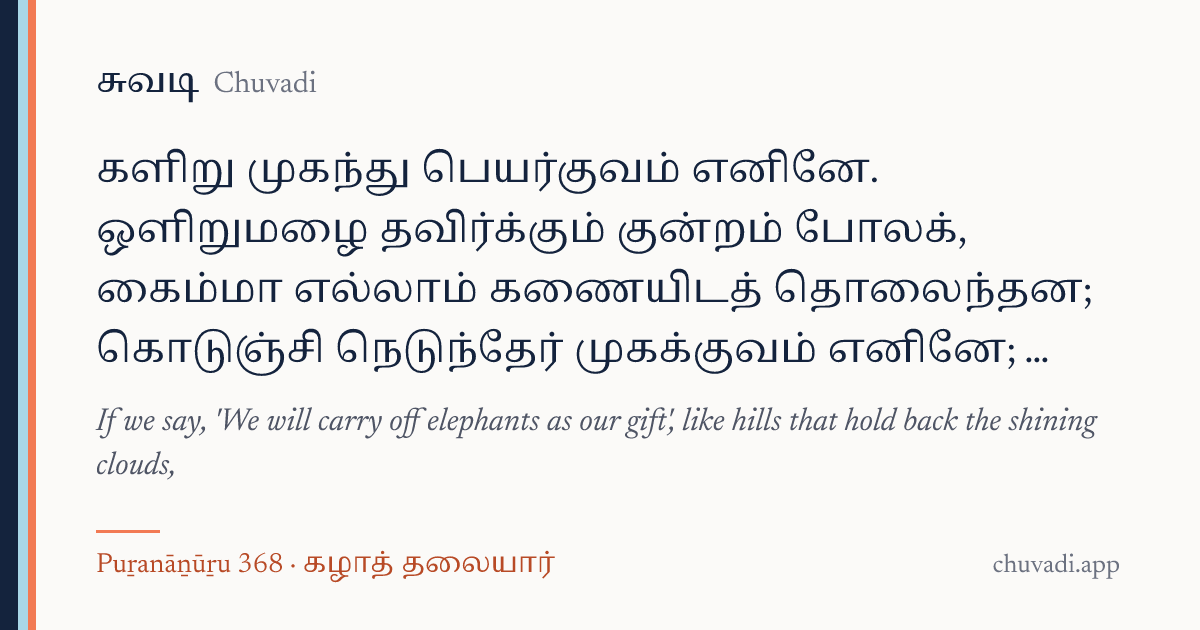
'யானைகளைப் பரிசாகக் கொண்டு செல்வோம்' என்றால், ஒளிரும் மேகங்களைத் தடுக்கும் குன்றுகளைப் போன்ற யானைகள் எல்லாம் அம்புகள் தைத்து அழிந்துவிட்டன. 'கொடிஞ்சியுடைய நெடிய தேர்களைக் கொண்டு செல்வோம்' என்றால், அவற்றை இழுத்த விரைந்து ஓடும் நல்ல குதிரைகள் தளர்ந்து விழ, தேர்கள் தம் பெருமை அழிந்து நிலத்தில் சாய்ந்துவிட்டன. 'பிடரி மயிர் கத்தரித்த குதிரைகளைக் கொண்டு செல்வோம்' என்றால், உடல் முழுவதும் புண்கள் நிறைந்து, உயிரற்றவையாகி, காற்று நின்றுபோனதால் செல்ல முடியாத மரக்கலங்களைப் போலக் குருதி வெள்ளத்தில் அமிழ்ந்து கிடக்கின்றன. ஆகவே, கொண்டு செல்லப் பரிசு இல்லாததால் மகிழ்ச்சியின்றி, இரப்பவர்கள் வருந்தும் இந்தக் கொடிய அகன்ற போர்க்களத்தில், வீரர்களை வீழ்த்திய வாள் என்னும் ஏர் கொண்டு உழும் உழவனே! மதம் கொண்ட யானையின் காலடிச் சுவடு போன்ற என் தடாரிப் பறையின் தெளிந்த கண் ஒலிக்கும்படி அடித்து நான் பாடி வந்ததெல்லாம், கூத்தரின் முழவைப் போன்ற, அழகிய மணிகள் நெருக்கமாகப் பதித்த, பாம்பைப் போல ஒளிரும் உன் மார்பு மாலையைக் கொண்டு செல்லவே.
இது வாகைத் திணை, மறக்களவழித் துறை: போர்க்களத்தை ஏர்க்களமாகவும் அரசனை உழவனாகவும் உருவகித்துப் பாடிப் பரிசு கேட்பது. பாடியவர் கழாத் தலையார்; பாடப்பட்டவன் சேரமான் குடக்கோ நெடுஞ் சேரலாதன். 'கோடியர்' என்பவர் ஒருவகைக் கலைஞர்கள்; அவர்களைக் கூத்தர் என்று பொதுவாகக் கொள்ளப்பட்டுள்ளது.
ஆங்கிலம் · English translationAI
Translation
- If we say, 'We will carry off elephants as our gift',
- like hills that hold back the shining clouds,
- the elephants have all perished, struck by arrows;
- if we say, 'We will carry off tall chariots with their seat-posts',
- their swift, fine horses having given way where they pulled,
- their high glory ruined, they lie upon the ground;
- if we say, 'We will carry off horses with clipped manes',
- their bodies covered with wounds, they have become another thing,
- and like ships whose course the wind has cut off,
- they are sunk deep in the great flood of blood. And so,
- having nothing to carry away, without any joy,
- the suppliants grieve on this wide and cruel field,
- you ploughman of the sword, who have laid the men low!
- On my taṭāri drum, like the footprint of a rutting elephant,
- beating so that its clear face rings out,
- all that I have come here singing for is that, like the drums
- of the dancers, set close with fine gems, your
- necklace, gleaming like a snake, we might carry it away.
What the poem says
Kaḻāttalaiyār sings to Cēramāṉ Kuṭakkō Neṭuñcēralātaṉ in vākai, the theme of victory, with the turai maṟakkaḷavaḻi: a bard praises a battlefield as if it were a harvest field and its lord as a ploughman, and asks for a gift in return.
The poem's wit lies in its form. The bard goes through what a king would usually give, elephants, chariots, horses, and finds each one destroyed: the elephants killed by arrows, the chariots fallen with their horses, the horses so wounded that they lie in the river of blood like ships stranded when the wind drops. There is nothing left to carry away, and the suppliants grieve. In the same breath the king is praised as 'ploughman of the sword' who has cut men down like a crop.
So the bard names what he wants: the king's own jewelled necklace, which he compares to the drum of the dancers, studded with gems, and to a snake. His own drum, the small taṭāri, is compared to the footprint of an elephant, a common way of describing its round face. 'Kōṭiyar' in line 16 are a class of performers; 'dancers' is a broad rendering.