



புறநானூறு 370
பாடல் · The poem
Tap a word to see where else it occurs.
பொருள் · Meaning in TamilAI
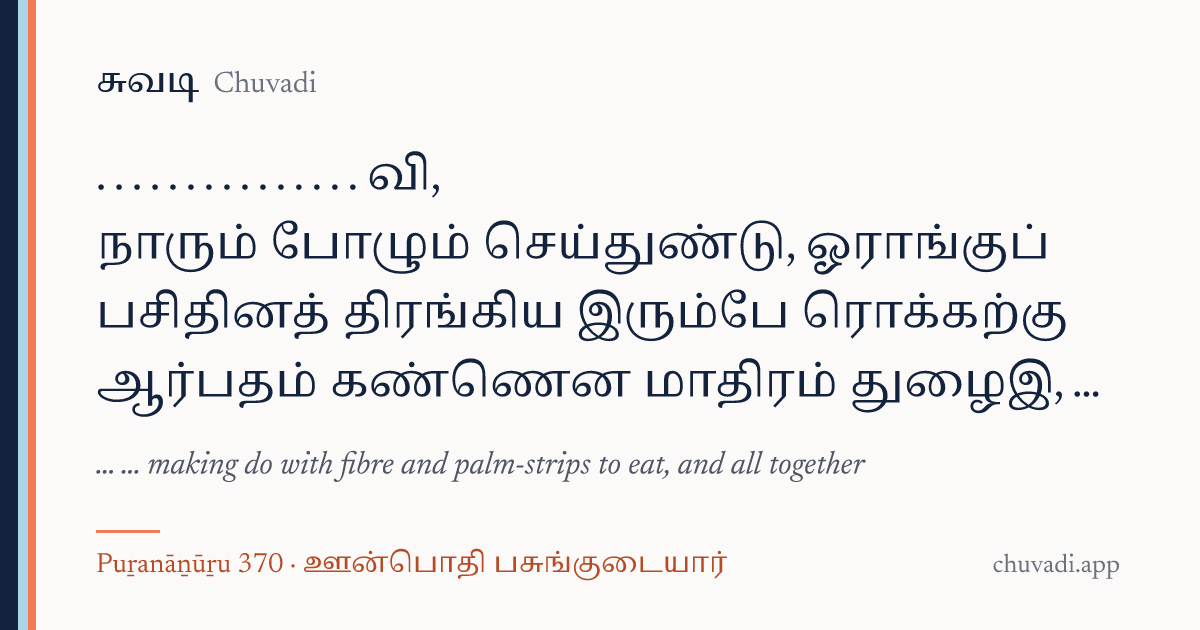
… நாரும் பனை ஓலைப் பிளவுகளும் உணவாகக் கொண்டு, ஒன்றுசேர்ந்து பசி தின்றதால் உடல் வற்றிய என் பெரிய சுற்றத்துக்காக, நிறைவான உணவையே கண்ணாகக் கொண்டு எல்லாத் திசைகளிலும் தேடி, வியர்வையில் உழன்று, உலர்ந்து, உடல் செத்துப் போகும் நிலையில் வந்தேன். பாலை நிலத்துக் குடிஞை என்னும் ஆந்தையின் துடிப்பறை போன்ற இனிய குரல், உழுஞ்சில் மரத்தின் கவட்டில் அமர்ந்த பருந்தின் பெடை அழைக்கும் குரலோடு சேர்ந்து ஒலிக்கும் அந்த இடத்தில், மூங்கில் காய்ந்து உலர்ந்த வறட்சி மிகுந்த நீண்ட வழியில், வரிகளுடைய மரல் செடி வாடிய காட்டைப் பின்னே விட்டு, பழுத்த மரத்தை நினைத்து வரும் பறவையைப் போல வந்தேன். ஒளிரும் படைக்கலங்களின் மழை பழங்கள் விழுவதைப் போலப் பொழிய, மிதிபட்டு எழுந்த குருதி நிலத்தில் பரவ, விளைந்த செழிப்பான கதிர்களை அறுத்து, தாள்களைக் குவித்து, வீழ்ந்த பிணங்களின் பல போர்களையும் அழித்து இழுத்து, யானைகளையே எருதுகளாகக் கொண்டு, வாள் என்னும் மடலை ஓச்சி, வீரர்கள் சிந்திக் கிடக்கும் களத்தில் போரடிக்கும்போது, என் அகன்ற கண்ணுடைய தடாரி ஒலிக்கும்படி அடித்து, 'கொடிய வலிமையுடைய அகன்ற இந்தப் போர்க்களம் பொலிவதாக!' என்று போற்றி, இரும்புப் பூண் இறுக்கிய உயர்ந்த அழகிய தந்தங்களை உடைய, மலை போன்ற யானையைப் பரிசாகப் பெற வந்தேன், பெருமானே! கூரிய வேல் பாய்ந்ததால் விழுந்து கிடந்தவனின் வளையல் அணிந்த பெரிய கையை அச்சமின்றி ஓச்சி, வீழ்ந்தோரின் கால்களோடு கலந்த வரிகளுடைய குடலை மாலையாகச் சூடி, அழுகுரல் கொண்ட பேய்மகள் ஆட, கழுகுகளோடு சிவந்த செவியுடைய எருவைப் பருந்துகள் சுற்றித் திரியும், அச்சம் தரும் பரப்புடைய போர்க்களத்தின் தலைவனே!
இது வாகைத் திணை, மறக்களவழித் துறை: போர்க்களத்தை ஏர்க்களமாக உருவகித்துப் பாடிப் பரிசு கேட்பது. பாடியவர் ஊன்பொதி பசுங்குடையார்; பாடப்பட்டவன் சோழன் செருப்பாழி எறிந்த இளஞ்சேட் சென்னி. முதல் அடி முழுவதும் விடுபட்டுள்ளது; இருபத்து நான்காம் அடியின் பொருள் உறுதியில்லை.
ஆங்கிலம் · English translationAI
Translation
- … …
- making do with fibre and palm-strips to eat, and all together
- for my great family, shrivelled as hunger devoured them,
- searching every quarter with food as the one thing in my eyes,
- toiling in sweat, dried up, my body all but dead, I came
- where the wilderness owl, its sweet call like the tuṭi drum,
- and the cry of the kite's mate perched in the fork of the uḻuñcil
- sound out together, in that place,
- along the long, drought-stricken road where bamboo has withered dry,
- leaving behind the forest where the striped marul has shrivelled;
- like birds that set their thoughts on a tree heavy with fruit,
- as the rain of bright weapons poured down like falling fruit,
- the blood that leapt as they trampled spreading over the ground,
- reaping the ripe, rich ears and heaping up the stalks,
- dragging out the many stacks of fallen corpses to break them,
- with elephants for the oxen, swinging the sword-blade,
- in the threshing where men are spilled and trodden round,
- making my wide-faced taṭāri ring as I beat it,
- praising 'May this wide field of fierce strength flourish!',
- for a gift of hill-like elephants, their raised, lovely tusks bound in iron,
- I have come, great one!
- Where the warrior lay as the honed spear struck him,
- she swings his great bangled arm, unafraid,
- wears striped entrails as a garland, mixed with the feet of the fallen,
- and the she-demon of wailing voice dances; with the eagles
- the red-eared vultures wheel about —
- lord of the field whose expanse is full of dread!
What the poem says
Ūṉpoti Pacuṅkuṭaiyār sings to the Cōḻa king Iḷañcēṭ Ceṉṉi 'who destroyed Ceruppāḻi', in vākai with the turai maṟakkaḷavaḻi, the bard's praise of a battlefield as a harvest. The edition prints the epithet as 'செரப்பாழி இறிந்த'; poem 378 has 'எறிந்த', and the reading 'Ceruppāḻi eṟinta' is taken here. The first line is lost.
The first half is the bard's journey. His family is starving, reduced to chewing fibre and palm strips; he searches everywhere for food and crosses a dry wilderness where owls and kites call and bamboo and marul have withered. Like birds that think of a fruit-laden tree, he comes to the king.
The second half is the battlefield as harvest: weapons fall like ripe fruit, blood spreads, the 'crop' is reaped and stacked, and elephants serve as the oxen that tread the threshing-floor. He beats his taṭāri, praises the field and asks for an elephant. The poem ends with the terrible scene of a she-demon dancing with a fallen warrior's bangled arm and wearing entrails as a garland, while eagles and red-eared vultures circle. Line 24 ('iṉattu aṭi virāya') is uncertain.