



புறநானூறு 373
பாடல் · The poem
Tap a word to see where else it occurs.
பொருள் · Meaning in TamilAI
முரசுகள் இடிமுழக்கம் போல ஒலிக்க, போர்ப்பயிற்சி பெற்ற யானைகள் மேகங்களாக, தேர்களும் குதிரைகளும் பொழியும் மழைத்துளிகளாக அச்சம் தர, அம்புக் காற்று சேர்ந்த அகன்ற பாசறையில், வடியும் குருதியோடு உயர்த்திய ஒளிரும் வாள், பிழிந்தெடுப்பது போலத் தோன்ற, ஊறும் சதையை மகிழ்ந்து, வீரர்கள் ஆடிய கலந்த பெரிய படையுடைய, கொங்கு நாட்டைப் புறங்காட்டி ஓடச் செய்த வெற்றி வேந்தனே! … பெரிய பொறிகள் … மயில் போல நடக்கும் மென்மையான கண்களுடைய பெண்கள் கலங்குவது போல, நெடிய சுவருடைய நல்ல வீடுகள் தனிமைப்பட, அவர்கள் வாயிலைக் கடந்து வெளியேறுகிறார்கள்; மென்தோள் மகளிர் ஊர்ப்பொது இடத்தைப் பேணுவதில்லை … 'குதிரை வாழ்க' என்று … ஆதரவாக ஒரு சொல்லும் இல்லாததால் நல்ல நிழலை நாடி, நுண்ணிய அணி பூண்ட மார்பும் சிறிய குடுமித் தலையும் உடைய சிறுவர்கள், அம்புகள் தீர்ந்த நேரத்தில் தங்கள் உறவினரின் முகத்தைக் காணாமல் … வேந்தன் புறங்கொடுத்து ஓடிய, அழிவுற்ற போர்க்களத்தில், மாளிகைகளில் தீ கலந்து பரவ, உத்தரங்கள் முறிந்து, இடி தாக்கிய மலை போலப் பெரிய நிலத்தில் விழ, அவன் உறுதியாகச் சென்றான் … கண்டு கண்களில் அடித்துக்கொண்டு அழுகிறார்கள். வஞ்சி நகரின் முற்றத்தையே வீரக்களமாக்கி, அஞ்சாத வீரர்களின் உடல் போர்களை அழித்து, மேற்கு நாட்டுப் போரடிப்பைக் கைக்கொண்டாய், பெருமானே! உன் … பொலிவதாக! புகழ்பெற்ற குடியினர் வேந்தர்களின் ஒவ்வொரு போர்க்களத்துக்கும் சென்று, 'புள்ளிகளுடைய முகத்தையுடைய யானைப் பரிசு பொலிக!' என்று போற்றி, அவற்றைப் பெற்றார்கள் என்று பெரியோர் சொல்வர். நானும் அழகிய கண்ணுடைய பெரிய கிணைப்பறை அதிரும்படி அடித்து, … அன்போடு போற்றி, உன்னைப் போன்றவர் வேறு யாரும் இங்கே இல்லாததால், பழைய கோட்டையிலிருந்து பெறும் பரிசுக்காக வந்தேன், பெருமானே! பகைவர்களும் புகழும் ஆண்மையும், நண்பர்களுக்குக் குறையின்றி உதவும் பண்பும் உடையவனே! பேய்களோடு நரிக்கூட்டங்கள் திரியும், கொழுப்பைத் தின்னும் சிவந்த செவியுடைய எருவைப் பருந்துகள் கூடும், அச்சம் தரும் பரப்புடைய போர்க்களத்தின் தலைவனே!
இது வாகைத் திணை, மறக்களவழித் துறை; ஏர்க்கள உருவகமாகவும் கொள்ளலாம் என்று பதிப்பு குறிக்கிறது. பாடியவர் கோவூர்கிழார்; பாடப்பட்டவன் சோழன் குராப்பள்ளித் துஞ்சிய கிள்ளி வளவன். பல அடிகள் சிதைந்துள்ளதால் இடைப்பகுதியின் தொடர்பு உறுதியாகத் தெரியவில்லை; ஆறாம், ஒன்பதாம், பத்தாம் அடிகளின் பொருளும் ஐயத்துக்குரியது.
ஆங்கிலம் · English translationAI
Translation
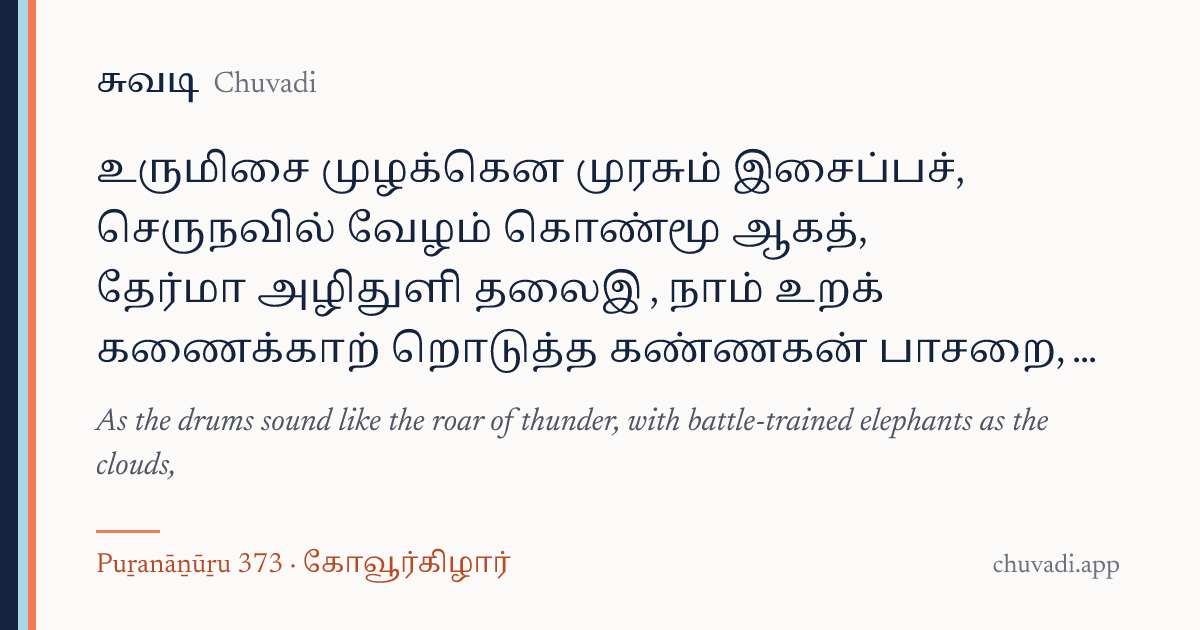
- As the drums sound like the roar of thunder,
- with battle-trained elephants as the clouds,
- chariots and horses as the pouring rain, striking dread,
- in the wide camp where the wind of arrows was joined,
- the bright sword raised with the blood streaming down it
- as if being wrung out, delighting in the oozing pulp,
- with the great tangled army where the young men danced,
- victorious king, who made Koṅku turn its back!
- … … the great engines with their beams,
- like soft-eyed women moving like peacocks in confusion,
- the fine houses with tall walls left lonely, they go out of the gates;
- the soft-shouldered women no longer tend the common ground;
- wounds … …
- … adorned, 'Long live the horse!' saying,
- having no shelter of a word, seeking a good shelter,
- the small boys with tufted heads and fine ornaments on their chests,
- when the arrows ran out, not seeing the faces of their kin,
- … …
- on the field where the king turned his back, wasted and strewn,
- fire spread mingling through the mansions, their beams breaking,
- like a mountain struck by thunder, falling to the dark ground,
- he went, surely … …
- … seeing … they beat their eyes in grief;
- making the courtyard of Vañci a field of valour,
- breaking up the stacks of men of the unafraid warriors,
- you have taken, great one, the threshing of the western land!
- May your … flourish indeed!
- Men of illustrious clans, going to every battlefield of kings,
- praising, 'May the gift of spot-faced elephants flourish!',
- have received them, so the great ones say; and I, too,
- beating so that my lovely-faced great kiṇai drum resounds,
- … though I … praising out of love,
- since there are no others here like you,
- for a gift from the ancient fort I have come, great one!
- Your manhood praised even by your foes, to friends
- your nature of helping without fail; where demons with
- packs of jackals roam, where the fat-eating
- red-eared vultures gather,
- lord of the field whose expanse is full of dread!
What the poem says
Kōvūr Kiḻār's poem to the Cōḻa king Kiḷḷi Vaḷavaṉ 'who died at Kurāppaḷḷi' is in vākai, with the turai maṟakkaḷavaḻi; the edition adds that it can also be read as 'ēr-kaḷa uruvakam', the metaphor of the battlefield as a ploughing and threshing field. It is the longest poem in this range and one of the most damaged: lines 9, 13, 14, 18, 22, 23, 27 and 32 all have gaps, so many connections are lost.
The first eight lines use the storm figure (drums as thunder, elephants as clouds, chariots and horses as rain) and praise the king who made Koṅku turn back. The middle section, broken as it is, seems to describe the defeated side: women leave their lonely houses, children with tufted hair look in vain for their kin, a king flees, mansions burn and their beams crash 'like a mountain struck by thunder'. Then the king is said to have made the courtyard of Vañci a battlefield and taken 'the threshing of the western land'. The poem gives these places only as names, and the bard does not say whose city Vañci was.
The last part is the bard's request. Men of famous clans before him, the elders say, went to kings' battlefields and received elephants; he too has come, beating his kiṇai drum, because there is no one else like this king. He praises the king's courage, which even enemies admire, and his steady help to friends, and closes with the formula shared with poem 370, 'lord of the field whose expanse is full of dread'. Line 6 ('piṭṭai ūṟu') and line 9 ('taṇṭa mā poṟi') are doubtful, and line 10 is a guess.