



புறநானூறு 375
பாடல் · The poem
Tap a word to see where else it occurs.
பொருள் · Meaning in TamilAI
அசையும் கதிரவனின் ஒளியைச் சுமந்த கலங்கிய நீருடைய குளத்தின் அருகே, நிற்கும் வலிமை தேய்ந்து சாய்ந்த பல தூண்களை உடைய பொது மன்றத்தின் ஒரு மூலையையே படுக்கையாகக் கொண்டு, முழவு போன்ற அடிமரத்தையுடைய பனையின் வாள் போன்ற ஓரங்களுடைய பெரிய மடல்களிலிருந்து எடுத்த நாரையும் பிளவுகளையும் கிணைப்பறையோடு சேர்த்துச் சுருட்டிக்கொண்டு, ஏர்த்தொழில் செய்து வாழ்பவர்களின் வீடுகளுக்கு முறைவைத்துச் செல்லாமல், 'முறை முறையாக இரந்து உண்ணும் இந்தத் துயர வாழ்க்கையைக் காக்க முன்வரும் சான்றோர் யார்?' என்று எண்ணி வந்தேன். புரச மரங்கள் தொங்கும், குறையாத செல்வமுடைய, மலைகள் அழகு செய்யும் தோட்டங்கள் நிறைந்த நல்ல நாட்டின் தலைவனே! பொய்க்காத கொடையும் கழலும் தொடியும் உடைய ஆயே! வேறு யாரும் இல்லாததால், குறையின்றிக் கிணையை முழக்கி, பெருமழை கடலின் மேல் பரவுவதைப் போல, நானும் உன் ஒருவனையே நினைத்து வந்தேன். ஆகவே, புலவர்களுக்குப் புகலிடமாக இருந்து, இந்த நிலவுலகில் நீ நீடு வாழ்வாயாக! இன்னும் ஒன்று: நீ இல்லாமல் வெறுமையான உலகத்தில் புரவலர்களே இல்லாமல் போகட்டும்! நெருங்கிப் பெரியவற்றைச் சொன்னாலும் சிறியவற்றைக் கூட உணராத, பெருமையின்றிப் பெருகிய செல்வமுடைய, தகுதியற்ற மன்னர்களை என் சுற்றத்தார் பாடாமல் இருப்பார்களாக!
இது பாடாண் திணை, வாழ்த்தியல் துறை: தலைவனை வாழ்த்துவது. பாடியவர் உறையூர் ஏணிச்சேரி முடமோசியார்; பாடப்பட்டவன் ஆய் அண்டிரன். பன்னிரண்டாம் அடியில் 'தாவது' என்பதன் பொருள் உறுதியாகத் தெரியவில்லை.
ஆங்கிலம் · English translationAI
Translation
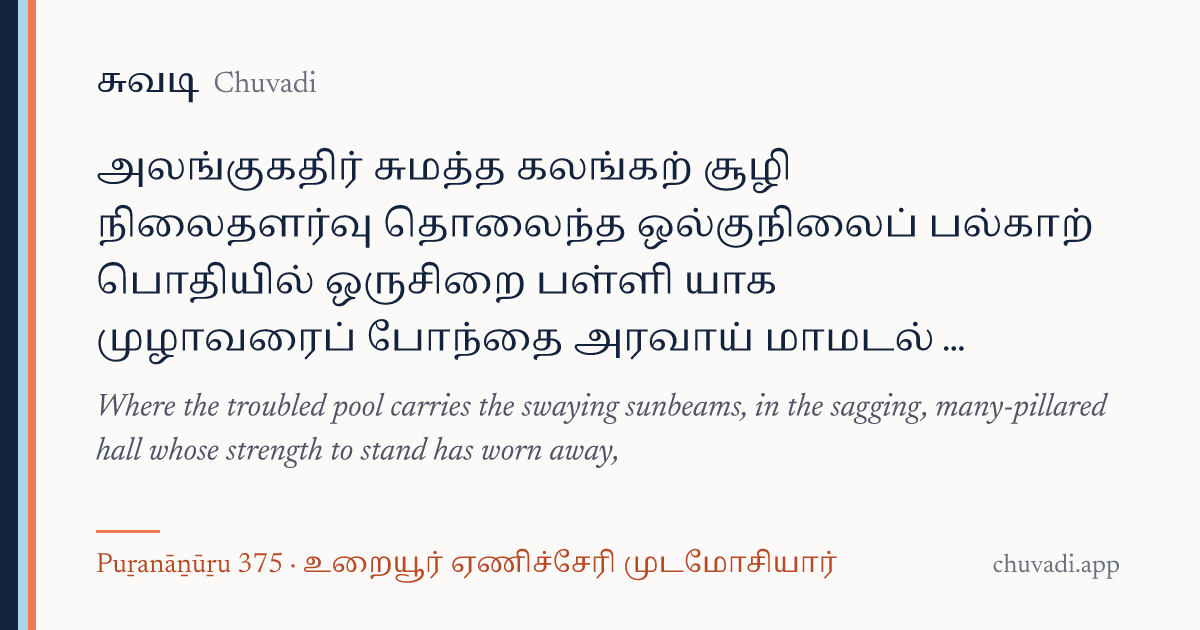
- Where the troubled pool carries the swaying sunbeams,
- in the sagging, many-pillared hall whose strength to stand has worn away,
- a corner of the common hall for my bed,
- the great saw-edged fronds of the palmyra, thick-trunked as a drum,
- their fibre and strips I rolled up together with my kiṇai;
- not going in turn to the houses of those who live by the plough,
- 'This wretched life of begging and eating by turns,
- who is the worthy one who will take it up and support it?' — so asking,
- where the purasam hangs, with wealth that never ends,
- lord of a good land, its farms adorned with hills!
- Āy of unfailing giving, with warrior's anklet and bracelet!
- Since there was no one, I beat my kiṇai without fault;
- as the great rain spreads over the sea, I too
- came thinking only of you. And so,
- being the refuge of poets, on this earth
- may you long endure! And one thing more:
- in a world made empty by your absence,
- may there be no patrons at all! And crowding close,
- even when told of great things, understanding nothing, not even small,
- with wealth swollen without nobility,
- worthless kings — may my people never sing of them!
What the poem says
The same poet, Uṟaiyūr Ēṇiccēri Muṭamōciyār, sings again of Āy, here in pāṭāṇ with the turai vāḻttiyal, a blessing. The poet's name is printed slightly differently from poem 374 ('ஏணிச்சேர்' there, 'ஏணிச்சேரி' here).
The bard begins with his own poverty. He sleeps in a corner of a half-ruined public hall, rolls up palm fibre with his drum, and will no longer make the rounds of farmers' houses. 'Who will take on this miserable life of begging?' he asks, and that is why he has come to Āy, lord of a rich land of hill farms. Since there was no one else, he says, he came to Āy alone, like rain that falls on the sea, a picture of a stream of gifts returning to the source of plenty.
The blessing has a sharp edge. May Āy endure as the refuge of poets; and if the world is ever left without him, may there be no patrons at all, rather than mean kings who understand nothing and are rich without worth. The poet's people, the bards, should never sing of such men. Line 12 ('tāvatu') is uncertain, and the image of rain on the sea in line 13 may mean only 'as surely as rain spreads over the sea'.