



புறநானூறு 388
பாடல் · The poem
Tap a word to see where else it occurs.
பொருள் · Meaning in TamilAI
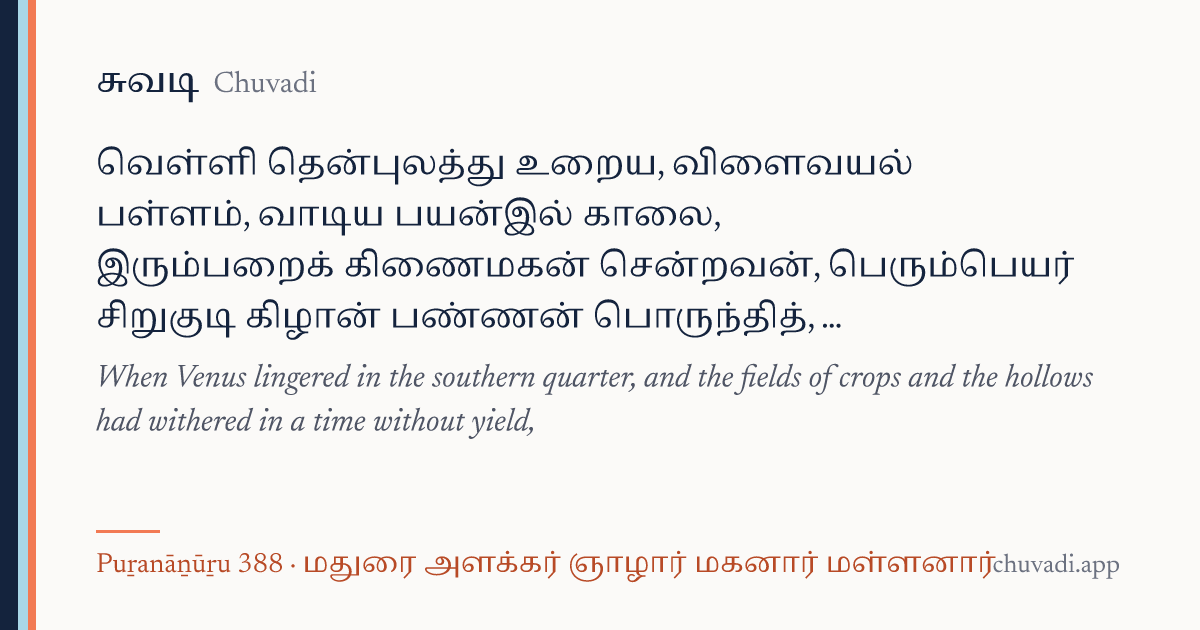
வெள்ளி தென்திசையில் தங்கியதால் விளைவயல்களும் பள்ளங்களும் வாடிப் பயனற்றுப் போன காலத்தில், பெரிய பறையை உடைய கிணைமகன் ஒருவன் சென்று, பெரும் புகழுடைய சிறுகுடித் தலைவன் பண்ணனைச் சேர்ந்தான். பண்ணன் அவனுடைய நிலையை அறிந்துகொண்டதால், அந்த நிலையின் துன்பம் தோற்று ஓடியது. தன்னிடம் இருந்ததையெல்லாம் கொடுத்தான் எம் தலைவன், கொடையால் உயர்ந்த பெருமகன். நுண்ணிய கல்வியை உடைய பெரிய கையாலும், கலப்பையின் கொழு போன்ற நாவாலும், வெல்லும் உண்மை மொழிகளால், புல் மண்டிய விளைநிலத்தைப் புரட்டி உழும் பண்ணனைப் பற்றிக் கேட்டிருக்கிறீர்களா? வேலை செய்யும் எருதுகள் பூட்டிய கலப்பை போல அவனுடைய கிணையைத் தொட்டு நாள்தோறும் நான் பாடாமல் இருப்பேனோ? மணிகள் ஒளிரும் முற்றத்தை உடைய தென்னவன் மரபில் வந்தவனும், கட்டிய முரசு முழங்கும் பெருமை மிகுந்த படையை உடையவனும், சிறந்த யானைகளை உடையவனுமான வழுதியே! என் பெரிய சுற்றத்தைக் காக்கும் காவல் ஒருநாளும் குறையாமல் இருப்பதாக!
இது பாடாண் திணை; துறை இயன்மொழி. பாடியவர் மதுரை அளக்கர் ஞாழார் மகனார் மள்ளனார்; பாடப்பட்டோன் சிறுகுடி கிழான் பண்ணன். எட்டு முதல் பத்து வரையிலான அடிகளில் நாவால் உழுபவன் பண்ணனா புலவனா என்பதும், இறுதியில் வரும் பாண்டியன் வழுதிக்கும் பண்ணனுக்கும் உள்ள தொடர்பும் உறுதியாகத் தெரியவில்லை.
ஆங்கிலம் · English translationAI
Translation
- When Venus lingered in the southern quarter, and the fields of crops
- and the hollows had withered in a time without yield,
- a drummer with his great drum went to him; with the great-named
- Paṇṇaṉ, lord of Ciṟukuṭi, he met,
- and since Paṇṇaṉ understood his state, from that state
- distress fled in rout; all that he had
- he gave, our father, prince exalted in giving.
- With fine learning in his large hand and his tongue for a ploughshare,
- with true words that win, the grassy field
- he turns over — have you heard of Paṇṇaṉ? His
- drum I hold like a plough yoked to working oxen;
- if I did not sing him every day — yet unceasing,
- descendant of the Teṉṉavaṉ with the gem-bright courtyard,
- with an army of pride where the tight-laced drum roars,
- Vaḻuti of the noble elephants —
- may the protection of my great kin never fail!
What the poem says
Maturai Aḷakkar Ñāḻār Makaṉār Maḷḷaṉār sings of Paṇṇaṉ, lord of Ciṟukuṭi. The tiṇai is pāṭāṇ, praise of a patron, and the turai iyaṉmoḻi, a statement of the patron's nature. The scene is a famine: Venus has moved into the south, which was taken as a sign of failed rains, and the fields have dried up. A drummer goes to Paṇṇaṉ, who understands his need at once and gives everything he has.
Lines 8–10 use a ploughing metaphor. Someone tills the 'grassy field' with his hand and with a tongue that serves as the plough's point, speaking true and winning words. It is most likely Paṇṇaṉ, praised as learned and eloquent, though the image could also describe the poet. Line 11 continues it: the bard's drum is his plough.
The ending is the hardest part. The bard says he would sing Paṇṇaṉ every day, and then names a Pāṇṭiya king, Vaḻuti, 'descendant of the Teṉṉavaṉ', with his drums and elephants, and asks that the protection of his kin should never fail. How the Pāṇṭiya relates to Paṇṇaṉ is not stated. One possible reading is that the bard wishes the king to keep protecting a land where such a patron lives. The syntax of lines 11–16 is uncertain, and the translation keeps the phrases in their order without forcing a single construction.