



புறநானூறு 39
பாடல் · The poem
Tap a word to see where else it occurs.
பொருள் · Meaning in TamilAI
புறாவின் துன்பம் கேட்டு, கறைபடிந்த அடிகளையுடைய யானையின் வெண்தந்தங்களால் செய்த வெண்முனைகளையுடைய கோல் பொருந்திய துலாக்கோலில் ஏறியவனின் வழித்தோன்றலே! ஆகவே கொடை உனக்கு மட்டுமே உரிய புகழ் அன்று. பகைவர் அணுக அஞ்சும், நெருங்க முடியாத கொடிய வலிமையுடைய தூங்கெயிலை அழித்த உன் முன்னோரை நினைத்தால், போரில் கொல்லுதலும் உனக்கு மட்டுமே உரிய புகழ் அன்று. வீரம் மிக்க சோழர்களின் உறந்தை அவையில் அறம் குறைவின்றி நிலைத்து நிற்பதால், நீதியும் உனக்கு மட்டுமே உரிய புகழ் அன்று. வீரம் மிகுந்து ஏழு போர்களை வென்ற, கணையமரம் போன்ற திண்ணிய தோள்களும், கண்ணைக் கவரும் மாலையும், செருக்குடைய குதிரைகளும் உடைய வளவனே! அளந்து அறியப்படாத பொன் விளையும் நீண்ட சிகரங்களையுடைய உயர்ந்த இமயத்தில் காவலான விற்சின்னத்தைப் பொறித்த, சிறந்த வேலைப்பாடுடைய நெடுந்தேரையுடைய வானவன் அழியும்படி, வாடாத வஞ்சியை வாட்டுகிறாய். பெருமைமிக்க உன் வலிய அடிகளைப் பாடும்போது நான் எப்படிச் சொல்வேன்?
இது பாடாண் திணை, இயன்மொழித் துறை: பாடப்படுவோரின் இயல்பான பெருமையைப் புகழ்வது. பாடியவர் மாறோக்கத்து நப்பசலையார்; பாடப்பட்டோன் சோழன் குளமுற்றத்துத் துஞ்சிய கிள்ளிவளவன். புறாவுக்காகத் துலாக்கோலில் ஏறியவன், தூங்கெயிலை அழித்தவன் ஆகியோரை மரபு முற்காலச் சோழர்களோடு இணைக்கிறது; பாடல் அவர்களை முன்னோர் என்று மட்டுமே சொல்கிறது. வானவன் என்பது சேர மன்னனைக் குறிக்கிறது; வஞ்சி அவனது நகரம்.
ஆங்கிலம் · English translationAI
Translation
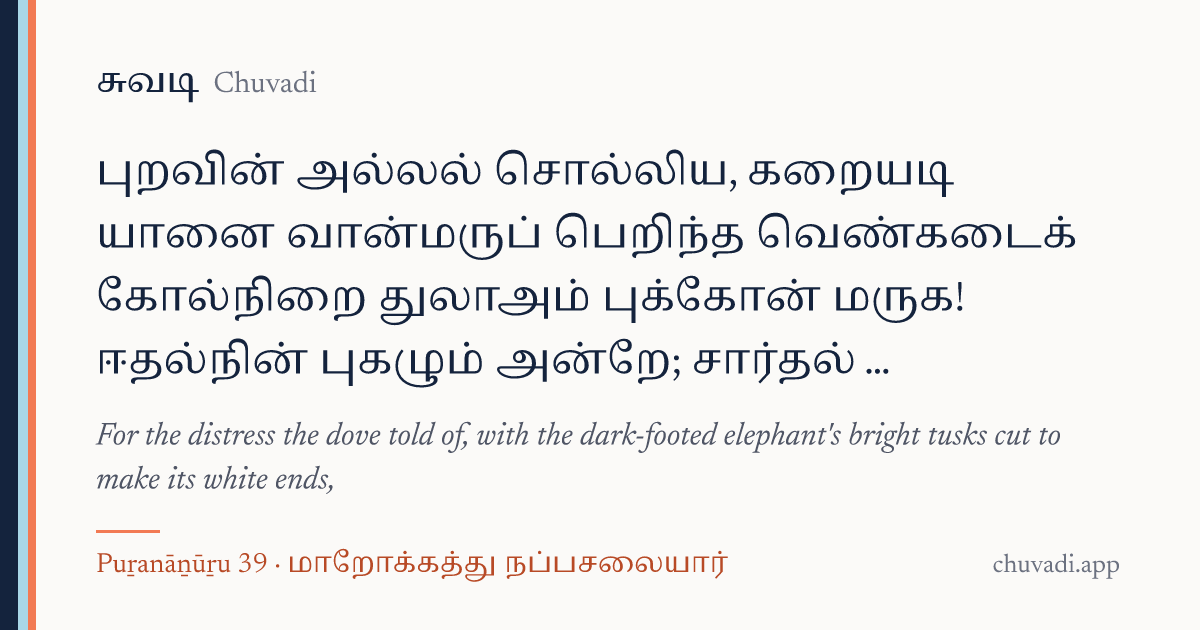
- For the distress the dove told of, with the dark-footed
- elephant's bright tusks cut to make its white ends,
- the balance with its beam he entered: descendant of that one!
- Giving is not a fame that is yours alone; since
- your forebears destroyed the hanging fort, with fierce strength hard to approach,
- that enemies dread to go near, if one remembers them,
- killing is not a fame that is yours alone; flawless,
- in the hall of the warlike Cōḻas at Uṟantai
- virtue stands firm and abides, and so
- justice is not a fame that is yours alone; great in valour,
- with shoulders thick as a gate bar that have won seven battles,
- with a garland that draws the eye, with spirited horses, Vaḷavaṉ!
- How then shall I speak? The lofty
- Himalaya, with long gold-bearing peaks no one has measured,
- on which the guarding bow emblem was set,
- with a long chariot of fine work — so that the Vāṉavaṉ is ruined,
- you make the unwithering Vañci wither:
- how shall I speak, when I sing of your strong feet full of greatness?
What the poem says
Māṟōkkattu Nappacalaiyār praises Cōḻaṉ Kiḷḷivaḷavaṉ (pāṭāṇ, turai iyaṉmoḻi) through a clever problem: every virtue the poet might praise in him already belongs to his ancestors, so what is left that is his own?
Generosity? An ancestor climbed into a balance, its ends made of elephant tusk, to answer the dove's distress, a reference to the tradition of the Cōḻa who weighed his own flesh against a dove. Prowess? His forebears destroyed the 'hanging fort' that enemies feared to approach; tradition credits this to an early Cōḻa, though the poem says only 'your forebears'. Justice? Virtue has long stood firm in the Cōḻa hall at Uṟantai (Uṟaiyūr). So none of these is his alone.
The answer comes at the end. He is the one who has made 'the unwithering Vañci wither', bringing ruin to the Vāṉavaṉ, the Cēra king, whose bow emblem was set upon the Himalaya. Vañci, the Cēra capital, shares its name with a plant, which allows the play on 'withering'. This victory, the poet implies, is his own fame, and the poet asks how he could ever describe it fully.
The poem gives no further detail of the war with the Cēra.