



புறநானூறு 390
பாடல் · The poem
Tap a word to see where else it occurs.
பொருள் · Meaning in TamilAI
அறவை நெஞ்சம் கொண்ட ஆயர்களும், மறவை நெஞ்சத்தோடு வளரும் தாயில்லாதவர்களும் … அரும்புகள் நிறைந்த நீண்ட தண்டை உடைய செருந்திப் பூவின் மணம் கமழும், விழாவுக்காக அணிசெய்த அகன்ற களம் போன்ற முற்றத்தை உடைய மாளிகை அது. அன்போடு நாடி வருவோர் மட்டுமே அதை நெருங்க முடியும்; காவலர் தூண்டினாலும் பிறர் நெருங்க முடியாத காவல் மிகுந்த பெரிய மாளிகை. மலைக்கூட்டம் போன்ற அதன் மாடங்கள் எதிரொலிக்கும்படி, கரகரத்த குரலை உடைய என் தடாரிப் பறையை ஓங்கிக் கொட்டி, பல நாள் நின்று பாடினேன் என்பது மட்டுமன்று; நான் சென்ற அன்றே, இரவு கழியும் வேளையில், நான் வந்ததைக் கண்டு, “நெடிய வாயிலில் நிற்கும் வறண்ட தலையை உடைய பொருநன் இரங்கத்தக்கவன்” என்று சொல்லி, என்னைத் தன் அருகில் வரச்செய்ய விரும்பினான். பழைய நீரில் உள்ள பாசி போன்ற ஆடையை என் இடுப்பிலிருந்து நீக்கி, அழகிய மலர் போன்ற புதிய ஆடையை உடுத்தினான். மகிழ்ச்சி தரும் கள்ளையும், அமிழ்தம் போன்ற இறைச்சித் துவையல் கலந்த சோற்றையும் வெள்ளிக் கலத்தில் ஊட்டினான். அதோடு, முன்னூரில் உள்ள பொதுமன்றத்தில் தளர்ந்த நடையோடு கூடியிருந்த என் பெரிய சுற்றத்தாரின் பெருந்துயரம் நீங்கும்படி, உள்ளே நனைந்த வேங்கைப் பூவைப் போன்ற, எருதுகள் கொண்டுவந்த செந்நெல் போர்களைக் கொடுத்து, “இதைக் கொள்ளைப் பொருளாகக் கொள்க!” என்றான். நீர் உண்ணும் துறையில் மலைப்பூக்கள் மிதக்கும் தலைநீர் நாட்டின் தலைவன் அவன். கண்டவர்கள் அதைக் கொண்டு வீட்டுக்குச் சென்று அவன் திருவடியை வாழ்த்தினர். என் பசியை அவன் போக்கியது போல வானமும் அறியாது. சிறந்த யானைகளை உடைய வேந்தர்கள் இதன் உண்மையை அறியார்; இதைக் கண்டதும் இல்லை!
இது பாடாண் திணை; துறை இயன்மொழி. பாடியவர் ஔவையார்; பாடப்பட்டோன் அதியமான் நெடுமான் அஞ்சி. முதல் இரண்டு அடிகளில் உள்ள ‘அறவை’, ‘மறவை’ என்ற சொற்களின் பொருள் உறுதியாகத் தெரியவில்லை; அவ்வடிகள் சிதைந்திருக்கலாம். இருபத்தைந்து, இருபத்தாறாம் அடிகளின் பொருளும் முழுமையாகத் தெளிவாக இல்லை.
ஆங்கிலம் · English translationAI
Translation
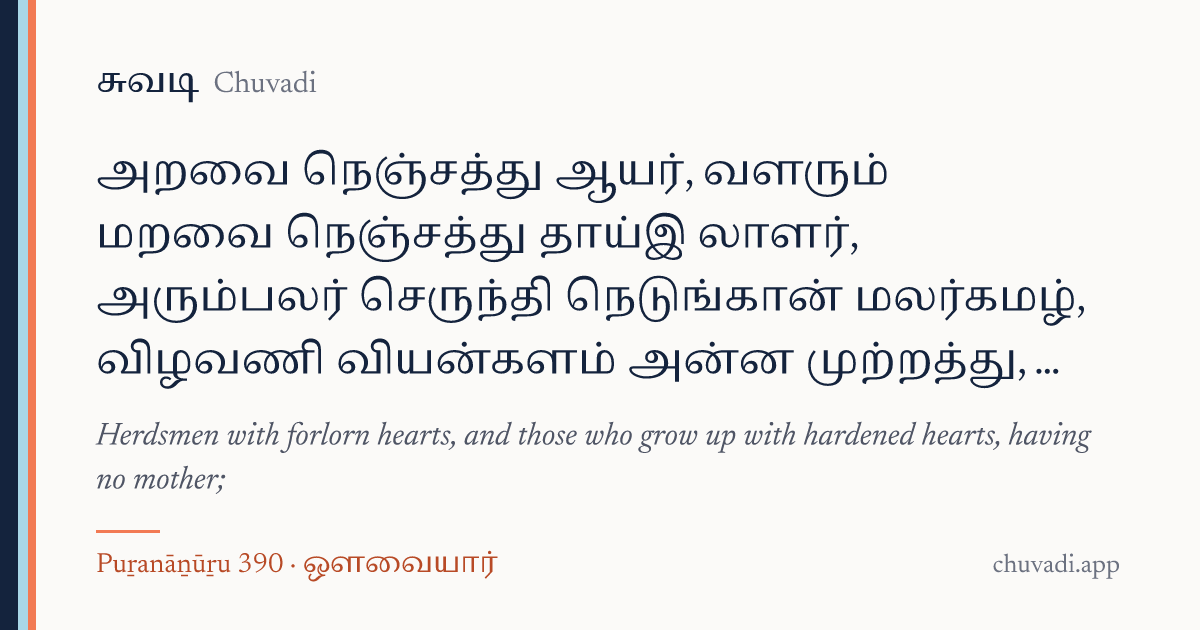
- Herdsmen with forlorn hearts, and those who grow up
- with hardened hearts, having no mother;
- where the scent of the tall-stemmed cerunti, thick with buds, spreads,
- in a courtyard like a wide festival ground, adorned,
- where only those who come in longing draw near; which guards,
- though urged on, would not approach, the guarded wide mansion —
- so that its towers like a range of hills rang, my
- rasping-voiced taṭāri I beat as if to drive them off,
- and stood there singing; not only for many days,
- but on the very night I came, as the night was passing,
- from the moment I came — 'At the tall gate stands
- the bard with a dry, rough head, poor man' — so saying,
- wishing me to come near him, from my waist
- he removed the cloth like moss in old water,
- put on me a new fold of cloth like a lovely flower,
- and besides toddy of the kind that gladdens,
- rice with meat paste of a kind like nectar
- he fed me from a white vessel of silver; and besides,
- who had gathered, weary of gait, in the hall of the town ahead,
- my dark great kin — so that their great grief might leave them,
- like seeing vēṅkai blossoms wet to the heart,
- he gave with stacks of red paddy brought by oxen,
- and said, 'Take it as your plunder!' At the drinking ford
- the lord of the land of headwaters adorned with mountain blooms —
- those who saw took it home, praising his fine feet;
- the sky has not known such an ending of my hunger;
- kings with noble elephants
- do not know the truth of it; they have never seen it!
What the poem says
Auvaiyār sings of Atiyamāṉ Neṭumāṉ Añci, who is not named in the poem but is called 'lord of the land of headwaters'. The tiṇai is pāṭāṇ, praise of a patron, and the turai iyaṉmoḻi, an account of his character and deeds. The poet speaks as a poor bard (porunaṉ) who came to the chief's mansion.
The mansion is guarded so closely that only those who come in love may enter it, yet the bard was noticed on the very night he arrived: 'a poor bard with a dusty head stands at the gate'. The chief called him in, took away cloth like slimy moss, dressed him in new cloth, fed him toddy and rice with meat from a silver bowl, and sent piles of red paddy, golden like vēṅkai flowers, to the bard's hungry family waiting in the village hall. 'Take it as your plunder,' he said, as if it were spoils of war.
The ending says that not even rain, 'the sky', has ever relieved hunger this way, and that crowned kings with their elephants have never seen generosity like it. The first two lines are obscure. They seem to describe people who gather in the courtyard, perhaps humble herders and orphans, but the words aṟavai and maṟavai are uncertain and the lines may be corrupt. Lines 25 and 26 are also hard to construe exactly.