



புறநானூறு 86
பாடல் · The poem
Tap a word to see where else it occurs.
பொருள் · Meaning in TamilAI
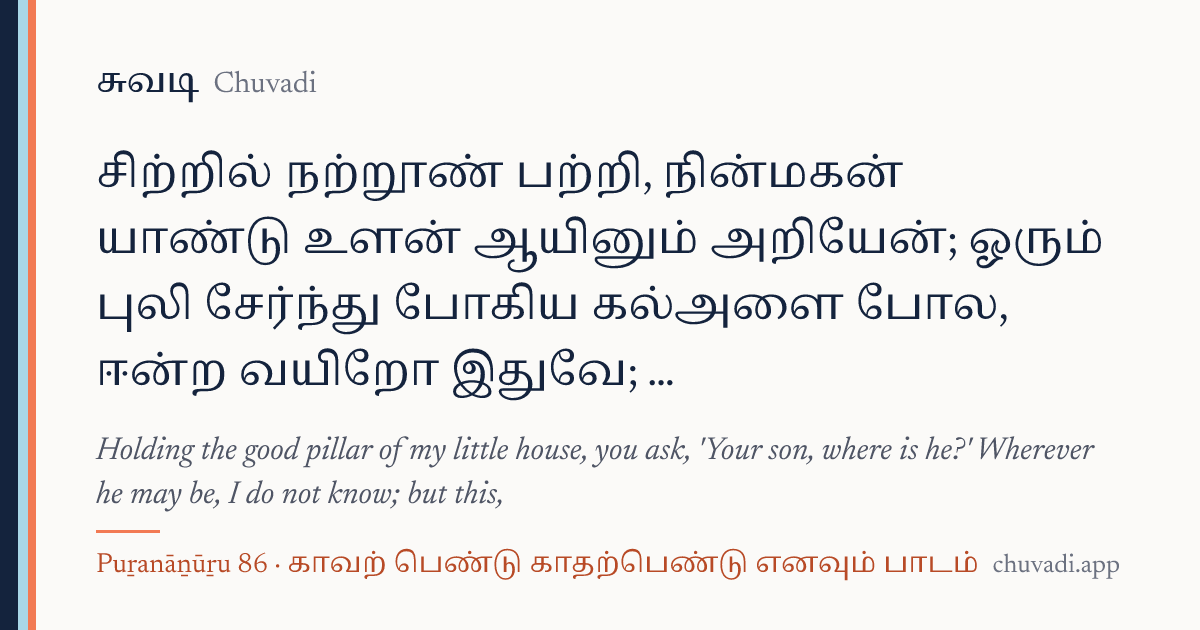
என் சிறிய வீட்டின் நல்ல தூணைப் பிடித்துக்கொண்டு, 'உன் மகன் எங்கே இருக்கிறான்?' என்று கேட்கிறாய். அவன் எங்கே இருக்கிறான் என்பதை நான் அறியேன். புலி தங்கியிருந்துவிட்டுப் போன கற்குகை போல, அவனைப் பெற்ற வயிறு இதுதான். அவன் போர்க்களத்தில் நிச்சயமாகத் தோன்றுவான்!
இது வாகைத் திணை; துறை ஏறாண் முல்லை, வீரக் குடியின் நிலையான ஆண்மையைப் புகழ்வது. பாடியவர் காவற்பெண்டு (காதற்பெண்டு என்றும் பாடம் உண்டு); தனிப்பட்ட ஒருவரைப் பாடாததால் பாடப்பட்டோர் பெயர் இல்லை. தாய் தன் வயிற்றைப் புலிக்குகைக்கும், மகனைப் புலிக்கும் ஒப்பிடுகிறாள். தூணைப் பிடித்து நிற்பவர் கேட்பவரா, தாயா என்பதைப் பாடலின் சொல்லமைப்பு இருவகையாகவும் கொள்ள இடம் தருகிறது.
ஆங்கிலம் · English translationAI
Translation
- Holding the good pillar of my little house, you ask, 'Your son,
- where is he?' Wherever he may be, I do not know; but this,
- like a rock cave where a tiger has lain and gone,
- is the womb that bore him;
- he will show himself, surely, on the field of battle!
What the poem says
A mother answers someone who has come to her small house asking where her son is. The colophon names the poet Kāvaṟpeṇṭu, with the variant Kātaṟpeṇṭu, and gives no patron. The tiṇai is vākai, valour and victory, and the turai ēṟāṇ mullai praises the steady courage of a warrior family, where valour is a household inheritance.
The questioner stands holding the pillar of the poor hut. The mother says she does not know where the boy is; but she lays her hand, as it were, on her own womb and calls it a rock cave that a tiger once lay in and has left. The tiger is her son. If the visitor wants him, he will find him where tigers are found: on the battlefield.
The poem is five lines and gains its force from compression. Her answer is at once a rebuke to the questioner, a statement of pride, and perhaps an awareness of danger, since a tiger's den left empty may not be filled again.
Line 1 could also be read as the mother herself holding the pillar as she speaks; the grammar allows both.