



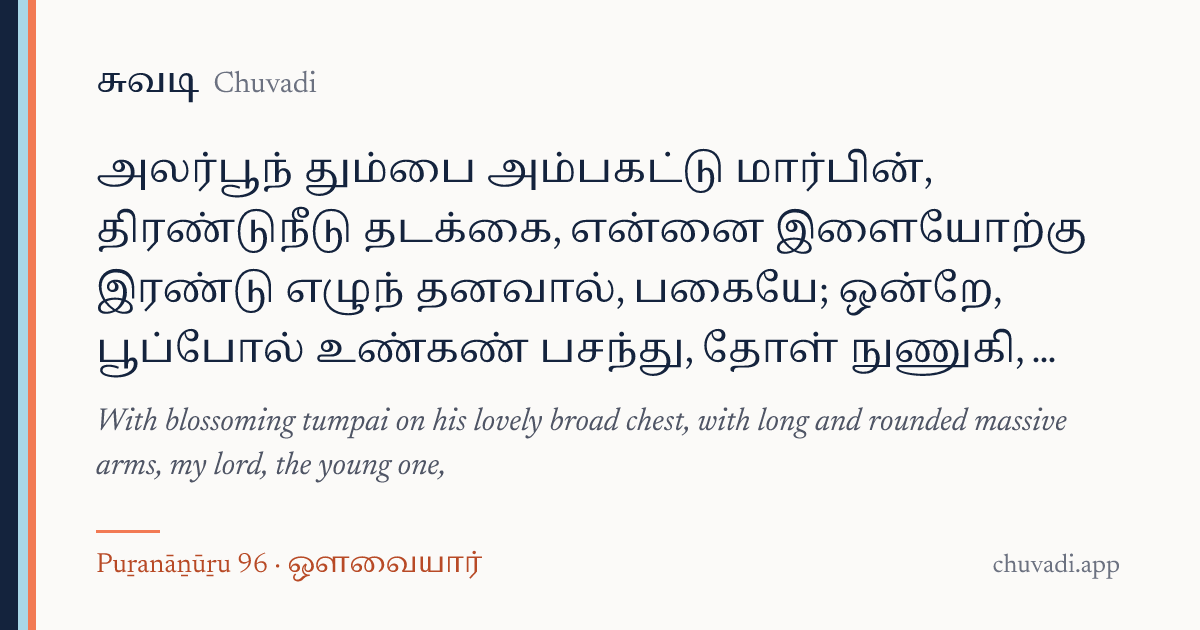
புறநானூறு 96
பாடல் · The poem
Tap a word to see where else it occurs.
பொருள் · Meaning in TamilAI
மலர்ந்த தும்பைப் பூ மாலையணிந்த அழகிய அகன்ற மார்பும், திரண்டு நீண்ட பெரிய கைகளும் உடைய என் தலைவனான அந்த இளையவனுக்கு இரண்டு பகைகள் தோன்றியுள்ளன. ஒன்று, அவனைப் பார்த்த பெண்களின் மலர் போன்ற மை தீட்டிய கண்கள் பசலை படர்ந்து, தோள்கள் மெலியும்படி அவர்களைக் காதலால் கட்டிப் போட்டது. மற்றொன்று, அவன் செல்லும் ஊர், 'விழா இல்லாத நாளிலும் நல்ல உணவைத் தவறாமல் உண்டு, ஆட்டிறைச்சியை வயிறார உண்ட சுற்றத்தோடு வந்த இவனுடைய யானைகள் எங்கள் துறையின் நீரைக் கலக்கிவிடுமோ?' என்று சொல்லி, அவன் அங்கே தங்குவதை வெறுக்கிறது.
இது பாடாண் திணை; துறை இயன்மொழி. பாடியவர் ஔவையார்; பாடப்பட்டோன் அதியமான் மகன் பொகுட்டெழினி. 'பகை' என்று சொல்லப்படுபவை உண்மையில் அவனுடைய அழகையும் படைப் பெருமையையும் விருந்தோம்பலையும் புகழ்வனவே. 'கைமான்' என்பது யானை.
ஆங்கிலம் · English translationAI
Translation
- With blossoming tumpai on his lovely broad chest,
- with long and rounded massive arms, my lord, the young one,
- has two enmities that have arisen; one:
- flower-like kohl-darkened eyes grown pale, shoulders grown thin,
- it has bound fast the women who looked on him; the other:
- 'Though there is no festival, never missing a good meal,
- with his kin who have gorged on dark mutton, the water of our ford
- will his elephants take?' so saying,
- the town he goes to resents his lodging there.
What the poem says
Auvaiyār sings of Pokuṭṭeḻiṉi, son of Atiyamāṉ, called in the poem 'my lord, the young one'. The tiṇai is pāṭāṇ, praise of a patron, and the turai iyaṉmoḻi describes his natural qualities.
The poem plays with the idea of 'enmity'. The young prince, wearing the tumpai flower of battle on his broad chest, has made two kinds of enemies without fighting. The first are the women who have seen him: they pine with love, their eyes grow pale and their shoulders thin, as love-sick women do in Tamil poetry. The second are the towns where he stops with his retinue. They resent his stay, grumbling that even without a festival his followers never miss a feast, gorge on mutton, and that his elephants will foul the water at their bathing place.
The complaint of the towns is in fact praise: it shows the size of his army and the abundance of his hospitality. Kaimāṉ in line 8, 'the animal with a hand', is the elephant. The quoted speech in lines 6 to 8 is taken as the town's grumbling.