



புறநானூறு 99
பாடல் · The poem
Tap a word to see where else it occurs.
பொருள் · Meaning in TamilAI
தேவர்களைப் போற்றி, வேள்வித் தீயில் அவியுணவைப் படைத்து, பெறுவதற்கு அரிய சிறப்புடைய கரும்பை இந்த நாட்டுக்குக் கொண்டுவந்து, கடல் சூழ்ந்த உலகத்தின் மேல் தம் ஆணைச் சக்கரத்தைச் செலுத்திய பழைய மரபுடைய உன் முன்னோரைப் போல, கொடைக்கு அடையாளமான வீரக்கழல் அணிந்த கால்களும், கரிய பனம்பூ மாலையும், பூக்கள் நிறைந்த சோலைகளும், புதிய புலால் நாறும் நீண்ட வேலும் உடையவனே! ஏழு அரச அடையாளங்களுடைய நாட்டின் நீங்காத உரிமையைக் குறையின்றி அடைந்தும் நீ மனம் நிறையவில்லை. போரை விரும்பி, ஒலிக்கும் முரசுகளையுடைய ஏழு அரசர்களோடு மாறுபட்டுச் சென்று, போரில் வென்று, உன் வலிமையை வெளிப்படுத்தினாய். அன்றும் நீ பாடுவோர்க்குப் பாட முடியாத அளவு பெரியவனாக இருந்தாய். இன்றும், மாறுபாடு மிக்க கோவலூரை அழித்து, பகைவரின் அரண்களை அழிக்கும் படையை ஏந்திய உன் தோள்களைப் பரணன் பாடியிருப்பானோ?
இந்தப் பதிப்பில் இப்பாடலுக்குத் திணை, துறை, பாடியவர், பாடப்பட்டோர் ஆகிய குறிப்புகள் இல்லை. ஔவையார் அதியமானைப் பாடியது என்பது மரபு. இப்பதிப்பு இப்பாடலின் இறுதியில் அச்சிட்டுள்ள இளம் பனை ஓலை பற்றிய இரண்டு அடிகள் அடுத்த பாடலைச் சேர்ந்தவை; அவை அங்கே சேர்க்கப்பட்டுள்ளன. 'எழுபொறி நாட்டத்து எழாஅத் தாயம்' என்பதன் பொருள் உறுதியாகத் தெரியவில்லை.
ஆங்கிலம் · English translationAI
Translation
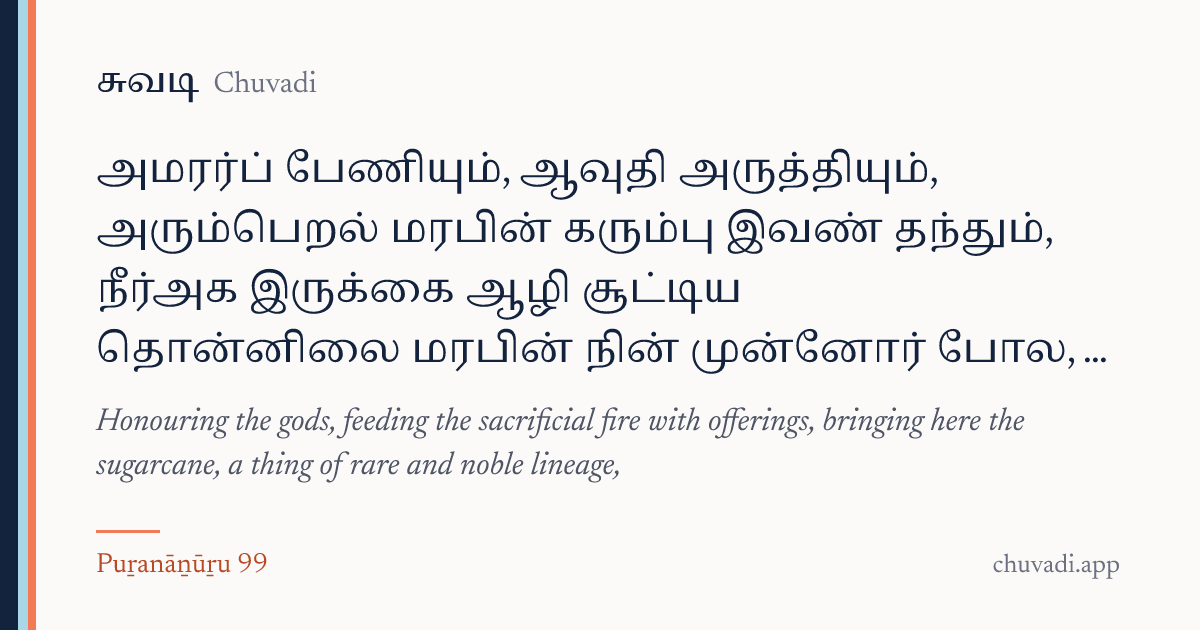
- Honouring the gods, feeding the sacrificial fire with offerings,
- bringing here the sugarcane, a thing of rare and noble lineage,
- like your forebears of ancient standing who set the wheel of rule
- upon the seat that the waters gird,
- with the anklets of giving on your feet, a garland of dark palmyra,
- with groves full of flowers, a long spear reeking of fresh flesh,
- the unbroken inheritance of the land of seven emblems
- you received without fault, yet you were not content; craving war,
- you fought against seven kings with resounding drums,
- went out, won the battle, and made your strength plain;
- even that day you were too great for singers; and today,
- would Paraṇaṉ have sung it? For you
- have crushed Kōvalūr, proud in strife, and your
- shoulders have borne the wheel that destroys forts!
What the poem says
In this edition the poem has no colophon, so neither the poet, the patron, nor the tiṇai and turai are recorded. Tradition attributes it to Auvaiyār, addressing Atiyamāṉ Neṭumāṉ Añci, but that is not stated here.
The poem praises a king who belongs to an old line of rulers. His ancestors honoured the gods, fed the sacrificial fire, brought sugarcane to this land (a deed the poem treats as part of the family's renown, without further detail), and set their wheel of command over the sea-girt earth. He wears a garland of dark palmyra and holds an inheritance of 'seven emblems' that he received intact. Not satisfied with that, he went to war against seven drum-bearing kings and won. Even then, the poet says, he was beyond the power of poets; and now that he has destroyed Kōvalūr, would even the poet Paraṇaṉ have been able to sing it?
The edition prints two more lines at the end of this poem, about a white young palmyra leaf; they break off mid-phrase and belong to puram.100, where they have been moved. Line 7 (eḻupoṟi nāṭṭattu eḻāat tāyam) is obscure: 'the seven emblems' may mean seven royal insignia, and the translation is tentative. 'Would Paraṇaṉ have sung it?' in line 12 can also be read as a statement that Paraṇaṉ did sing the earlier deed.