



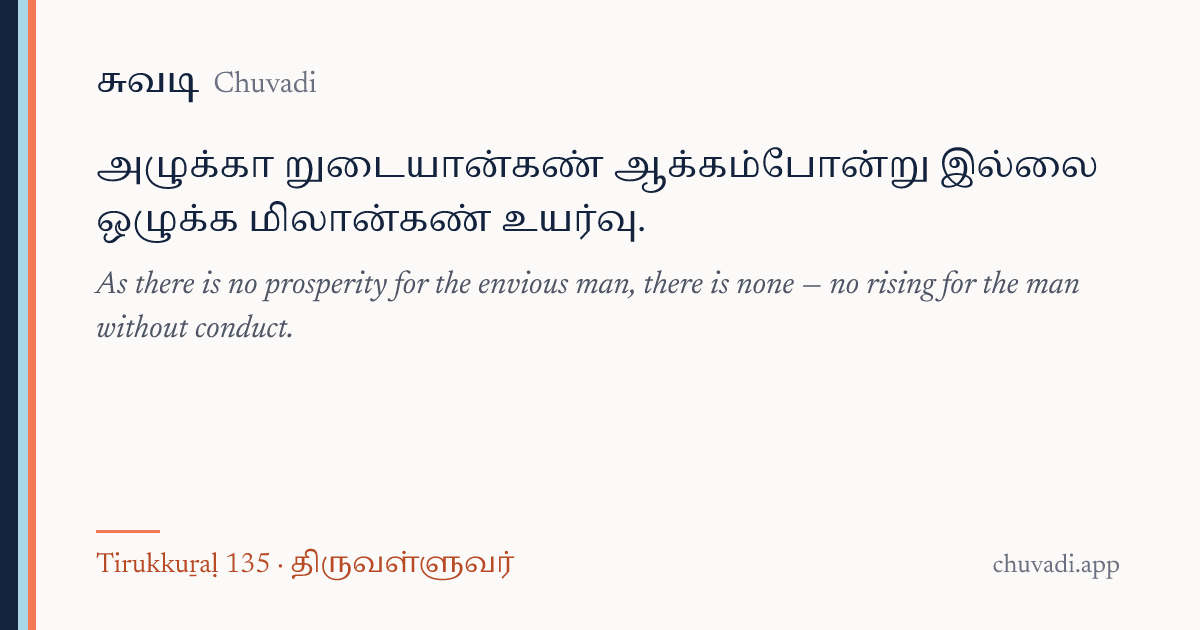
திருக்குறள் 135
பாடல் · The poem
Tap a word to see where else it occurs.
பொருள் · Meaning in TamilAI
பொறாமை உள்ளவனிடம் செல்வம் நிலைத்து வளராதது போல, ஒழுக்கம் இல்லாதவனிடம் உயர்வும் இருக்காது.
ஒழுக்கமுடைமை அதிகாரம் இங்கு பொறாமையை உவமையாக எடுத்துக்கொள்கிறது. ‘ஆக்கம்’ என்பது செல்வமும் வளர்ச்சியும்; ‘உயர்வு’ என்பது சமூகத்தில் பெறும் மதிப்பு. பொறாமையும் ஒழுக்கமின்மையும் ஒருவனை உள்ளிருந்தே அரிக்கும் குறைகள் என்பதால் இந்த ஒப்புமை பொருந்துகிறது.
ஆங்கிலம் · English translationAI
Translation
- As there is no prosperity for the envious man, there is none —
- no rising for the man without conduct.
What the poem says
A simile from ordinary observation: everyone knows that the envious do not thrive. In just the same way, the person without conduct does not rise. The first line holds back the subject, so the second line lands the comparison.
Uyarvu, "rising" or "elevation", answers viḻuppam in the chapter's first couplet: conduct lifts, its absence leaves one low. The envious man is borrowed from the theme of a later chapter (aḻukkāṟu, envy, chapter 17), and the comparison looks ahead to it.
யாப்பு · Metre: veṇpā scansion
வெண்பா · புணர்ச்சியுடன் Scans as a veṇpā once a final குற்றியலுகரம் is dropped before a vowel, as prosody reads it (நின்று உலகம் → நின் றுலகம்).
நேர் one letter, short or long, with any consonant after it · நிரை a short letter with the letter after it · a final உ before a vowel is dropped, and ஐ after a word's first letter counts as short.