



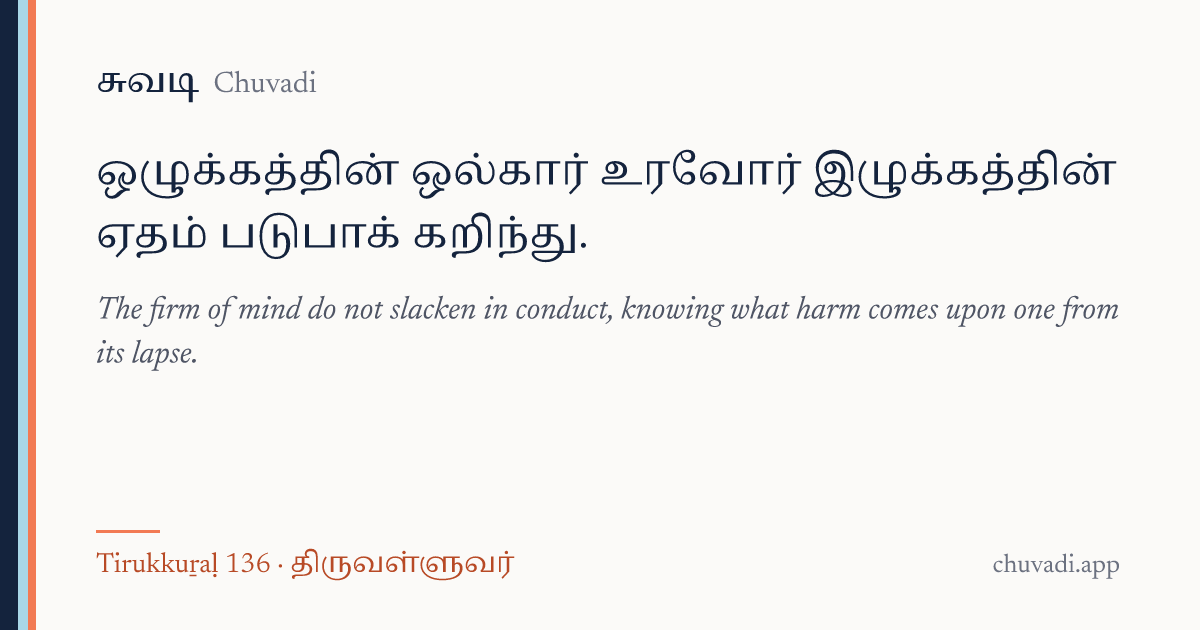
திருக்குறள் 136
பாடல் · The poem
Tap a word to see where else it occurs.
பொருள் · Meaning in TamilAI
ஒழுக்கம் தவறுவதால் வரும் துன்பத்தை நன்கு அறிந்திருப்பதால், மனவலிமை உடையவர்கள் ஒழுக்கத்தில் சிறிதும் தளர மாட்டார்கள்.
‘உரவோர்’ என்பவர் மன உறுதியும் அறிவும் உடையவர். ‘ஒல்கார்’ என்ற சொல் தளர்ந்து சாய்தலைக் குறிக்கிறது; விளைவை அறியும் அறிவே ஒழுக்கத்தைக் காக்கும் என்பது கருத்து.
ஆங்கிலம் · English translationAI
Translation
- The firm of mind do not slacken in conduct, knowing what harm
- comes upon one from its lapse.
What the poem says
The strong, uravōr, are those with strength of mind, and their strength shows as steadiness: they do not waver from conduct. The reason given is practical foresight. They know the harm, ētam, that falls on anyone who slips.
The couplet treats virtue as a form of good sense rather than only obedience. A nearly identical second line appears in the chapter on envy (kural.164), where the subject is not acting out of envy; the shared phrase marks a recurring pattern in which knowing the consequences keeps the wise in line.
யாப்பு · Metre: veṇpā scansion
வெண்பா Scans as a veṇpā as printed: every சீர் is one a veṇpā allows, and every join keeps வெண்டளை.
நேர் one letter, short or long, with any consonant after it · நிரை a short letter with the letter after it · a final உ before a vowel is dropped, and ஐ after a word's first letter counts as short.