



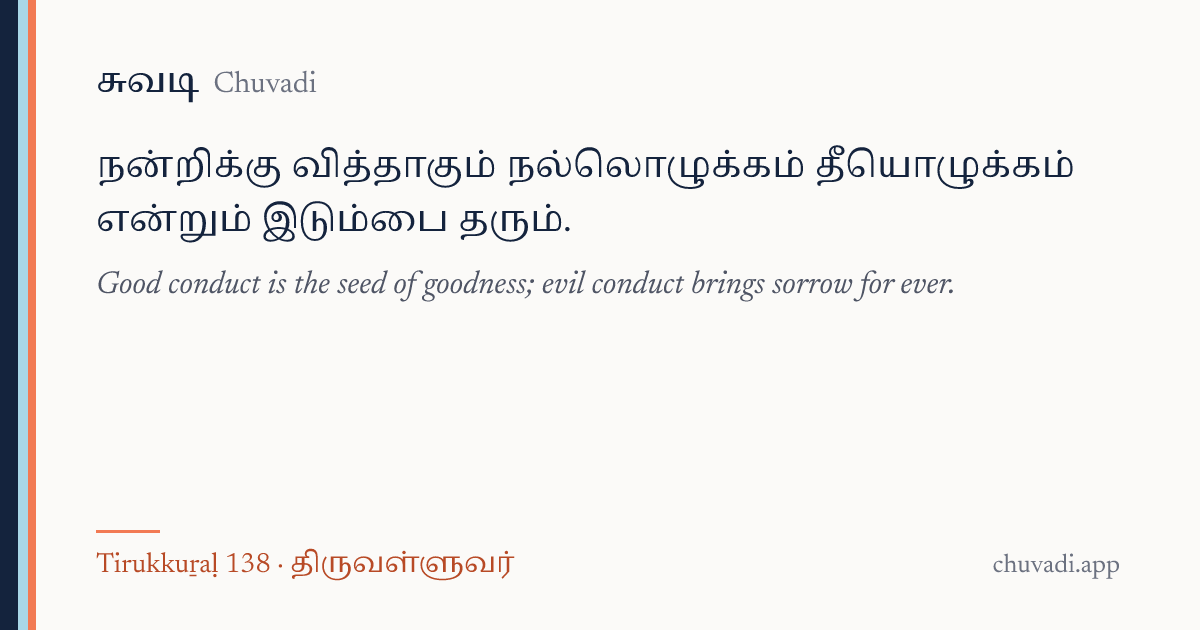
திருக்குறள் 138
பாடல் · The poem
Tap a word to see where else it occurs.
பொருள் · Meaning in TamilAI
நல்லொழுக்கம் நன்மைகள் முளைப்பதற்கான விதையாக அமைகிறது; தீய ஒழுக்கமோ என்றென்றும் துன்பத்தையே தருகிறது.
விதை என்ற உருவகம், ஒழுக்கத்தின் பயன் காலப்போக்கில் வளர்ந்து பெருகும் என்பதைக் காட்டுகிறது. ‘என்றும்’ என்ற சொல், தீயொழுக்கத்தின் துன்பம் ஒருநாளில் முடிவதில்லை என்பதை உணர்த்துகிறது.
ஆங்கிலம் · English translationAI
Translation
- Good conduct is the seed of goodness; evil conduct
- brings sorrow for ever.
What the poem says
The image is agricultural: good conduct is a seed, vittu, from which naṉṟi, good or benefit, grows. Its opposite yields iṭumpai, affliction, and the word eṉṟum, "always", suggests the harvest of bad conduct never runs out, perhaps across births.
Naṉṟi here is the general sense of goodness or benefit rather than the narrower "gratitude" the word usually means in the chapter on gratitude. The pairing of nal-oḻukkam and tī-y-oḻukkam, good and evil conduct, is plain and symmetrical, giving the chapter a simple statement of cause and effect.
யாப்பு · Metre: veṇpā scansion
வெண்பா Scans as a veṇpā as printed: every சீர் is one a veṇpā allows, and every join keeps வெண்டளை.
நேர் one letter, short or long, with any consonant after it · நிரை a short letter with the letter after it · a final உ before a vowel is dropped, and ஐ after a word's first letter counts as short.