



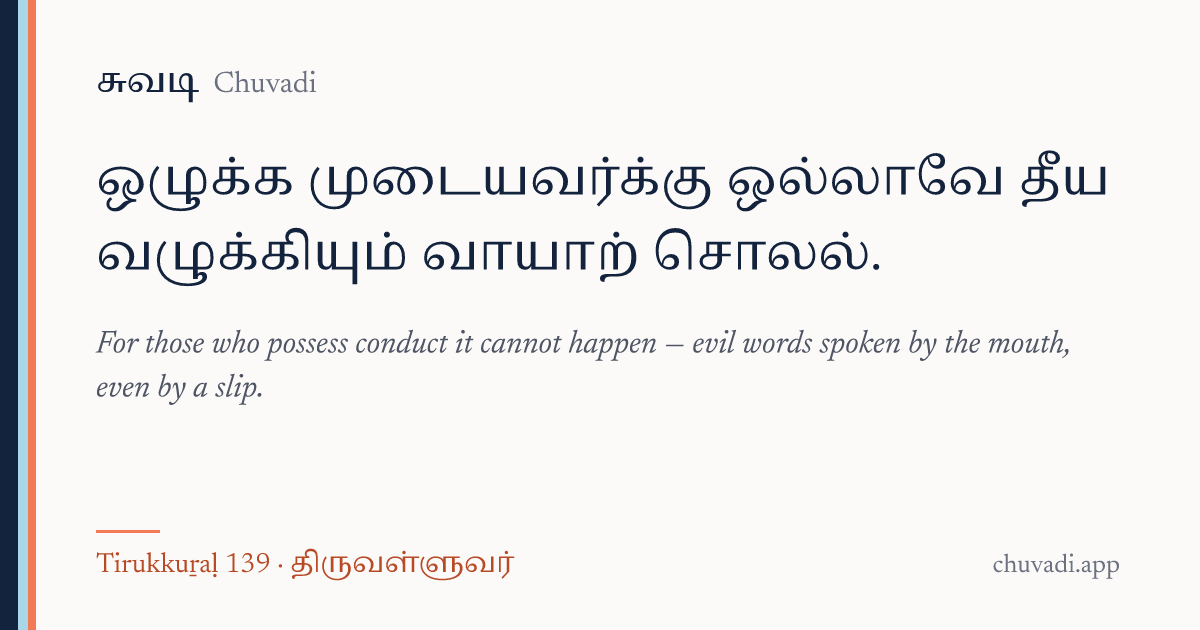
திருக்குறள் 139
பாடல் · The poem
Tap a word to see where else it occurs.
பொருள் · Meaning in TamilAI
ஒழுக்கம் உடையவர்கள், தவறியும்கூடத் தம் வாயால் தீய சொற்களைச் சொல்ல மாட்டார்கள்; அது அவர்களால் இயலாத ஒன்று.
ஒழுக்கம் செயலில் மட்டுமல்ல, பேச்சிலும் இருக்க வேண்டும் என்று இந்த அதிகாரம் விரிவுபடுத்துகிறது. ‘வழுக்கியும்’ என்பது கால் வழுக்குவது போலத் தன்னையறியாமல் நேர்வதைக் குறிக்கிறது.
ஆங்கிலம் · English translationAI
Translation
- For those who possess conduct it cannot happen — evil
- words spoken by the mouth, even by a slip.
What the poem says
Conduct extends to speech. A person of real conduct will not let harsh or evil words out even by accident, vaḻukkiyum, "even slipping".
The couplet is about habit: when conduct is deeply rooted, even the unguarded moment stays within it. Ollāvē, "they cannot", is stronger than "they should not"; it describes what has become impossible for such a person, not merely what is forbidden. The adjective tīya, "evil", sits at the end of the first line and reaches across to "words" in the second, which the English imitates.
யாப்பு · Metre: veṇpā scansion
வெண்பா Scans as a veṇpā as printed: every சீர் is one a veṇpā allows, and every join keeps வெண்டளை.
நேர் one letter, short or long, with any consonant after it · நிரை a short letter with the letter after it · a final உ before a vowel is dropped, and ஐ after a word's first letter counts as short.