



திருக்குறள் 145
பாடல் · The poem
Tap a word to see where else it occurs.
பொருள் · Meaning in TamilAI
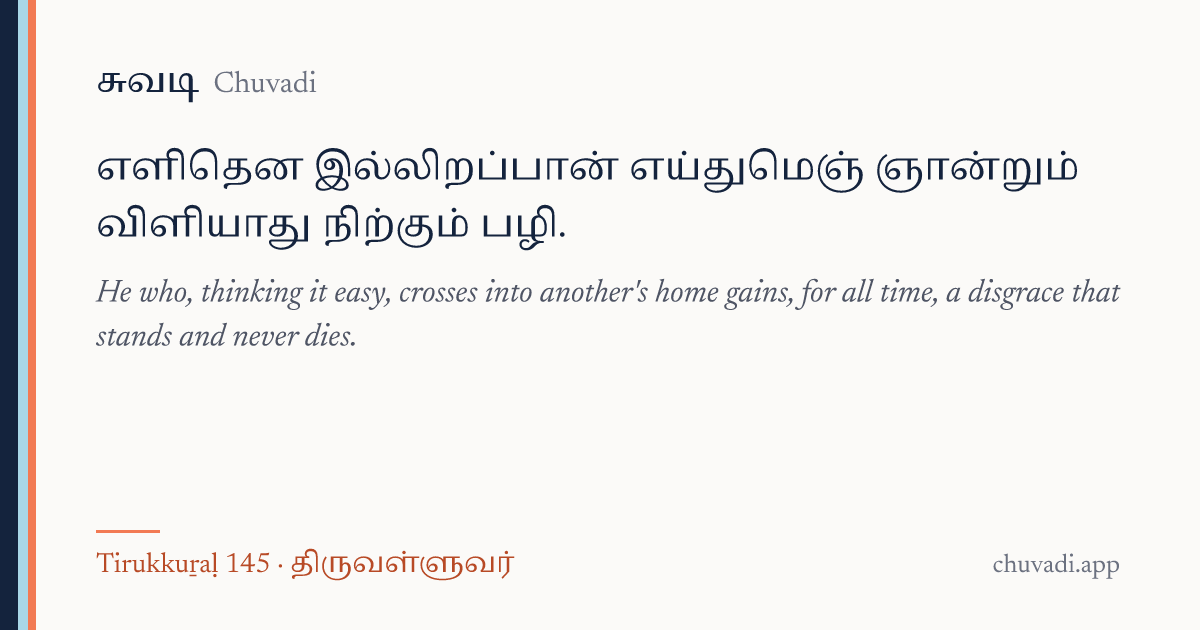
எளிதாக முடியும் என்று எண்ணிப் பிறன் மனையில் எல்லை மீறுபவன், எந்நாளும் அழியாமல் நிலைத்திருக்கும் பழியைப் பெறுவான்.
எளிது என்று நினைத்த செயலுக்கு அழியாத பழி கிடைக்கிறது என்ற முரண்பாடே குறளின் கூர்மை. ‘இல்லிறப்பான்’ என்பவன் பிறன் வீட்டின் எல்லையைக் கடப்பவன்.
ஆங்கிலம் · English translationAI
Translation
- He who, thinking it easy, crosses into another's home gains, for all time,
- a disgrace that stands and never dies.
What the poem says
The contrast is between the ease of the act and the permanence of what it earns. The trespasser thinks it simple, eḷitu; what he obtains is paḻi, disgrace, that does not die, viḷiyātu.
Il iṟappāṉ, "one who goes beyond the house", uses the same verb as transgressing a boundary. The couplet works with the time-scale of reputation, which in the Kuṟaḷ can outlast the body (see the chapter on fame, 24), and so punishment here outlives the offender.
யாப்பு · Metre: veṇpā scansion
வெண்பா Scans as a veṇpā as printed: every சீர் is one a veṇpā allows, and every join keeps வெண்டளை.
நேர் one letter, short or long, with any consonant after it · நிரை a short letter with the letter after it · a final உ before a vowel is dropped, and ஐ after a word's first letter counts as short.