



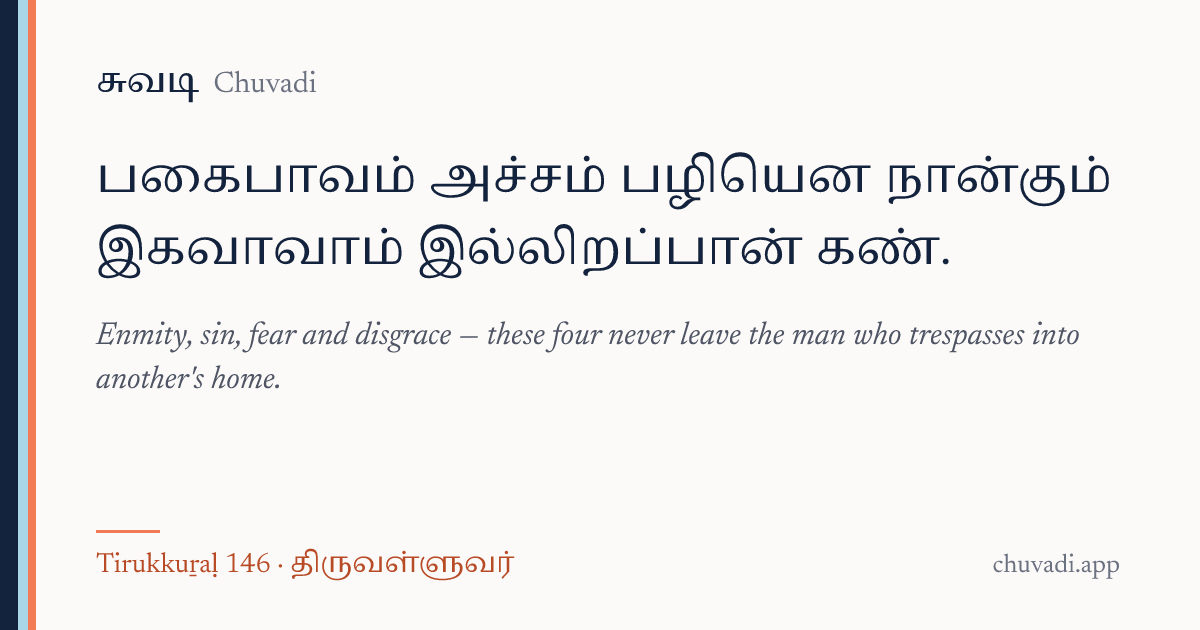
திருக்குறள் 146
பாடல் · The poem
Tap a word to see where else it occurs.
பொருள் · Meaning in TamilAI
பகை, பாவம், அச்சம், பழி என்னும் இந்த நான்கும், பிறன் மனையில் எல்லை மீறுபவனை விட்டு ஒருபோதும் நீங்கமாட்டா.
பிறனில் விழையாமை அதிகாரம் இங்கு அந்தத் தவற்றின் விளைவுகளை வரிசைப்படுத்துகிறது. நான்கும் ஒருசேர அவனைத் தொடர்வதால், அவனுக்கு அமைதி என்பதே இல்லை என்பது உட்பொருள்.
ஆங்கிலம் · English translationAI
Translation
- Enmity, sin, fear and disgrace — these four
- never leave the man who trespasses into another's home.
What the poem says
A simple list, unusual in its directness. Each of the four touches a different realm: pakai, enmity, from the wronged husband and his people; pāvam, sin, in the moral order; accam, fear, within the offender's own mind; paḻi, disgrace, in public opinion.
The verb ikavā, "they do not leave", makes them companions who cling to him. The couplet gathers the earlier arguments of the chapter, social, moral and practical, into a single count.
யாப்பு · Metre: veṇpā scansion
வெண்பா Scans as a veṇpā as printed: every சீர் is one a veṇpā allows, and every join keeps வெண்டளை.
நேர் one letter, short or long, with any consonant after it · நிரை a short letter with the letter after it · a final உ before a vowel is dropped, and ஐ after a word's first letter counts as short.