



திருக்குறள் 184
பாடல் · The poem
Tap a word to see where else it occurs.
பொருள் · Meaning in TamilAI
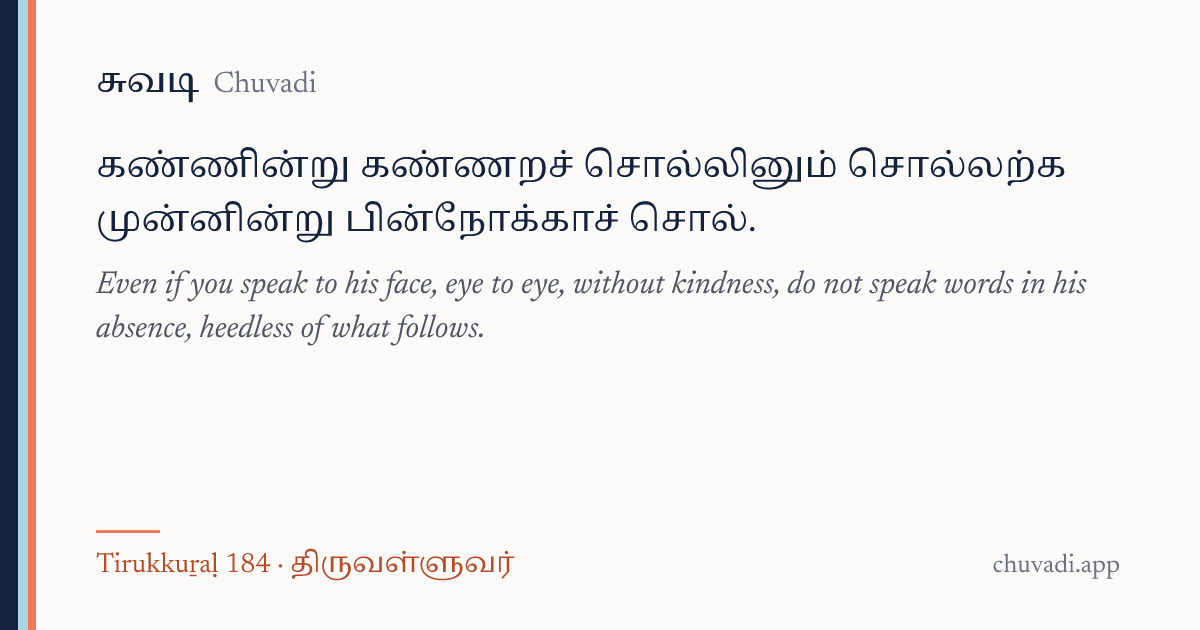
ஒருவரின் முகத்துக்கு நேராக இரக்கமின்றிக் கடுமையாகப் பேசினாலும் பேசலாம்; ஆனால் அவர் இல்லாதபோது, விளைவை எண்ணாமல் அவரைப் பற்றிப் பேசக்கூடாது.
‘கண்ணின்று கண்ணற’ என்பதில் முதல் ‘கண்’ முகத்துக்கு நேர் நிற்பதையும், இரண்டாவது ‘கண்’ இரக்கத்தையும் குறிக்கிறது. ‘முன்னின்று பின்நோக்காச் சொல்’ என்பதற்கு வேறு பொருளும் கொள்ளப்படுகிறது.
ஆங்கிலம் · English translationAI
Translation
- Even if you speak to his face, eye to eye, without kindness, do not speak
- words in his absence, heedless of what follows.
What the poem says
Harsh words spoken openly are a lesser evil than words spoken behind a person's back. The line plays on kaṇ, which means both "eye" and "kindness": kaṇṇiṉṟu, "standing before the eyes", and kaṇ aṟa, "with kindness gone".
The second line is difficult. Muṉṉiṉṟu piṉ nōkkāc col may mean "a word that does not look to what comes after", that is, careless of consequences, or "a word spoken behind, after standing in front", the two-faced word. The English combines absence and heedlessness, which most readings share.
யாப்பு · Metre: veṇpā scansion
வெண்பா Scans as a veṇpā as printed: every சீர் is one a veṇpā allows, and every join keeps வெண்டளை.
நேர் one letter, short or long, with any consonant after it · நிரை a short letter with the letter after it · a final உ before a vowel is dropped, and ஐ after a word's first letter counts as short.