



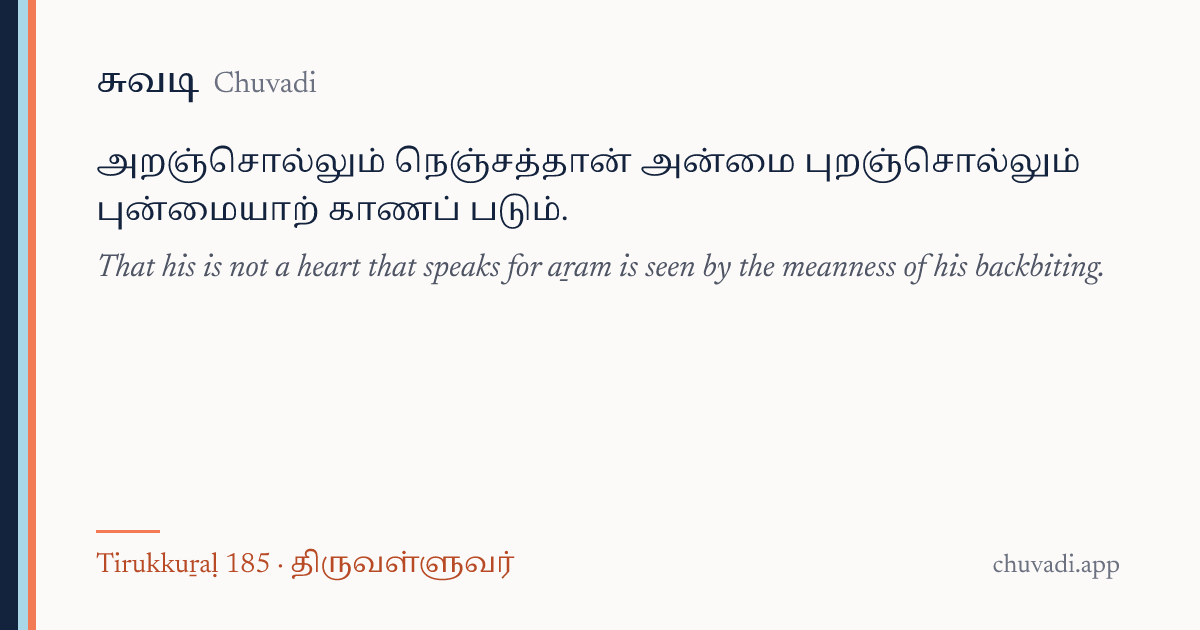
திருக்குறள் 185
பாடல் · The poem
Tap a word to see where else it occurs.
பொருள் · Meaning in TamilAI
ஒருவன் வாயால் அறத்தைப் பேசினாலும், அவன் நெஞ்சம் அறத்தைப் போற்றுவதில்லை என்பது, அவன் புறம்பேசும் இழிவான பழக்கத்தாலேயே வெளிப்பட்டுவிடும்.
பேச்சு ஒன்றாகவும் நடத்தை வேறாகவும் இருப்பதைப் புறங்கூறல் காட்டிக்கொடுத்துவிடும் என்கிறது. ‘புன்மை’ என்பது சிறுமை, இழிவு. அறத்தைப் பேசுவது எளிது; அது உள்ளத்தில் இருக்கிறதா என்பதை நடத்தையே காட்டும் என்று புறங்கூறாமை அதிகாரம் சுட்டுகிறது.
ஆங்கிலம் · English translationAI
Translation
- That his is not a heart that speaks for aṟam is seen
- by the meanness of his backbiting.
What the poem says
Whatever a man says about virtue, his backbiting shows the truth. That he lacks, aṉmai, a heart that speaks for aṟam is revealed by the pettiness, puṉmai, of his talk behind others' backs.
The phrase aṟañcollum neñcattāṉ, "one whose heart speaks aṟam", can be taken as one whose inner self is genuinely virtuous, or more pointedly as one who preaches virtue; on the second reading the couplet exposes the hypocrite who talks of goodness and slanders in private. The rhyme of aṟañcollum and puṟañcollum, speaking virtue and speaking behind, carries the contrast.
யாப்பு · Metre: veṇpā scansion
வெண்பா Scans as a veṇpā as printed: every சீர் is one a veṇpā allows, and every join keeps வெண்டளை.
நேர் one letter, short or long, with any consonant after it · நிரை a short letter with the letter after it · a final உ before a vowel is dropped, and ஐ after a word's first letter counts as short.