



திருக்குறள் 186
பாடல் · The poem
Tap a word to see where else it occurs.
பொருள் · Meaning in TamilAI
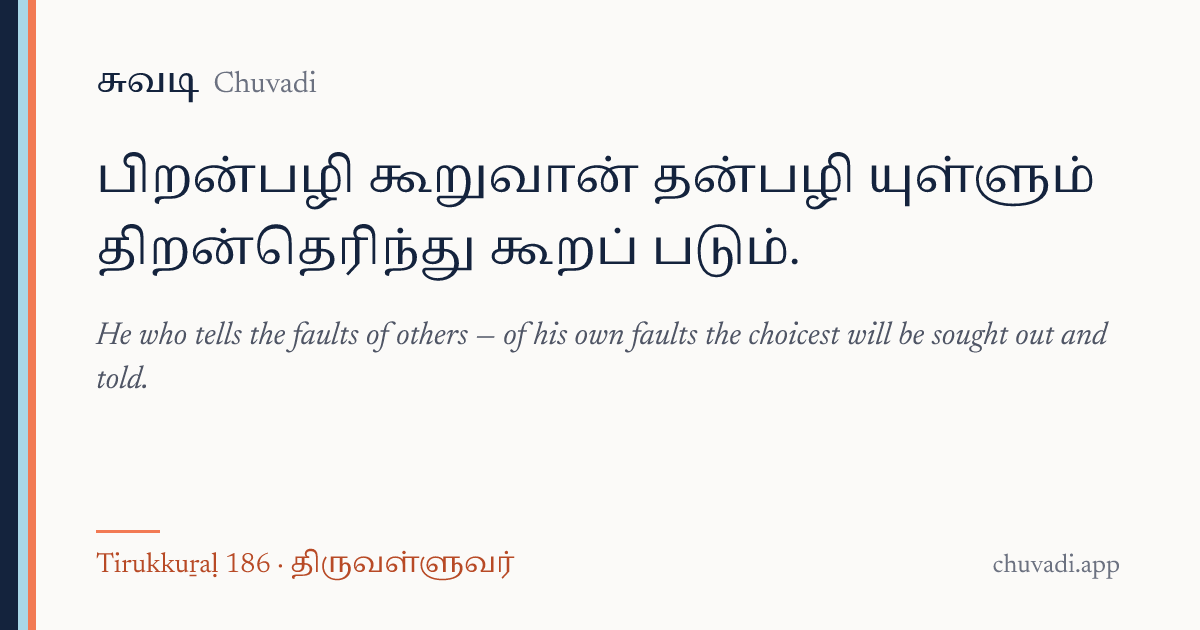
பிறருடைய பழிகளைத் தூற்றுபவனின் பழிகளுள் மிகக் கொடியவற்றை, மற்றவர்கள் தேடிப் பிடித்து எடுத்துச் சொல்லுவார்கள்.
புறங்கூறுபவன் தன்மீதே பழி திரும்பும் வழியைத் தானே திறக்கிறான் என்று புறங்கூறாமை அதிகாரம் எச்சரிக்கிறது. ‘திறன் தெரிந்து’ என்பது தேர்ந்தெடுத்து. ‘பழி’ என்ற சொல் இரு அடிகளிலும் வந்து, அவன் வீசிய பழியே அவனிடம் திரும்புவதைக் காட்டுகிறது.
ஆங்கிலம் · English translationAI
Translation
- He who tells the faults of others — of his own faults
- the choicest will be sought out and told.
What the poem says
A warning of reciprocity. Whoever gossips about others' failings will find his own faults gathered and spread, with the most damaging ones, tiṟaṉ terintu, picked out first.
The couplet does not say who will do the telling; the natural reading is the people he has wronged, or the world at large. Paḻi means both fault and disgrace. The couplet appeals to self-interest more than to principle, a common strategy in the Kuṟaḷ.
யாப்பு · Metre: veṇpā scansion
வெண்பா Scans as a veṇpā as printed: every சீர் is one a veṇpā allows, and every join keeps வெண்டளை.
நேர் one letter, short or long, with any consonant after it · நிரை a short letter with the letter after it · a final உ before a vowel is dropped, and ஐ after a word's first letter counts as short.