



திருக்குறள் 206
பாடல் · The poem
Tap a word to see where else it occurs.
பொருள் · Meaning in TamilAI
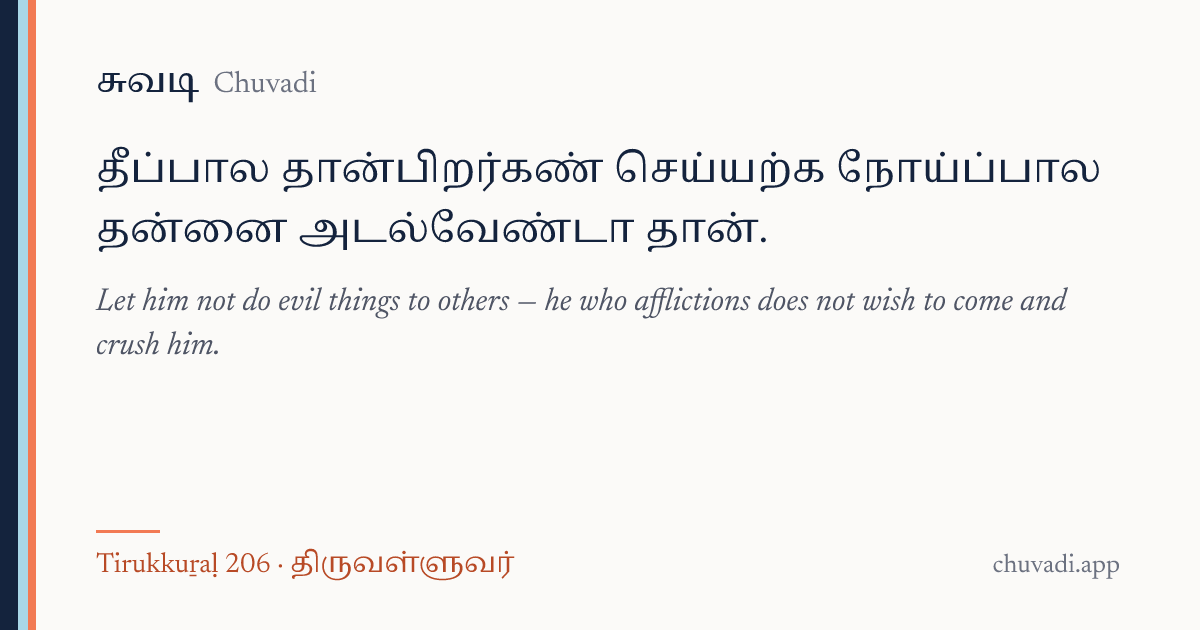
துன்பங்கள் வந்து தன்னை வருத்துவதை விரும்பாதவன், தீய செயல்களைப் பிறருக்குச் செய்யக் கூடாது.
‘தீப்பால’, ‘நோய்ப்பால’ என்ற இணை, பிறருக்குச் செய்யும் தீமையே தனக்குத் துன்பமாகத் திரும்பும் என்பதைக் காட்டுகிறது. ‘அடல்’ என்பது வருத்தி அழித்தல்; தீமை தானே தேடி வந்து தாக்கும் என்ற கருத்து இதில் உள்ளது.
ஆங்கிலம் · English translationAI
Translation
- Let him not do evil things to others — he who afflictions
- does not wish to come and crush him.
What the poem says
A plain statement of reciprocity. Anyone who does not want suffering, nōy, to fall on him should not cause suffering to others.
The parallel of tīppāla and nōyppāla, "things of the evil kind" and "things of the afflicting kind", sets action and its return side by side. Aṭal, "to strike, overwhelm, kill", is a strong word: the return of evil is imagined as a blow. The couplet presents moral restraint as a form of self-protection.
யாப்பு · Metre: veṇpā scansion
வெண்பா Scans as a veṇpā as printed: every சீர் is one a veṇpā allows, and every join keeps வெண்டளை.
நேர் one letter, short or long, with any consonant after it · நிரை a short letter with the letter after it · a final உ before a vowel is dropped, and ஐ after a word's first letter counts as short.