



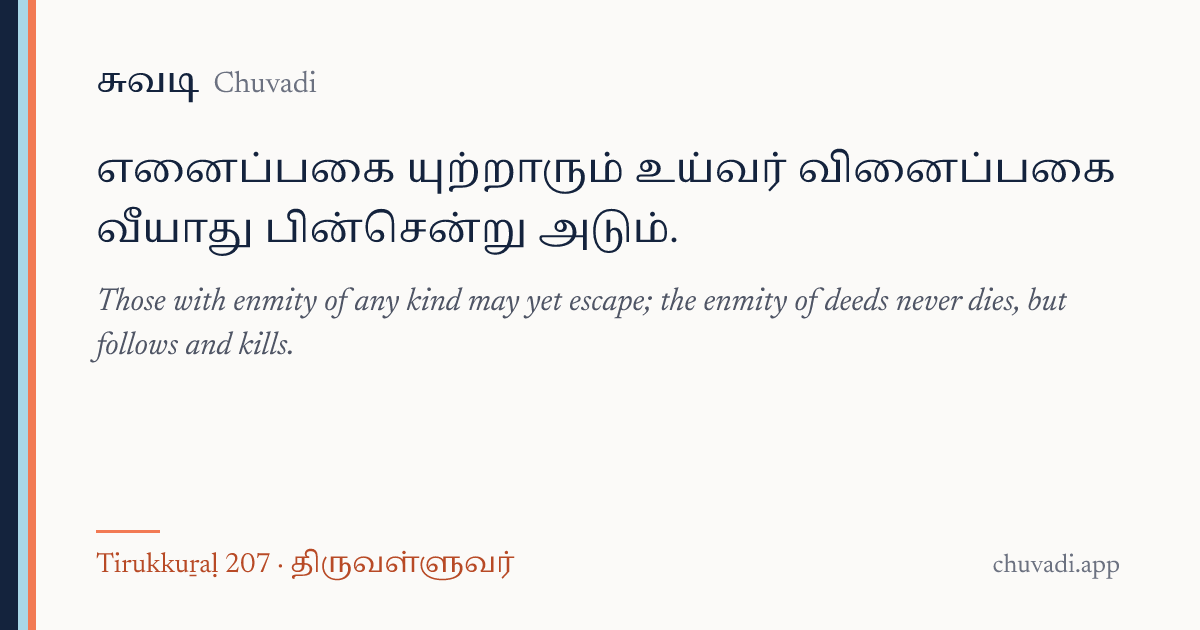
திருக்குறள் 207
பாடல் · The poem
Tap a word to see where else it occurs.
பொருள் · Meaning in TamilAI
எத்தகைய பகையைப் பெற்றவரும் தப்பிப் பிழைக்கலாம்; ஆனால் தீவினையால் வரும் பகை அழியாமல் பின்தொடர்ந்து வந்து அழித்துவிடும்.
மனிதப் பகைவனிடமிருந்து ஒளிந்துவிடலாம்; தன் செயலின் விளைவிலிருந்து தப்ப முடியாது என்பது தீவினையச்சம் அதிகாரத்தின் கருத்து. ‘வீயாது’ என்பது அழியாமல்.
ஆங்கிலம் · English translationAI
Translation
- Those with enmity of any kind may yet escape; the enmity of deeds
- never dies, but follows and kills.
What the poem says
Human enemies can be escaped, uyvar; the enmity of one's own evil deeds, viṉaip pakai, cannot. It does not die but follows the doer and destroys him.
Viṉai, "deed" or "action", is close to the idea of karma: the act that bears its own consequences. Calling it an enemy makes it vivid: a pursuer who never tires. The phrase piṉceṉṟu, "going behind", suggests it follows across time, perhaps into later births, as traditional commentators read it.
யாப்பு · Metre: veṇpā scansion
வெண்பா · புணர்ச்சியுடன் Scans as a veṇpā once a final குற்றியலுகரம் is dropped before a vowel, as prosody reads it (நின்று உலகம் → நின் றுலகம்).
நேர் one letter, short or long, with any consonant after it · நிரை a short letter with the letter after it · a final உ before a vowel is dropped, and ஐ after a word's first letter counts as short.