



திருக்குறள் 208
பாடல் · The poem
Tap a word to see where else it occurs.
பொருள் · Meaning in TamilAI
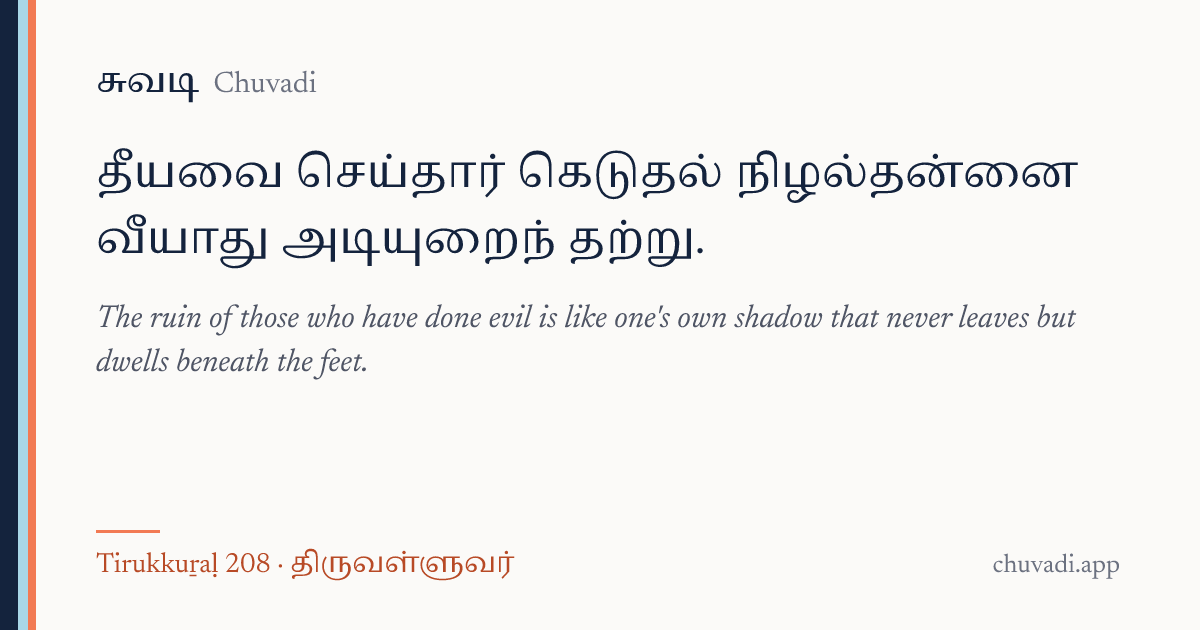
தீயவை செய்தவர்கள் அடையும் கேடு, ஒருவனுடைய நிழல் அவனை விட்டு நீங்காமல் அவன் காலடியிலேயே தங்கியிருப்பது போன்றது.
நிழல் உருவத்தை எப்போதும் தொடர்வது போல, கேடு தீவினையாளனைத் தொடரும் என்பது உவமையின் நுட்பம். ‘அடியுறைந்தற்று’ என்பது காலடியிலேயே தங்கியிருப்பது போல என்ற பொருள் தருகிறது; எங்குச் சென்றாலும் அது உடன் வரும்.
ஆங்கிலம் · English translationAI
Translation
- The ruin of those who have done evil is like one's own shadow
- that never leaves but dwells beneath the feet.
What the poem says
A homely image: one's shadow is always at one's feet, never leaving. So the ruin of the evil-doer never departs from him.
Aṭi uṟaintaṟṟu, "like dwelling at the foot", places the shadow under the feet, where it follows every step. The image adds closeness to the previous couplet's pursuit: ruin is not chasing from behind but already attached.
யாப்பு · Metre: veṇpā scansion
வெண்பா · புணர்ச்சியுடன் Scans as a veṇpā once a final குற்றியலுகரம் is dropped before a vowel, as prosody reads it (நின்று உலகம் → நின் றுலகம்).
நேர் one letter, short or long, with any consonant after it · நிரை a short letter with the letter after it · a final உ before a vowel is dropped, and ஐ after a word's first letter counts as short.