



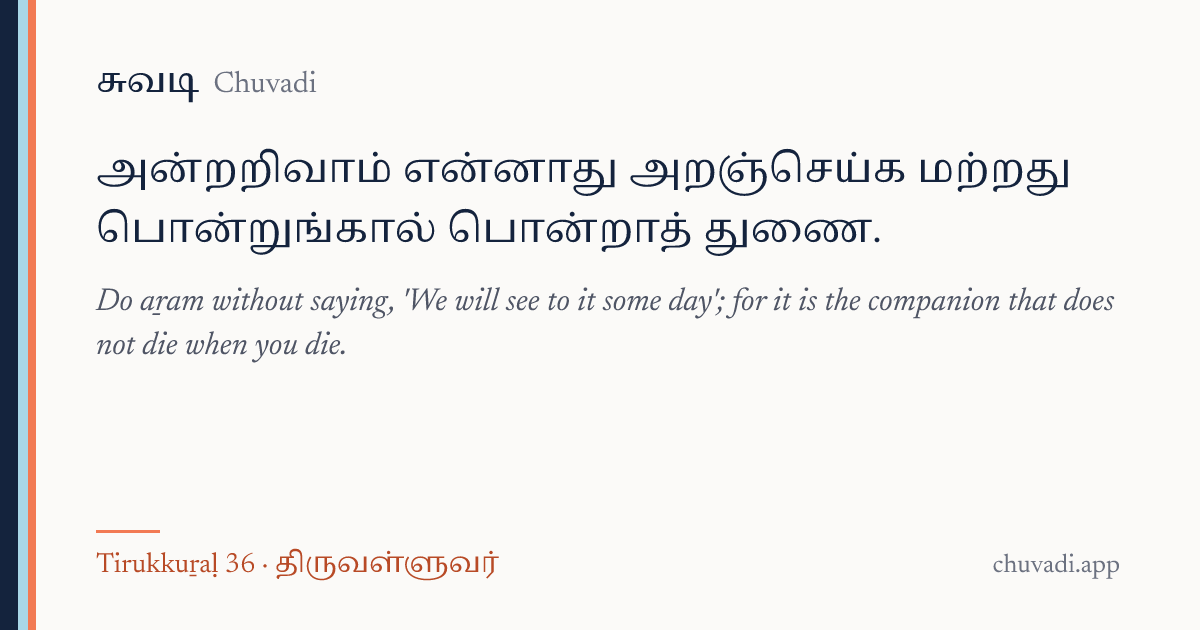
திருக்குறள் 36
பாடல் · The poem
Tap a word to see where else it occurs.
பொருள் · Meaning in TamilAI
பின்னொரு நாளில் பார்த்துக்கொள்ளலாம் என்று தள்ளிப்போடாமல் இப்போதே அறம் செய்ய வேண்டும்; அந்த அறம், உடல் அழியும் காலத்தில் அழியாமல் உடன்வரும் துணையாகும்.
‘பொன்றுங்கால் பொன்றா’ என்ற சொல்லிணைவு அழிவையும் அழியாமையையும் அருகருகே வைக்கிறது. அறன்வலியுறுத்தல் அதிகாரம் அறத்தைத் தள்ளிப்போடும் மனப்போக்கை இங்கே கண்டிக்கிறது; ‘அன்று அறிவாம்’ என்பதை முதுமையில் செய்வோம் என்று கொள்வதும் உண்டு.
ஆங்கிலம் · English translationAI
Translation
- Do aṟam without saying, 'We will see to it some day'; for it
- is the companion that does not die when you die.
What the poem says
The warning is against postponement. People say they will turn to virtue later, 'on that day' (aṉṟu), meaning in old age or near death. The couplet answers: do it now, because aṟam is the only companion (tuṇai) that does not perish when you perish.
The wordplay is in poṉṟum and poṉṟā: 'when you perish, the unperishing'. Wealth, kin and body all fall away at death; aṟam alone goes on, carrying its fruit into the next life. The phrase aṉṟu aṟivām could also be read 'we shall understand it then', but the sense of putting off the effort is the same.
யாப்பு · Metre: veṇpā scansion
வெண்பா · புணர்ச்சியுடன் Scans as a veṇpā once a final குற்றியலுகரம் is dropped before a vowel, as prosody reads it (நின்று உலகம் → நின் றுலகம்).
நேர் one letter, short or long, with any consonant after it · நிரை a short letter with the letter after it · a final உ before a vowel is dropped, and ஐ after a word's first letter counts as short.