



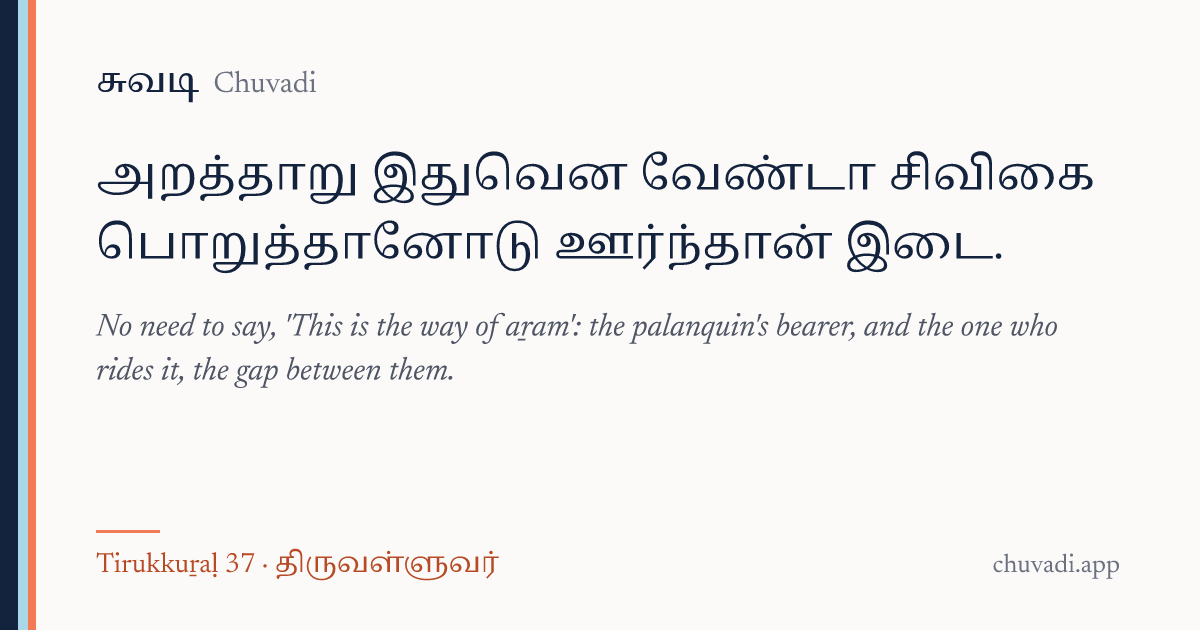
திருக்குறள் 37
பாடல் · The poem
Tap a word to see where else it occurs.
பொருள் · Meaning in TamilAI
பல்லக்கைச் சுமந்து செல்பவனுக்கும் அதில் அமர்ந்து செல்பவனுக்கும் இடையே உள்ள வேறுபாட்டைக் கண்டு, ‘அறத்தின் வழி இதுதான்’ என்று தனியே சொல்ல வேண்டியதில்லை.
அறன்வலியுறுத்தல் அதிகாரத்தில் மிகுந்த கருத்து வேறுபாட்டுக்கு உரிய குறள் இது. முன்பு செய்த அறத்தின் பயனை அந்த வேறுபாடே காட்டுகிறது என்பது வழக்கமான பொருள்; அந்த வேறுபாட்டை வைத்து அறத்தை அளக்கக் கூடாது என்று இதற்கு வேறு பொருளும் கொள்ளப்படுகிறது.
ஆங்கிலம் · English translationAI
Translation
- No need to say, 'This is the way of aṟam': the palanquin's
- bearer, and the one who rides it, the gap between them.
What the poem says
This is one of the most debated couplets in the Kuṟaḷ. On the surface: one man carries a palanquin, another rides in it, and the difference between them shows something about aṟam.
Traditional commentators read it as karma made visible: there is no need to explain the fruit of virtue, since the rider enjoys the reward of past good deeds and the bearer the result of their lack. Many modern readers find that reading troubling and offer another: 'Do not point to bearer and rider and say, this is the way of aṟam', so the couplet would forbid treating social station as proof of merit. The Tamil, with its bare 'no need for this is the way', permits both.
யாப்பு · Metre: veṇpā scansion
வெண்பா · புணர்ச்சியுடன் Scans as a veṇpā once a final குற்றியலுகரம் is dropped before a vowel, as prosody reads it (நின்று உலகம் → நின் றுலகம்).
நேர் one letter, short or long, with any consonant after it · நிரை a short letter with the letter after it · a final உ before a vowel is dropped, and ஐ after a word's first letter counts as short.