



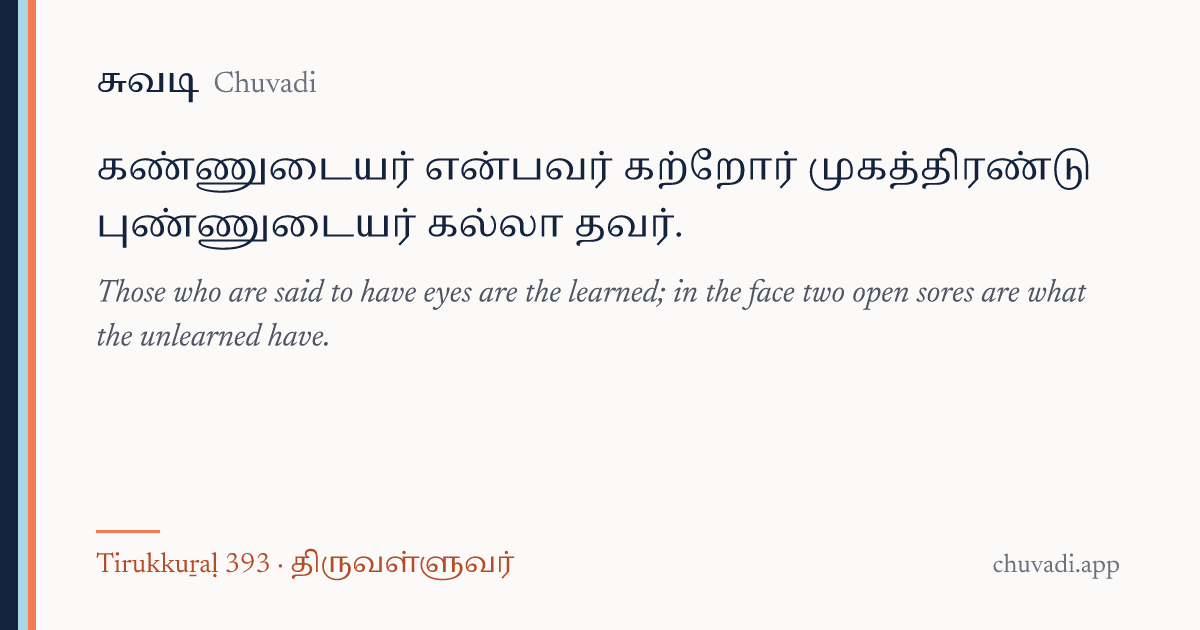
திருக்குறள் 393
பாடல் · The poem
Tap a word to see where else it occurs.
பொருள் · Meaning in TamilAI
கண் உடையவர் என்று சொல்லத் தகுந்தவர்கள் கற்றவர்கள் மட்டுமே; கல்லாதவர்களின் முகத்தில் இருப்பவை கண்கள் அல்ல, இரண்டு புண்கள்.
முந்தைய குறளில் கல்வியைக் கண் என்ற வள்ளுவர், கல்வி அதிகாரத்தில் அதைத் தொடர்ந்து கல்லாதவரின் கண்களைப் புண்கள் என்கிறார். பார்வை தராமல் முகத்தில் வெறுமனே இருக்கும் கண், வலி மட்டும் தரும் புண்ணுக்குச் சமம் என்பது கடுமையான உவமை.
ஆங்கிலம் · English translationAI
Translation
- Those who are said to have eyes are the learned; in the face two
- open sores are what the unlearned have.
What the poem says
This couplet takes the image of the eye from the one before and pushes it to a harsh contrast. Only the learned can truly be said to have eyes. The unlearned also have two openings in their face, but these are mere wounds, puṇ, holes that do not see.
The force lies in the word 'eṉpavar', 'those who are called': the name 'having eyes' belongs by right to the educated alone. The insult is deliberate and stark, in keeping with the chapter's high claims for learning. The comparison is not about physical sight at all. What makes an eye is the understanding that comes through it.
யாப்பு · Metre: veṇpā scansion
வெண்பா Scans as a veṇpā as printed: every சீர் is one a veṇpā allows, and every join keeps வெண்டளை.
நேர் one letter, short or long, with any consonant after it · நிரை a short letter with the letter after it · a final உ before a vowel is dropped, and ஐ after a word's first letter counts as short.