



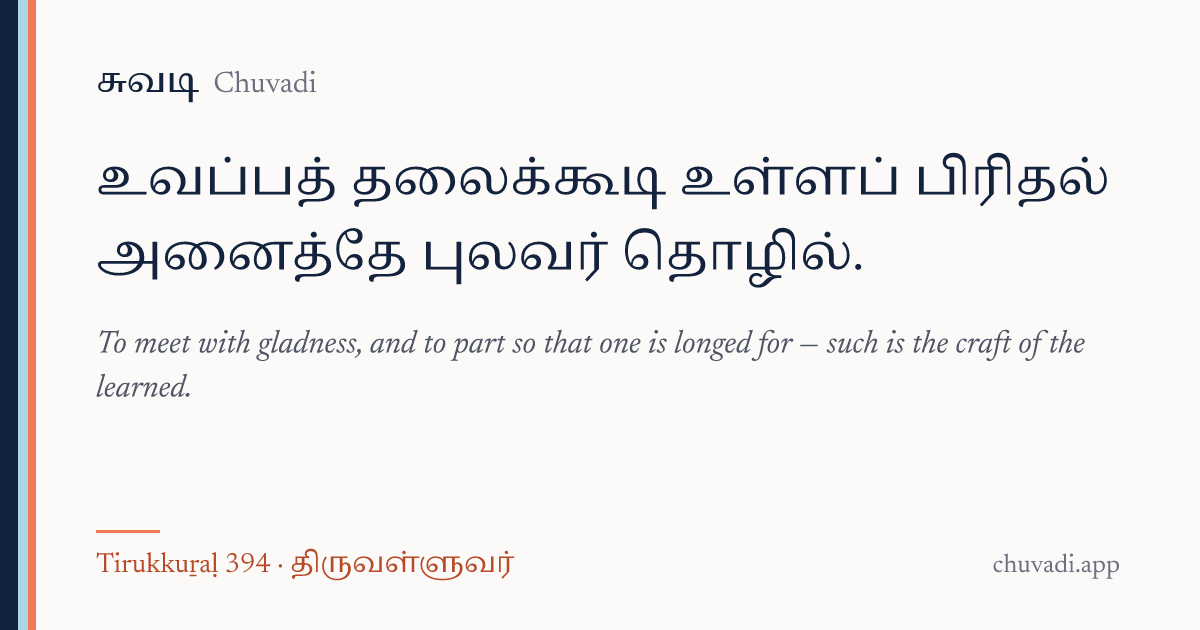
திருக்குறள் 394
பாடல் · The poem
Tap a word to see where else it occurs.
பொருள் · Meaning in TamilAI
மற்றவர்கள் மகிழும்படி அவர்களோடு கூடிப் பழகுவதும், பிரிந்த பின் ‘மீண்டும் எப்போது இவரைச் சந்திப்போம்’ என்று அவர்கள் ஏங்கும்படி விடைபெறுவதும் கற்றவர்களின் இயல்பு.
கல்வி அதிகாரம். கல்வியின் பயன் நூலறிவோடு நின்றுவிடாமல், மக்களோடு பழகும் பண்பிலும் தெரியும் என்கிறது. ‘புலவர்’ என்பது இங்கே பாட்டு இயற்றுபவரை மட்டுமன்றி, கற்றறிந்த எவரையும் குறிக்கும்.
ஆங்கிலம் · English translationAI
Translation
- To meet with gladness, and to part so that one is longed for —
- such is the craft of the learned.
What the poem says
Here learning is shown in social grace rather than in books. The learned person's skill shows when people gather: they come together with delight, and when they part, the others think of them fondly and wish to meet again.
Pulavar means the learned, and especially poets and scholars. Toḻil, 'work' or 'craft', makes this charm something learnt, a part of the discipline of learning, not just a gift of temperament. Uḷḷa, 'so that they think of', is read by most as 'so that one is remembered with longing'. Some take the subject of the gladness to be the scholars themselves, meeting one another with joy. Either way, learning makes good company.
யாப்பு · Metre: veṇpā scansion
வெண்பா Scans as a veṇpā as printed: every சீர் is one a veṇpā allows, and every join keeps வெண்டளை.
நேர் one letter, short or long, with any consonant after it · நிரை a short letter with the letter after it · a final உ before a vowel is dropped, and ஐ after a word's first letter counts as short.