



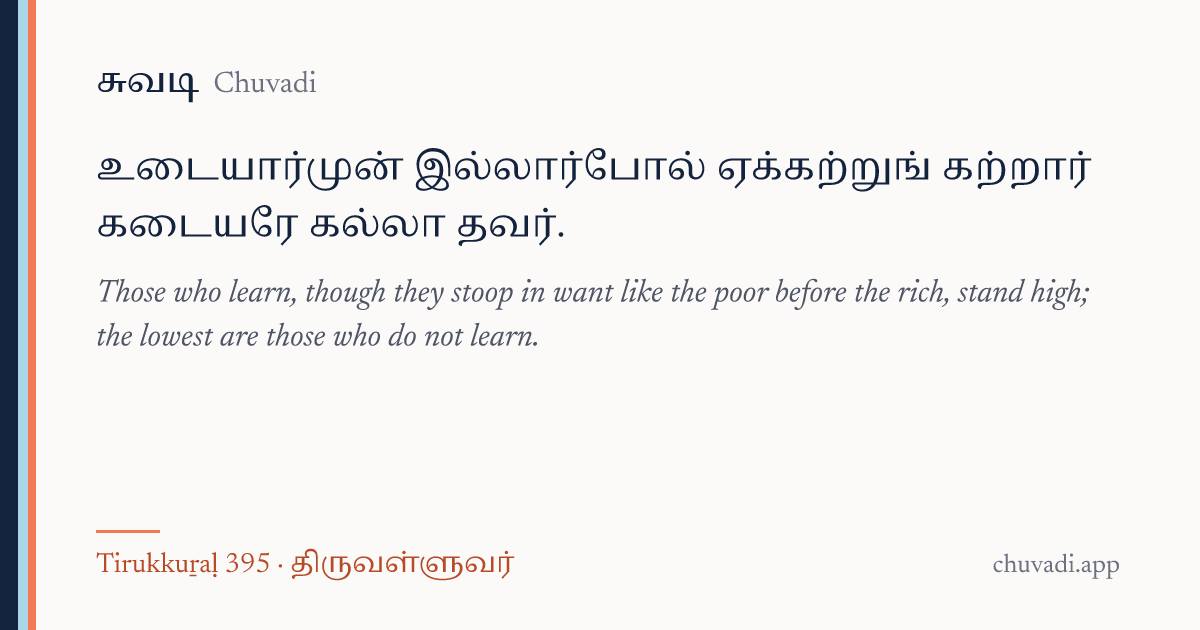
திருக்குறள் 395
பாடல் · The poem
Tap a word to see where else it occurs.
பொருள் · Meaning in TamilAI
செல்வரின் முன் வறியவர் பணிந்து நிற்பதுபோல, அறிந்தவர் முன் தாழ்ந்து நின்று ஏங்கியும் கற்றுக்கொண்டவர்களே உயர்ந்தவர்கள்; கல்லாதவர்களே கடைநிலையில் உள்ளவர்கள்.
கல்வி அதிகாரம். கற்கும்போது பணிவது இழிவு அல்ல; கல்லாமல் இருப்பதுதான் இழிவு என்பது கருத்து. ‘ஏக்கற்றும்’ என்ற சொல், அறிவுக்காக ஏங்கித் தாழ்ந்து நிற்கும் நிலையைக் காட்டுகிறது.
ஆங்கிலம் · English translationAI
Translation
- Those who learn, though they stoop in want like the poor before the rich, stand high;
- the lowest are those who do not learn.
What the poem says
The first line paints the posture of the student. Before those who have learning, the pupil stands like a poor man before a rich one, humble and eager. The second line gives the verdict: those who refuse to learn are the lowest of all.
Uṭaiyār, 'those who have', most naturally means those who possess learning, that is, teachers; illār are those who lack. Ēkkaṟṟu suggests longing and self-abasement. The couplet's point is that humility in learning is no disgrace; the true disgrace is ignorance. A few readers take uṭaiyār as the literally wealthy, which makes the line a simile only, or read kaṟṟār as 'those who have learnt' rather than 'those who learn'; most traditional readings treat the teacher as the 'rich man' of knowledge.
யாப்பு · Metre: veṇpā scansion
வெண்பா Scans as a veṇpā as printed: every சீர் is one a veṇpā allows, and every join keeps வெண்டளை.
நேர் one letter, short or long, with any consonant after it · நிரை a short letter with the letter after it · a final உ before a vowel is dropped, and ஐ after a word's first letter counts as short.