



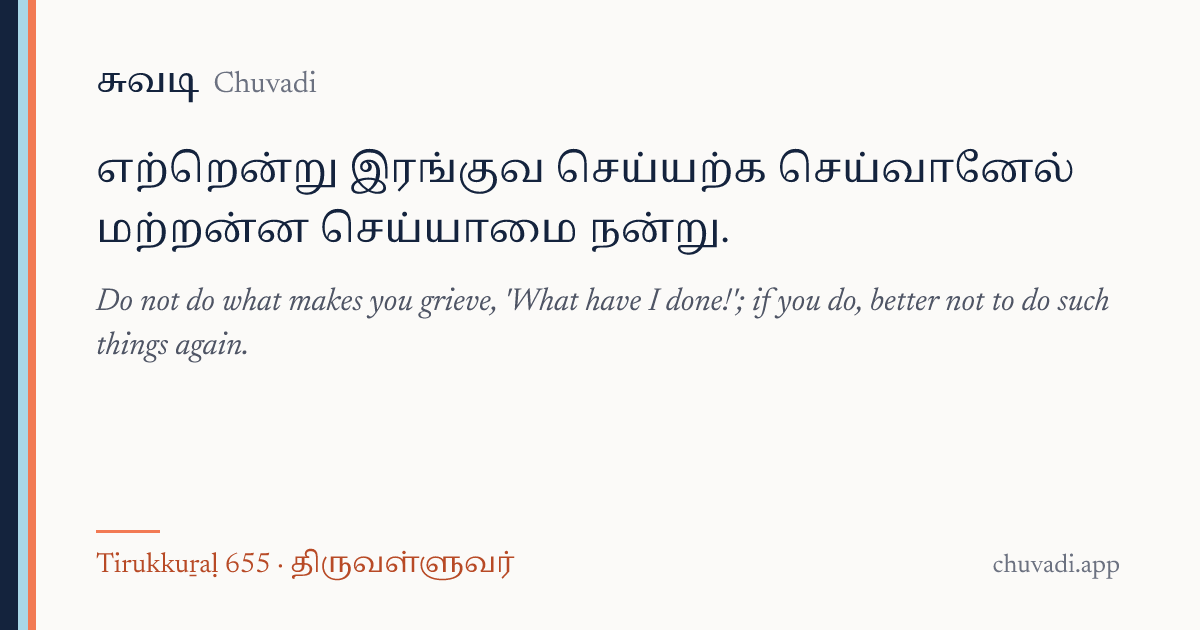
திருக்குறள் 655
பாடல் · The poem
Tap a word to see where else it occurs.
பொருள் · Meaning in TamilAI
‘என்ன செய்துவிட்டேன்!’ என்று பின்னர் வருந்த வைக்கும் செயலைச் செய்யக்கூடாது; ஒருவேளை அப்படி ஒன்றைச் செய்துவிட்டால், மீண்டும் அதுபோன்றதைச் செய்யாமல் இருப்பதே நல்லது.
வினைத்தூய்மை அதிகாரக் குறள். தவறு செய்யாமை முதல் வழி; செய்த தவறைத் திரும்பச் செய்யாமை இரண்டாம் வழி என்று இரண்டு படிகளாக அறிவுரை சொல்கிறது.
ஆங்கிலம் · English translationAI
Translation
- Do not do what makes you grieve, 'What have I done!'; if you do,
- better not to do such things again.
What the poem says
The couplet offers a two-step rule. First, avoid any act you will later lament with the cry eṟṟu, 'what is this I have done?' Second, if you have already slipped, the good course is not to repeat it. It is a realistic piece of advice: it expects failure and asks only that a person learn from it.
Iraṅku means to regret or lament. The chapter's idea of purity here includes the self-knowledge that foresees regret before acting.
யாப்பு · Metre: veṇpā scansion
வெண்பா · புணர்ச்சியுடன் Scans as a veṇpā once a final குற்றியலுகரம் is dropped before a vowel, as prosody reads it (நின்று உலகம் → நின் றுலகம்).
நேர் one letter, short or long, with any consonant after it · நிரை a short letter with the letter after it · a final உ before a vowel is dropped, and ஐ after a word's first letter counts as short.