



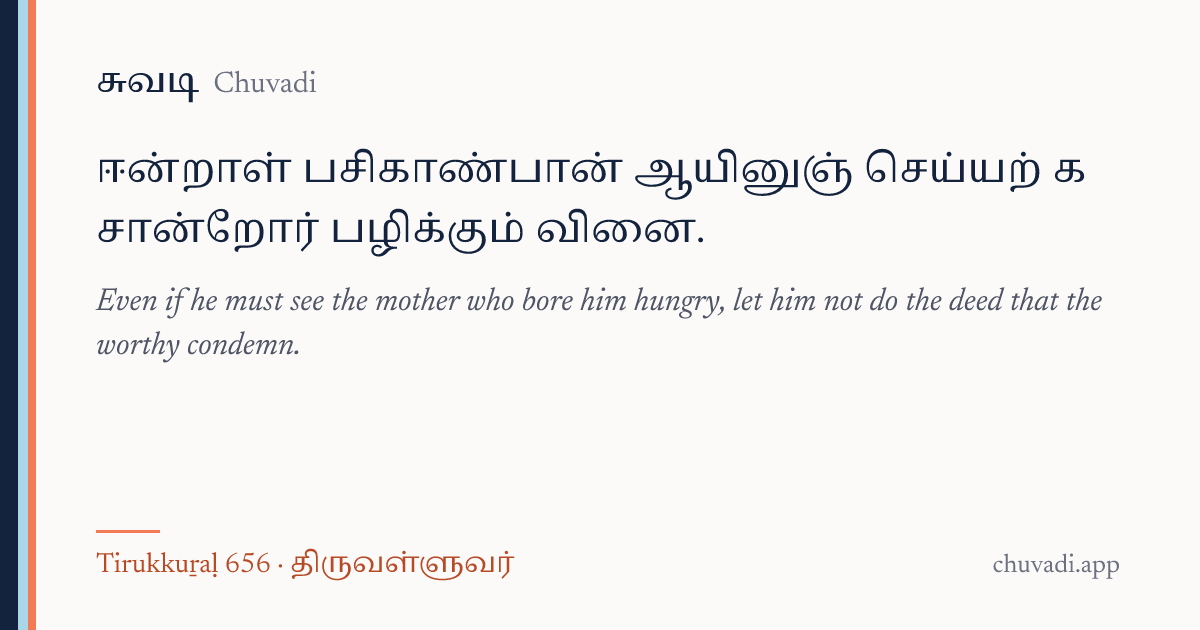
திருக்குறள் 656
பாடல் · The poem
Tap a word to see where else it occurs.
பொருள் · Meaning in TamilAI
தன்னைப் பெற்ற தாய் பசியால் வாடுவதைக் காண நேர்ந்தாலும், சான்றோர் பழிக்கும் செயலை ஒருவர் செய்யக்கூடாது.
வினைத்தூய்மை அதிகாரத்தின் மிக உறுதியான குறள் இது. பெரிய கடமையாகக் கருதப்படும் தாயைக் காத்தல்கூட இழிசெயலுக்குக் காரணமாகக் கூடாது என்று சொல்லி, தூய்மையின் எல்லையைக் காட்டுகிறது.
ஆங்கிலம் · English translationAI
Translation
- Even if he must see the mother who bore him hungry, let him not do
- the deed that the worthy condemn.
What the poem says
This is one of the starkest couplets on clean action. The extreme case chosen is a mother's hunger, the strongest claim a person could plead for doing wrong. Even then, the deed that the cāṉṟōr, the wise and upright, would blame must not be done.
The force of the couplet lies in refusing the most sympathetic excuse imaginable. Its standard is set not by private need but by the judgment of the worthy, whose blame (paḻi) marks the line that may not be crossed.
யாப்பு · Metre: veṇpā scansion
வெண்பா · சீர் இணைத்து Scans as a veṇpā once a word printed in two parts is read as one சீர்.
நேர் one letter, short or long, with any consonant after it · நிரை a short letter with the letter after it · a final உ before a vowel is dropped, and ஐ after a word's first letter counts as short.