



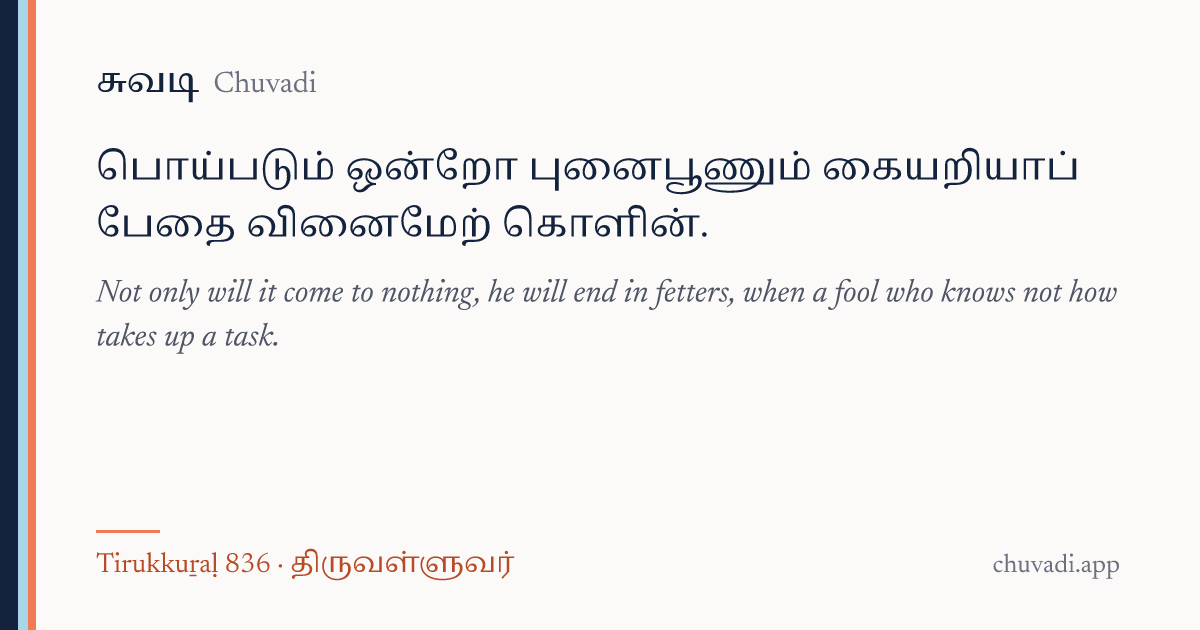
திருக்குறள் 836
பாடல் · The poem
Tap a word to see where else it occurs.
பொருள் · Meaning in TamilAI
செய்முறை அறியாத பேதை ஒரு செயலை மேற்கொண்டால், அது பொய்த்துப் போவது மட்டுமன்று; அவனே விலங்கு பூட்டப்படும் நிலைக்கும் ஆளாவான்.
பேதைமை அதிகாரத்தில் 'புனைபூணும்' என்பது தளை அணிதல், அதாவது சிறையோ தண்டனையோ பெறுதல்; 'கையறியா' என்பது கைவந்த திறமை இல்லாத என்ற பொருள் தருகிறது.
ஆங்கிலம் · English translationAI
Translation
- Not only will it come to nothing, he will end in fetters,
- when a fool who knows not how takes up a task.
What the poem says
When a fool who lacks skill undertakes some work, the result is not merely failure. He also brings disgrace or punishment upon himself.
Poypaṭum, 'comes to falsehood' or 'fails', is the first consequence. Puṉaipūṇum, literally 'wears a fetter', is the second and worse one, usually understood as imprisonment or punishment. Kaiyaṟiyā, 'not knowing with the hand', means lacking practical method. The couplet shows how folly, unlike mere ignorance, actively harms the one who has it.
யாப்பு · Metre: veṇpā scansion
வெண்பா Scans as a veṇpā as printed: every சீர் is one a veṇpā allows, and every join keeps வெண்டளை.
நேர் one letter, short or long, with any consonant after it · நிரை a short letter with the letter after it · a final உ before a vowel is dropped, and ஐ after a word's first letter counts as short.