



திருக்குறள் 837
பாடல் · The poem
Tap a word to see where else it occurs.
பொருள் · Meaning in TamilAI
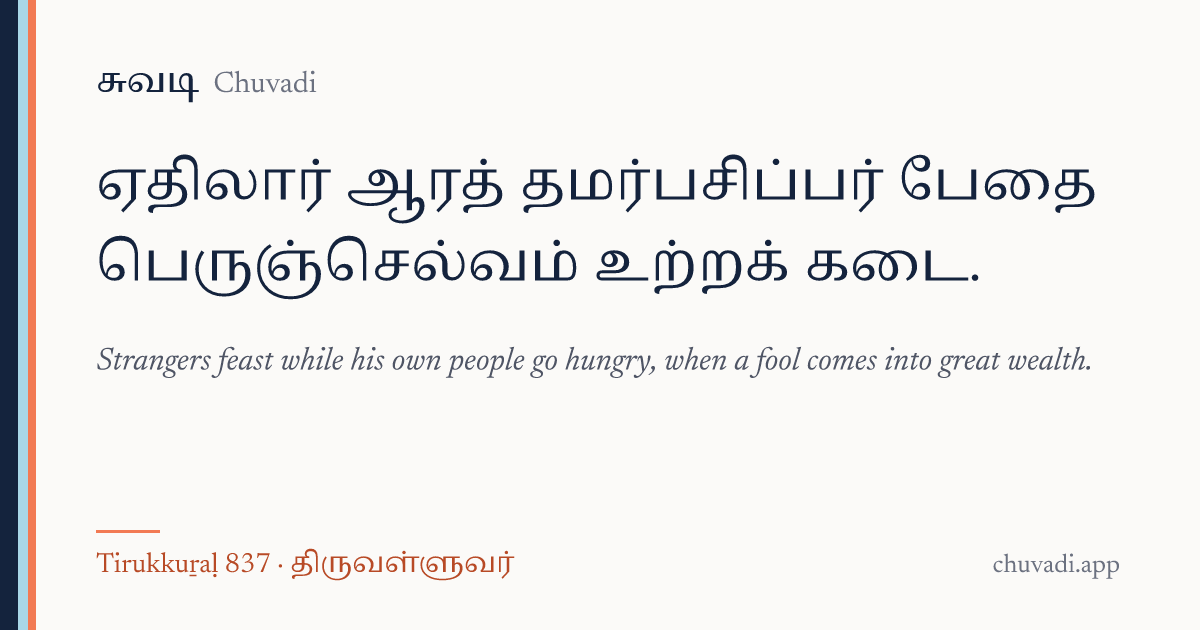
பேதைக்குப் பெருஞ்செல்வம் வந்து சேர்ந்தால், அயலார் வயிறார உண்பார்கள்; அவனுடைய சொந்த மக்களோ பசியால் வாடுவார்கள்.
பேதைமை அதிகாரத்தில், செல்வத்தை எங்கே செலவிடுவது என்று அறியாதவனின் நிலையை 'ஏதிலார் ஆர', 'தமர் பசிப்பர்' என்ற எதிரெதிர்ப் படிமங்களால் காட்டுகிறது.
ஆங்கிலம் · English translationAI
Translation
- Strangers feast while his own people go hungry, when a fool
- comes into great wealth.
What the poem says
Sudden riches in the hands of a fool are wasted. Outsiders are fed to their fill, while his own family and dependants starve.
Ētilār, 'strangers' or 'those who are nothing to him', and tamar, 'his own people', are opposed sharply. Āra, 'to satiety', against pacippar, 'they hunger', completes the contrast. The fool cannot tell whom he owes and whom he does not, and his wealth flows to the wrong mouths.
யாப்பு · Metre: veṇpā scansion
வெண்பா Scans as a veṇpā as printed: every சீர் is one a veṇpā allows, and every join keeps வெண்டளை.
நேர் one letter, short or long, with any consonant after it · நிரை a short letter with the letter after it · a final உ before a vowel is dropped, and ஐ after a word's first letter counts as short.