



தொல்காப்பியம் 1018 · பொருள் 2.14
பாடல் · The poem
Tap a word to see where else it occurs.
பொருள் · Meaning in TamilAI
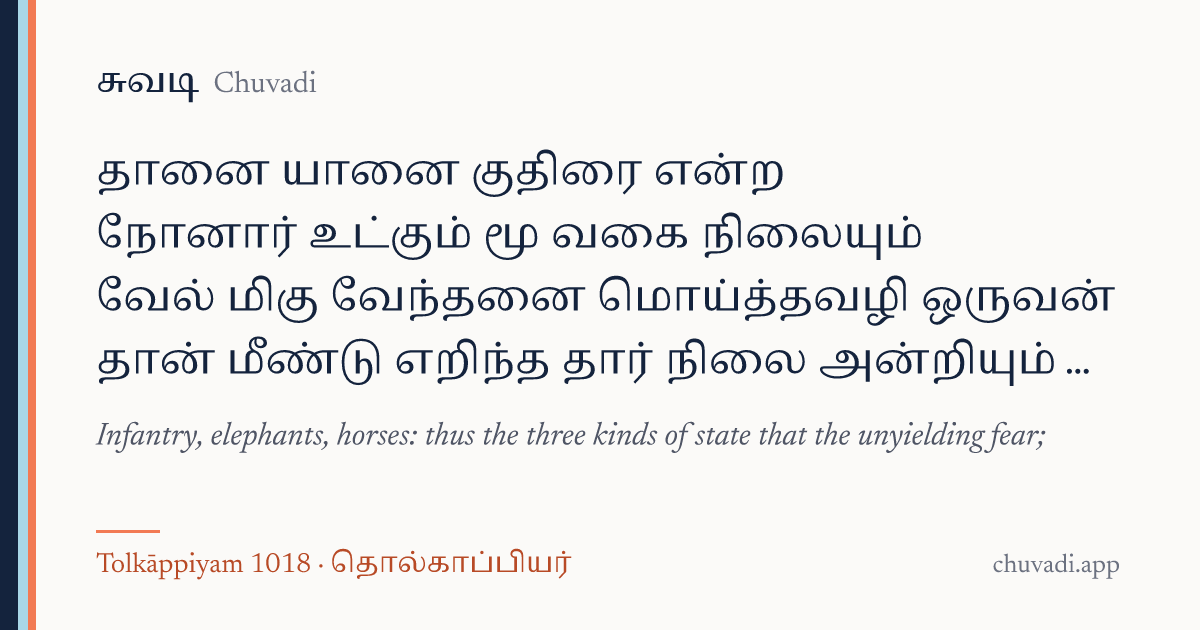
காலாட்படை, யானைப்படை, குதிரைப்படை என்று பகைவர் அஞ்சும் மூவகை நிலையும்; வேல்வலிமிக்க வேந்தனைப் பகைவர் மொய்த்தபோது ஒருவன் மீண்டு திரும்பித் தாக்கும் தார்நிலையும்; இரு தலைவர் ஒருவரை ஒருவர் கொன்று வீழும் பக்கமும்; படை உடைந்தபோது ஒருவனே பின்புறத்தைத் தாங்கும் எருமையும்; பகைப்படையை அறுத்துக் களத்தைக் கைக்கொள்ளும் ஏமமும்; யானையைக் கொன்று அதனோடு வீழ்ந்தவர் நிலையும்; பகைவேந்தனைக் கொன்ற வேந்தனைச் சூழ்ந்து வாள்வீரர் ஆடும் அமலையும்; இரு பெருவேந்தரும் சுற்றமும் ஒருவரும் எஞ்சாமல் வீழும் தொகைநிலையும்; தன் அரசன் வீழ்ந்ததற்குச் சினந்து ஒருவன் பாய்ந்து பெறும் நல்லிசை நிலையும்; பல படைகள் ஒருவனுக்குத் தோற்று உடைய அவன் ஒளிவீசும் வாளைச் சுழற்றும் நூழிலும் — இவை சேர்ந்து தும்பைக்குப் பன்னிரண்டு துறைகள் உண்டு.
இளம்பூரணர்
இவர் காலாள், யானை, குதிரை என்னும் மூவகை நிலை முதலிய பன்னிரண்டையும் தும்பையின் துறைகளாகக் கொண்டு பொருள் கொள்வார்.
நச்சினார்க்கினியர்
இவரும் இவற்றைத் தும்பைத் துறைகளாகவே கொள்வார்; தார், எருமை, நூழில் போன்ற துறைப்பெயர்களுக்கு இவர் தரும் பொருளும் பன்னிரண்டை எண்ணும் முறையும் இங்குச் சரிபார்க்கப்படவில்லை.
தொடர் அடிகளைக் கடந்து செல்வதால் பன்னிரண்டைப் பிரித்து எண்ணுவதில் உரையாசிரியர்களிடையே வேறுபாடு உண்டு. தார், எருமை, அமலை, நூழில் போன்ற துறைப்பெயர்களின் முழுப்பரப்பும் எப்போதும் தெளிவாக இல்லை.
ஆங்கிலம் · English translationAI
Translation
- Infantry, elephants, horses: thus
- the three kinds of state that the unyielding fear;
- when they swarm upon the king strong with the spear, one man
- turning back and striking, the tar state; and besides,
- the side where two leaders perish;
- one man against another, entering the broken ranks,
- the 'buffalo' who held the rear; cutting through the army
- and by the guard that takes the field;
- having killed an elephant, the fall of those who opposed, with the elephant
- the king who fell, the king who slew him,
- the amalai that sword-bearers dance; when swords strike home
- and the two great kings and their kin,
- in the heaped state where not one is left;
- the king having fallen in battle, enraged,
- the good-fame state where one man pressed on;
- since the many forces break before one, he
- swinging his bright sword, the nuzhil; including these,
- it has twelve turai that appear joined.
What the poem says
The twelve tuṟai of tumpai: the three kinds of fighting, by infantry, elephants and horses, that the enemy dreads; tār nilai, a single warrior who turns back to strike when foes crowd upon his king; the death of two leaders who kill each other; erumai "the buffalo", a warrior who alone holds the rear when the ranks are broken; one who cuts through the enemy and holds the field; the fall of a warrior who has slain an elephant and died with it; amalai, the dance of the sword-bearers around the slain king and his slayer; tokainilai, when both great kings and their followers fall and none is left; nal icai nilai, a warrior who, his king having fallen, rushes on in fury to win fame; and nūḻil, when the enemy hosts give way before one man swinging his sword.
The text runs on across lines, and the division of the twelve, especially among the first items and the elephant-fight, is explained differently by different commentators. The names (tār, erumai, amalai, nūḻil) are technical and their exact scope is not always clear.