



தொல்காப்பியம் 1019 · பொருள் 2.15
பாடல் · The poem
Tap a word to see where else it occurs.
பொருள் · Meaning in TamilAI
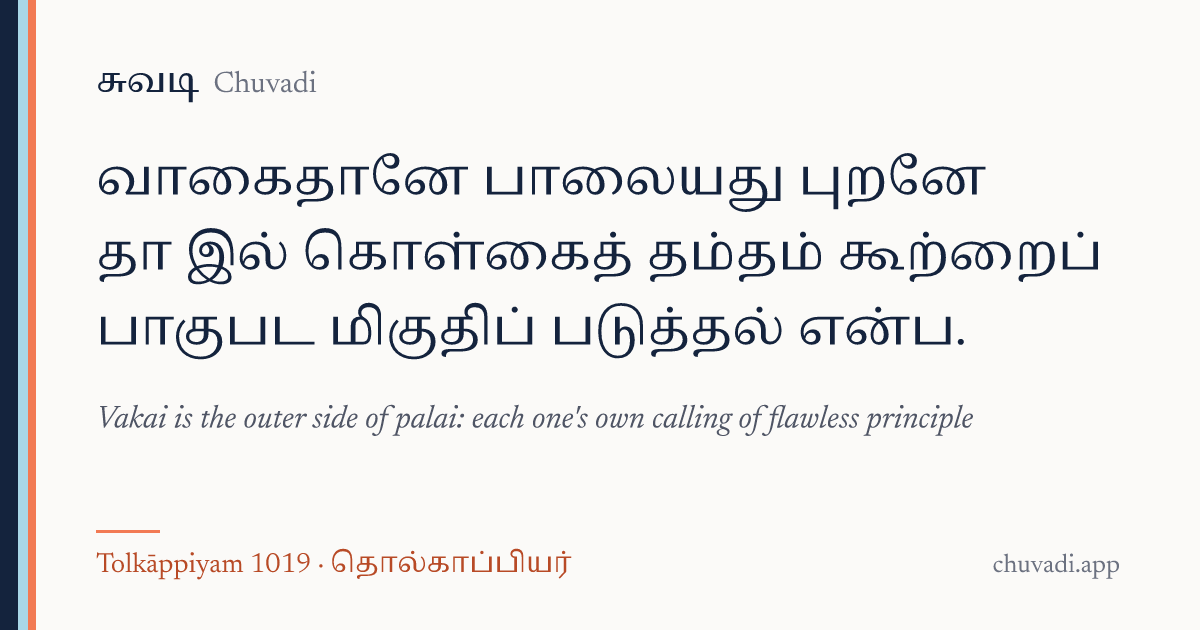
வாகைத் திணை பாலையின் புறமாகும்: குற்றமற்ற கொள்கையுடைய ஒவ்வொருவரும் தம்தம் பகுதிக்கு உரிய தொழிலில் வேறுபடுத்தி மேம்படுதலே அது என்பர்.
இளம்பூரணர்
இவர் வாகையைத் தம்தம் தொழிலில் குற்றமற்ற கொள்கையோடு பிறரினும் மேம்படுதல் எனக் கொண்டு, அது பாலையின் புறனாகும் எனப் பொருள் கொள்வார்; போர் வெற்றி மட்டுமன்றி எந்நெறியிலும் சிறத்தல் இதில் அடங்கும் என்பார்.
நச்சினார்க்கினியர்
இவரும் வாகையை இவ்வாறே பரந்த பொருளில் கொள்வார்; அந்தணர், அரசர் முதலிய ஒவ்வொரு பகுதியினரும் தம் தொழிலில் சிறத்தலை இதனுள் அடக்கி, பாலையோடு இணைப்பதற்குக் காரணம் கூறுவார்.
வாகை போர் வெற்றியை மட்டுமன்றி எந்த நெறியிலும் சிறந்து விளங்குவதைப் பாடுவது. பிரிவும் முயற்சியும் இரண்டுக்கும் பொது என்பதால் பாலையோடு இணைக்கப்பட்டது என்று உரையாசிரியர்கள் விளக்குவர்.
ஆங்கிலம் · English translationAI
Translation
- Vakai is the outer side of palai:
- each one's own calling of flawless principle
- set apart in its parts and raised to excellence, they say.
What the poem says
Vākai, the tiṇai of victory and excellence, is the puṟam of pālai. It is defined broadly: it praises the excelling of each person in his own calling (kūṟu "share, portion, duty"), held to with flawless principle and distinguished according to its kind. So vākai covers not only victory in war but pre-eminence in any honoured way of life.
The commentators explain the link with pālai through separation and self-denial: as the pālai hero leaves home for a higher end, so vākai praises those who excel by effort. The following nūṟpās list the kinds and themes.