



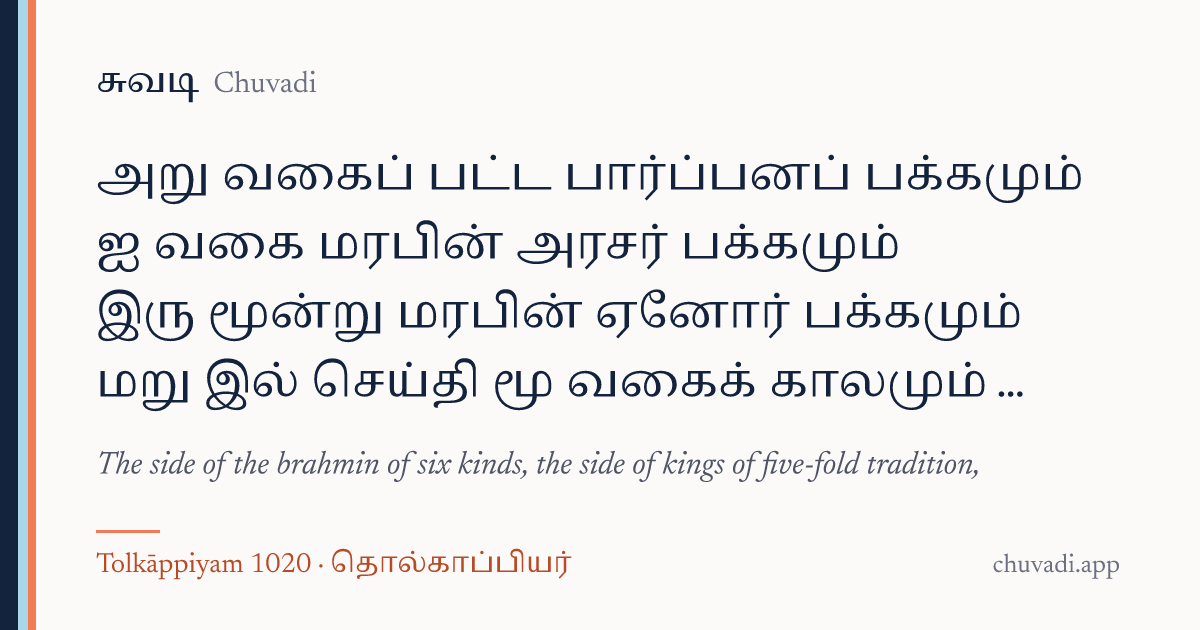
தொல்காப்பியம் 1020 · பொருள் 2.16
பாடல் · The poem
Tap a word to see where else it occurs.
பொருள் · Meaning in TamilAI
அறுவகைத் தொழிலுடைய அந்தணர் பக்கமும், ஐவகை மரபுடைய அரசர் பக்கமும், ஆறுவகை மரபுடைய ஏனையோர் (வணிகர், வேளாளர்) பக்கமும், குற்றமற்ற செயலும் மூன்று காலமும் அறிந்து நெறியில் ஒழுகிய அறிவனின் பக்கமும், எண்வகை ஒழுக்கமுடைய தாபதர் பக்கமும், தமக்குரிய பகுதியை அறிந்த பொருநர் பக்கமும், அவை போன்ற நிலைகளும் சேர்த்து, வாகை ஏழு வகையாகத் தொகுக்கப்பட்டது என்று புலவர் கூறுவர்.
இளம்பூரணர்
இவர் வாகையின் ஏழு வகைகளாகப் பார்ப்பனப் பக்கம், அரசர் பக்கம், ஏனோர் பக்கம், மூவகைக் காலம் அறிந்த அறிவன் பக்கம், தாபதப் பக்கம், பொருநர் பக்கம் முதலியவற்றைக் கொண்டு, அந்தணரின் ஆறு தொழிலை ஓதல், ஓதுவித்தல், வேட்டல், வேட்பித்தல், ஈதல், ஏற்றல் என விரிப்பார்.
நச்சினார்க்கினியர்
இவரும் இவ்வேழு பக்கங்களையும் அவ்வாறே கொண்டு, அந்தணர்க்கு ஆறு தொழிலும், அரசர்க்கு ஓதல், வேட்டல், ஈதல், படை வழங்குதல், குடியோம்புதல் என்னும் ஐந்தும் உரியன என மரபுவழி விரிப்பார். ஏனோர், தாபதர் ஆகியோர்க்கு இவர் தரும் பட்டியல்கள் இங்குச் சரிபார்க்கப்படவில்லை.
அந்தணரின் ஆறு தொழில் ஓதல், ஓதுவித்தல், வேட்டல், வேட்பித்தல், ஈதல், ஏற்றல் என்று உரையாசிரியர்கள் விரிப்பர். அரசர், ஏனோர், தாபதர் ஆகியோரின் தொழில் பட்டியல்கள் மரபிலிருந்து அவர்கள் தருவன; அவற்றில் சிறிய வேறுபாடுகள் உண்டு.
ஆங்கிலம் · English translationAI
Translation
- The side of the brahmin of six kinds,
- the side of kings of five-fold tradition,
- the side of the others of twice three traditions,
- the three-fold times of flawless action,
- the domain of the sage who has walked by the path,
- the side of ascetics of twice four practices,
- and among the warriors of a tradition that knows its share,
- with the kinds of such states, by these seven
- it has gained its gathering, say the poets.
What the poem says
The seven kinds of vākai, each the excellence of a class or way of life: the brahmin, by his six duties (learning, teaching, sacrificing, causing sacrifice, giving and receiving); the king, by his five (the commentators list learning, sacrificing, giving, protecting the people and punishing wrong); the "others", the merchant and cultivating classes, by their six; the aṟivaṉ "the wise one, sage" who has followed the path and knows the three times, past, present and future; the tāpatar "ascetics" by their eight practices; and porunar "warriors, fighters" who know their part.
The lists of six, five and eight duties are supplied by the commentators from tradition and vary somewhat among them. The fourth and fifth lines may describe one figure, the sage who knows the three times, or two; the commentators generally take them together, which gives seven kinds in all.