



தொல்காப்பியம் 1025 · பொருள் 2.21
பாடல் · The poem
Tap a word to see where else it occurs.
பொருள் · Meaning in TamilAI
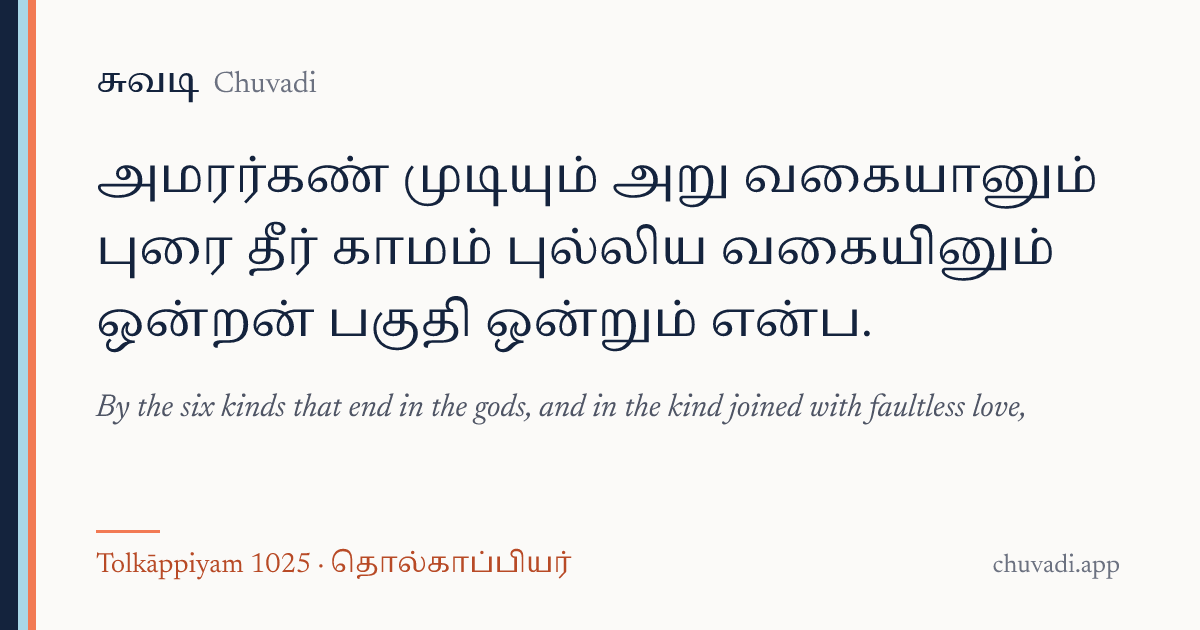
தெய்வங்களைப் பற்றி முடியும் ஆறு வகையாலும், குற்றமற்ற காமத்தைப் பற்றிய வகையாலும் ஒன்றன் பகுதி இதனோடு பொருந்தும் என்பர்.
இளம்பூரணர்
இவர் தெய்வத்தைப் பற்றி முடியும் ஆறு வகையும் குற்றமற்ற காமம் பற்றிய வகையும் பாடாணின் ஒரு பகுதியாக அமையும் எனப் பொருள் கொள்வதாகக் கொள்ளலாம்; ஆறு வகை எவை என்பதற்கு இவர் தரும் விளக்கம் இங்குச் சரிபார்க்கப்படவில்லை.
நச்சினார்க்கினியர்
இவர் உரையும் இந்நூற்பாவுக்கு மேற்கூறிய பொருளையே தருவதாகக் கொள்ளலாம்; 'ஒன்றன் பகுதி' என்பதற்கு இவர் தரும் விளக்கம் இங்குச் சரிபார்க்கப்படவில்லை.
தெய்வங்களைப் புகழும் பாடல்களும் காமம் பற்றிய சில பாடல்களும் பாடாணில் சேரும் என்பது இதன் கருத்து என்று உரையாசிரியர்கள் கொள்வர். ஆறு வகை எவை, 'ஒன்றன் பகுதி' எதைக் குறிக்கிறது என்பவை உறுதியாகத் தெரியவில்லை.
ஆங்கிலம் · English translationAI
Translation
- By the six kinds that end in the gods,
- and in the kind joined with faultless love,
- the portion of the one is joined, they say.
What the poem says
A difficult nūṟpā. Pāṭāṇ is joined by "six kinds that end in the gods", which the commentators take as praise of deities or themes culminating in them, and by the kind that concerns faultless love. "The portion of the one is joined" is read as saying that these two strands belong to pāṭāṇ together with the praise of men: a share of one tiṇai joins another.
Which six kinds are meant, and whether "the one" is kaikkiḷai or pāṭāṇ itself, are uncertain; the translation keeps close to the words.