



தொல்காப்பியம் 1026 · பொருள் 2.22
பாடல் · The poem
Tap a word to see where else it occurs.
பொருள் · Meaning in TamilAI
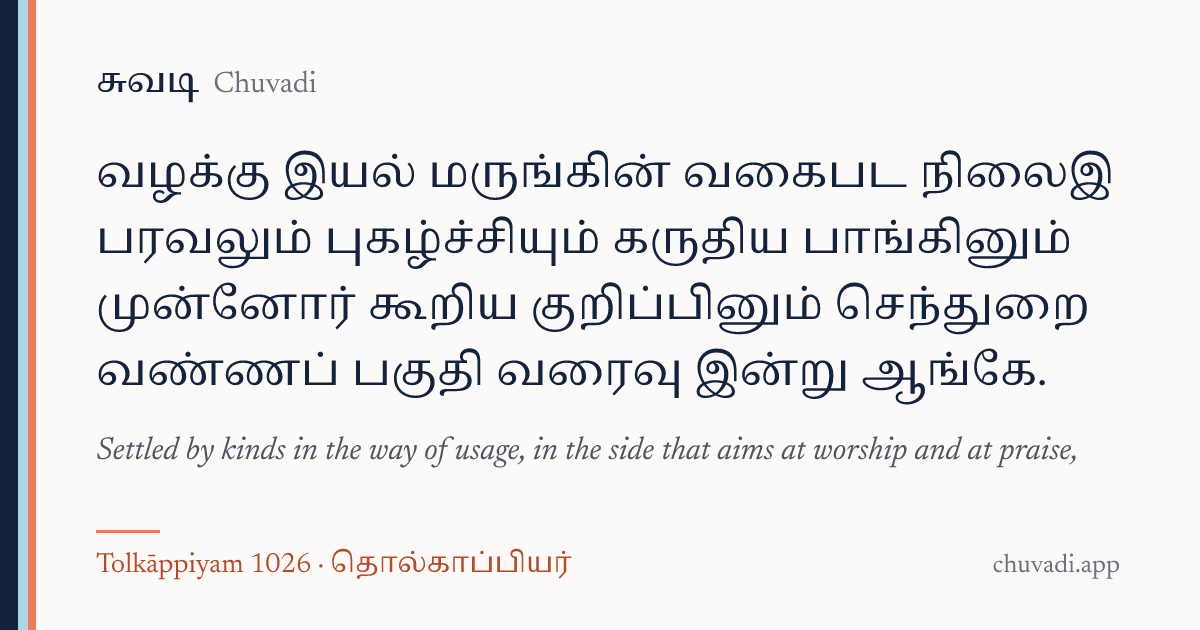
வழக்கின் இயல்புக்கு ஏற்ப வகைப்பட்டு நின்று, பரவுதலும் புகழ்தலும் கருதிய பக்கத்திலும், முன்னோர் கூறிய குறிப்பிலும், செந்துறை, வண்ணம் என்னும் இசைப்பகுதிகள் அங்கே வரையறையின்றி வரும்.
இளம்பூரணர்
இவர் பரவலைத் தெய்வத்தை வழிபடுவதாகவும் புகழ்ச்சியை மக்களைப் புகழ்வதாகவும் கொண்டு, செந்துறை, வண்ணம் முதலிய பாட்டு வகைகளில் இவை வரத் தடையில்லை எனப் பொருள் கொள்வார்.
நச்சினார்க்கினியர்
இவர் உரையும் இந்நூற்பாவுக்கு மேற்கூறிய பொருளையே தருவதாகக் கொள்ளலாம்; செந்துறை, வண்ணம் என்பவற்றுக்கு இவர் தரும் நுட்பமான பொருள் இங்குச் சரிபார்க்கப்படவில்லை.
பரவல் தெய்வத்தை வழிபடுவது; புகழ்ச்சி மக்களைப் புகழ்வது. செந்துறையும் வண்ணமும் பாட்டு வகைகள் என்று உரையாசிரியர்கள் கொள்வர்; அவற்றின் நுட்பமான பொருள் உறுதியாகத் தெரியவில்லை.
ஆங்கிலம் · English translationAI
Translation
- Settled by kinds in the way of usage,
- in the side that aims at worship and at praise,
- and in the intent told by the ancients, the centurai
- and the vannam portions are without restriction there.
What the poem says
In pāṭāṇ, whether it takes the form of paravu "worship, adoration" of a god or pukaḻcci "praise" of a man, arranged according to usage and the hints of earlier poets, the musical forms centuṟai (a kind of song) and vaṇṇam (rhythmic patterns) may be freely used: there is no restriction on them.
The commentators understand centuṟai and vaṇṇam as musical or song-forms; their precise technical sense in this period is not certain.