



தொல்காப்பியம் 1036 · பொருள் 3.2
பாடல் · The poem
Tap a word to see where else it occurs.
பொருள் · Meaning in TamilAI
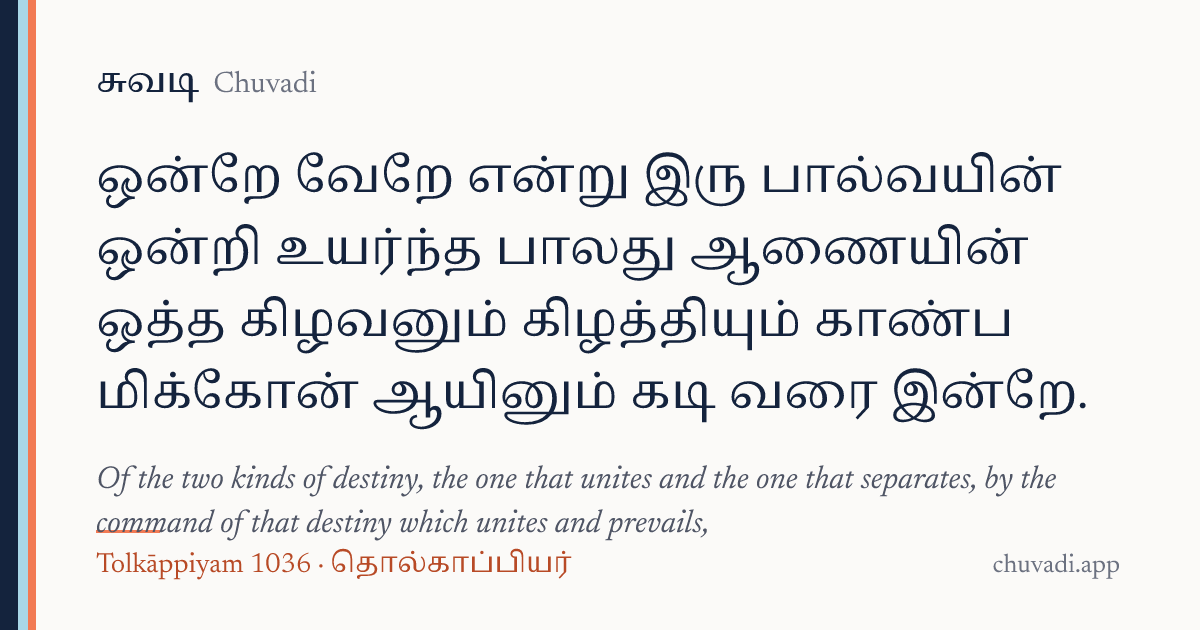
ஒன்றுசேர்க்கும் ஊழ், பிரிக்கும் ஊழ் என ஊழ் இரண்டு வகைப்படும். அவற்றுள் ஒன்றுசேர்க்கும் ஊழ் மேலோங்கி நிற்க, அதன் ஆணையால், ஒத்த தகுதியுடைய தலைவனும் தலைவியும் ஒருவரை ஒருவர் எதிர்ப்பட்டுக் காண்பர். தலைவன் தலைவியைவிட உயர்ந்தவனாக இருந்தாலும் அக்கூட்டம் விலக்கப்படுவது இல்லை.
இளம்பூரணர்
இவர் ஊழின் ஆணையால் ஒத்த தகுதியுடைய தலைவனும் தலைவியும் ஒருவரை ஒருவர் எதிர்ப்படுவர் என்பதே இதன் கருத்து எனக் கொண்டு, தலைவன் சற்று மிக்கவனாயினும் விலக்கில்லை எனப் பொருள் கொள்வார். 'ஒன்றே வேறே' என்பதற்கு இவர் தரும் நுட்பமான விளக்கம் இங்குச் சரிபார்க்கப்படவில்லை.
நச்சினார்க்கினியர்
இவர் 'ஒன்றே வேறே என்று இரு பால்' என்பதை ஒன்றுசேர்க்கும் ஊழும் பிரிக்கும் ஊழும் எனக் கொண்டு, ஒன்றுசேர்க்கும் ஊழ் மேலோங்கியபோது இயற்கைப் புணர்ச்சி நிகழும் எனப் பொருள் கொள்வதாக அறியப்படுகிறது; 'ஒத்த' என்பதை மெய்ப்பாட்டியலில் வரும் பிறப்பு, குடிமை முதலிய ஒப்புமைகளோடு இணைப்பார்.
இதுவே களவின் தொடக்கமான இயற்கைப் புணர்ச்சி. "ஒத்த" என்பதற்குப் பிறப்பு, குடிமை, ஆண்மை, ஆண்டு, உருவு முதலிய ஒப்புமைகளை மெய்ப்பாட்டியலில் வரும் பட்டியலோடு உரையாசிரியர்கள் இணைத்துக் காட்டுவர். தலைவன் மிக்கவன் ஆகலாம்; தலைவி மிக்கவள் ஆவது இவ்விதியில் அடங்காது.
ஆங்கிலம் · English translationAI
Translation
- Of the two kinds of destiny, the one that unites and the one that separates,
- by the command of that destiny which unites and prevails,
- a well-matched hero and heroine see each other;
- even if the man is the higher, there is no bar to it.
What the poem says
The first meeting of the lovers is not planned: it is brought about by pāl, "destiny, fate". Destiny is of two kinds, one that brings people together (oṉṟu) and one that keeps them apart (vēṟu); when the uniting destiny prevails, a hero and heroine who are equal and suited to each other (otta) catch sight of each other. This is the iyaṟkaip puṇarcci, the "natural union" with which kaḷavu begins.
The last line adds that if the man is superior to the woman, the meeting is still not forbidden; the reverse, a woman of higher standing, is not allowed by this rule. The commentators explain "well-matched" by the list of likenesses between lovers that the Tolkāppiyam gives later (birth, family, manliness, age, form and the like), and read "the higher" as superiority in such qualities.